北宋/金 傳黃宗道 舊傳李贊華 獵鹿圖 卷|Stag Hunt by Huang Zongdao|Li Zanhua
This is "Stag Hunt," a handscroll painted over 800 years ago and attributed to Huang Zongdao or Li Zanhua, now in the collection of the Metropolitan Museum of Art.
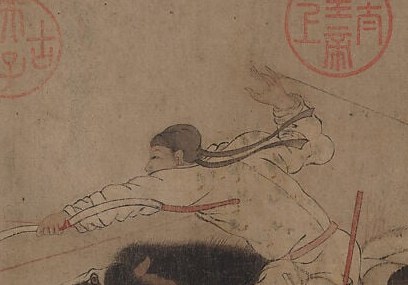
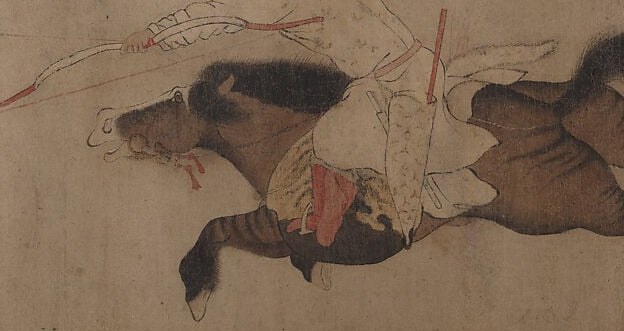
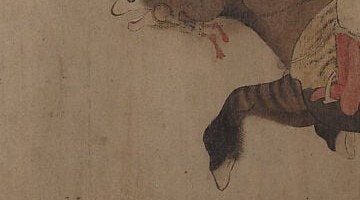
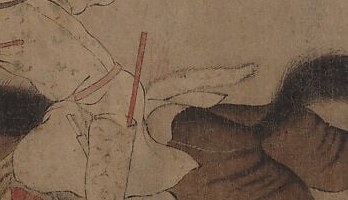
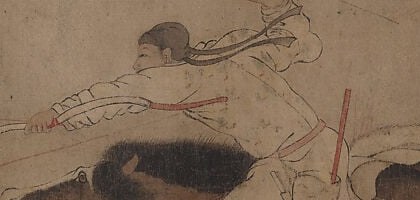
Look first at the horse's legs. All four are splayed in mid-air, a convention Chinese painters called the "flying gallop." It is not an attempt at realism. It is a visual cipher for speed itself, one that echoes through Central Asian art for centuries. The rider's streaming robes say the same thing in a different brushstroke.
The painting dates to a divided moment in Chinese history, around the turn of the 12th century, when the Northern Song and the Khitan-led Liao dynasty coexisted in uneasy proximity. The subject, a mounted archer chasing a stag across an open plain, was not neutral. It signaled a specifically nomadic, Khitan or Jurchen cultural identity, one that Song court painters would typically clothe in Confucian allegory.
Notice what is absent. A Song academic master would fill the background with mountains and mist, framing the chase as a moral metaphor. Here there is only blank paper, the vastness of the steppe itself. That emptiness is the final code, it declares who this scroll was made for.
Details
Transcript
The rider leans hard into the chase. Below him, all four legs leave the ground. Chinese painters called this the flying gallop. It is not realistic. It is a code for impossible speed. The robes stream back, a second code for velocity. Every object is a choice. The bow points the eye. But the real code is the emptiness. Song court painters filled space with mist and mountains.