Melons and Grapes by Chipman
Chipman's "Melons and Grapes," created around 1850, is a masterful example of still-life painting that emphasizes astonishing realism. This oil on canvas, housed in a private collection, invites viewers to marvel at the artist's meticulous attention to detail.
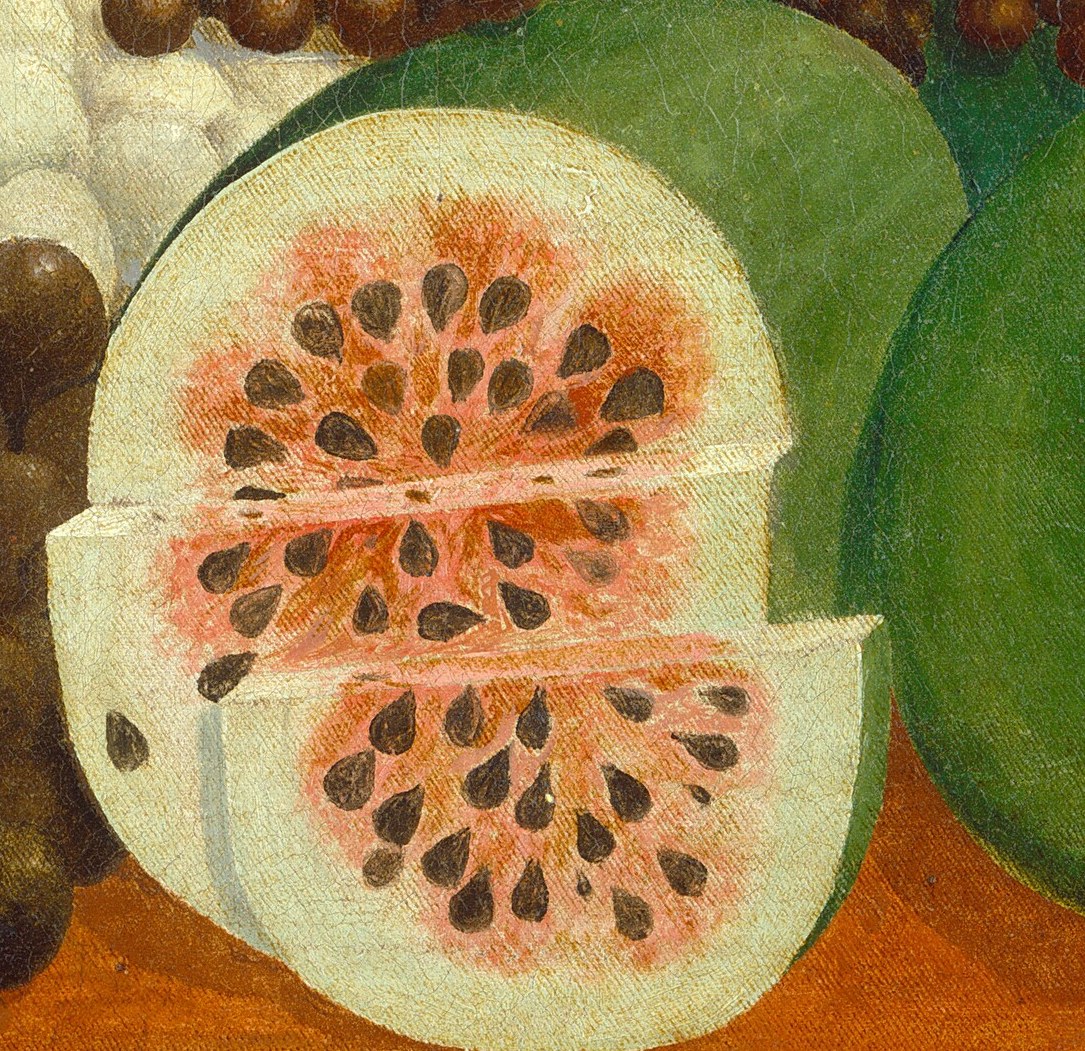
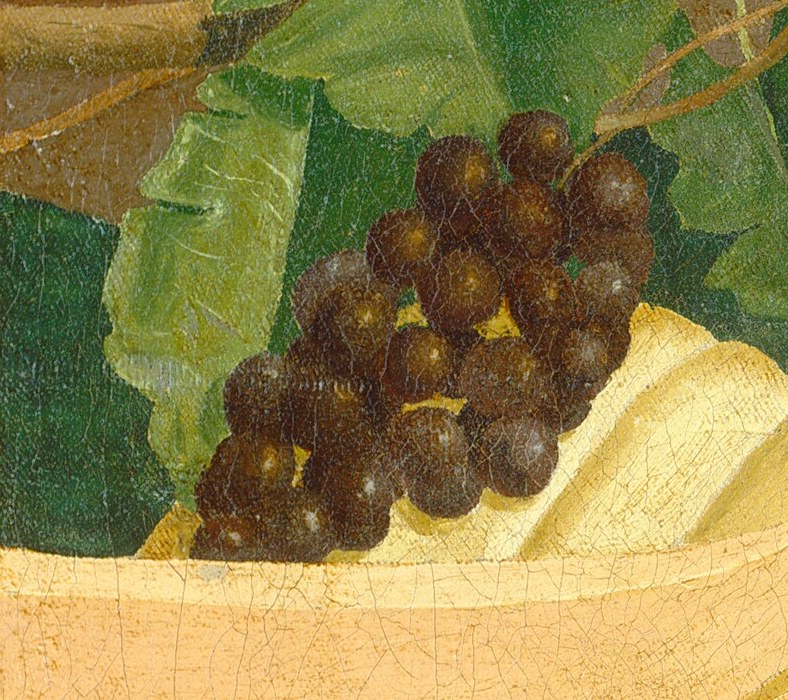
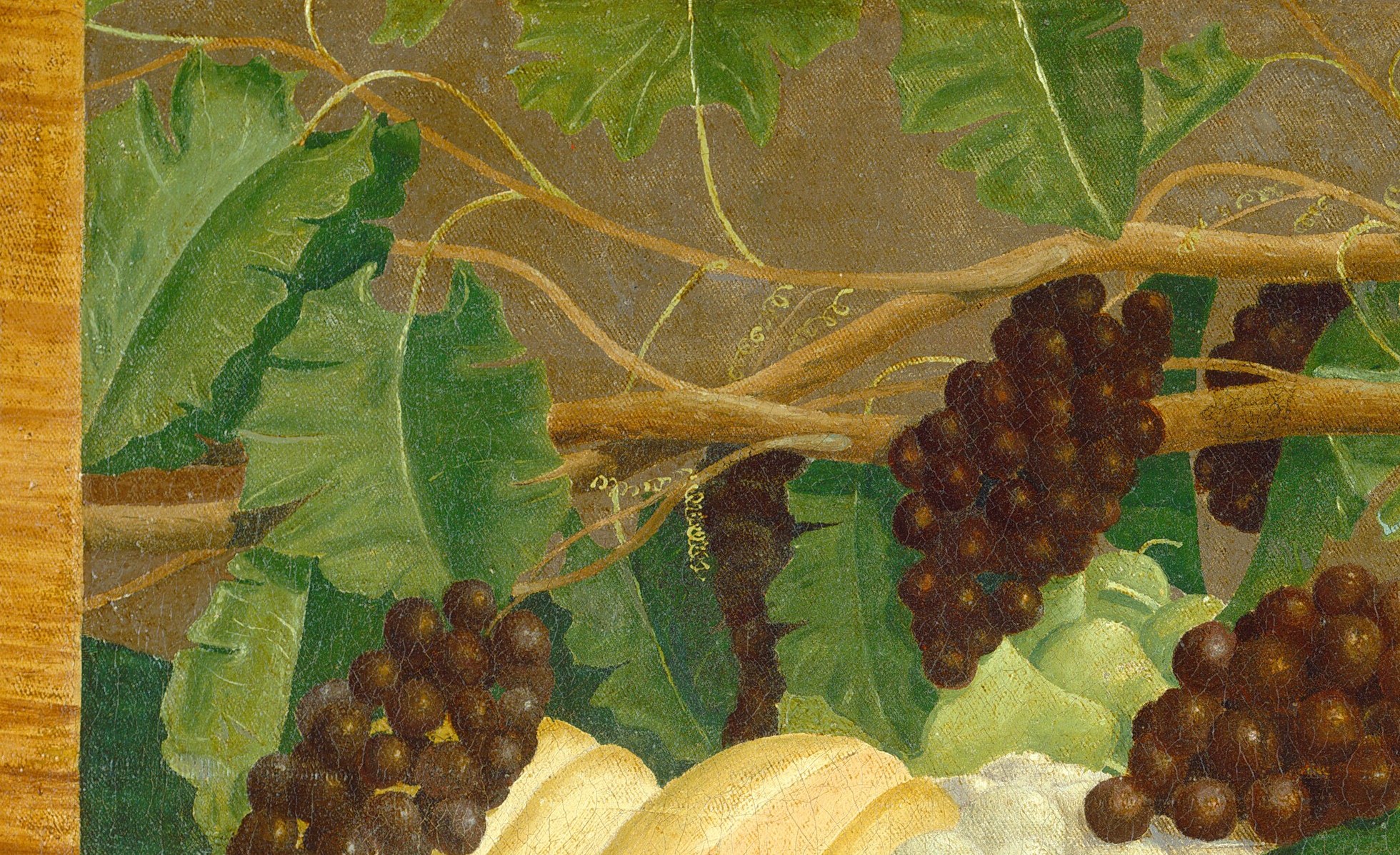
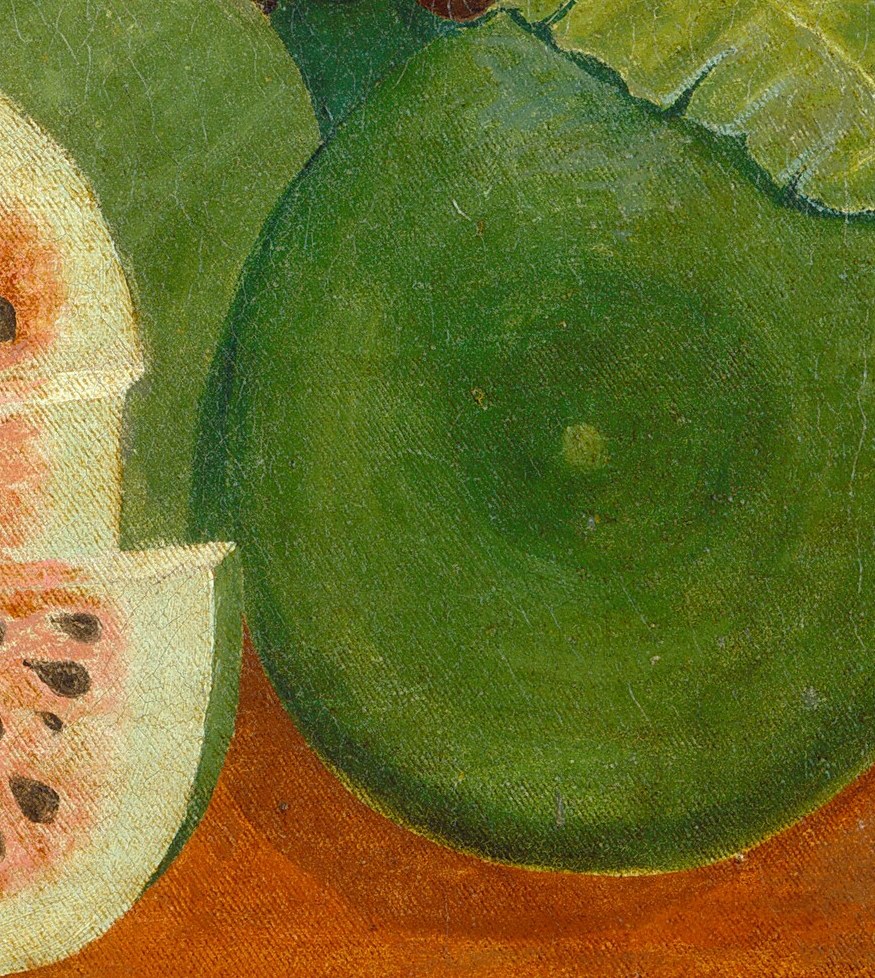
Look closely at the vibrant pink flesh and dark seeds of the cut melon, or the delicate texture of the grapes. The subtle variations in the melon rind and the veins on the leaves all showcase Chipman's keen observation.
The artist employed a technique involving thin, translucent layers of paint, known as glazing, to build depth and create the luminous, almost palpable quality of the fruit. This process allowed him to achieve a remarkable level of realism, making the depicted produce appear almost tangible.
Chipman, an artist active in the mid-19th century, elevated everyday subject matter through his precise rendering, celebrating the natural beauty and bounty of the depicted produce.
Details
Transcript
This painting is a still life, from around 1850. The artist, Chipman, focused on incredible realism. Every detail, from rind to seed, is rendered exactly. Notice the texture and color of the dark grapes. Or the subtle veins on these green leaves. He used thin, translucent layers of paint to build depth.