Portrait of Mary Tudor by Antonis Mor
This is the "Portrait of Mary Tudor" by Antonis Mor, painted around 1554 and housed at the Museo del Prado. Antonis Mor was a highly sought-after Netherlandish portraitist known for his formal style, which he applied to European royalty, creating a tradition that influenced later artists like Velázquez.
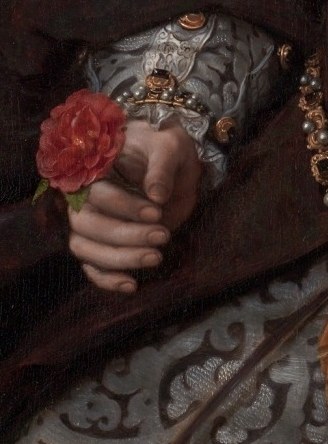
Observe the sitter's attire. The prominent Tudor rose brooch on her chest explicitly identifies her and links her to the powerful dynasty. The heavy pearl necklace and the opulent chair fabric signify her immense wealth and royal status. Even the rose she holds, a symbol of love and beauty, is held with a grip suggesting control.
Mary Tudor was Queen of England from 1553 until her death in 1558. Mor captured her in the formal court style, emphasizing her authority and lineage. The detailed embroidery and rich fabrics speak to the luxury of the Renaissance era and the sitter's high social standing.
These carefully chosen symbols create a rich visual language, communicating not just the sitter's likeness but her identity, power, and the expectations of her reign.
Details
Transcript
This is Mary Tudor, Queen of England. Her identity is clear from this Tudor rose. Pearls signal her immense wealth and status. Her left hand holds a rose for love and beauty. Her right hand rests on her chair of authority. Look at the ring on her finger. This portrait was painted in 1554. Antonis Mor painted portraits for European courts.