Lamentation by Solario, Andrea
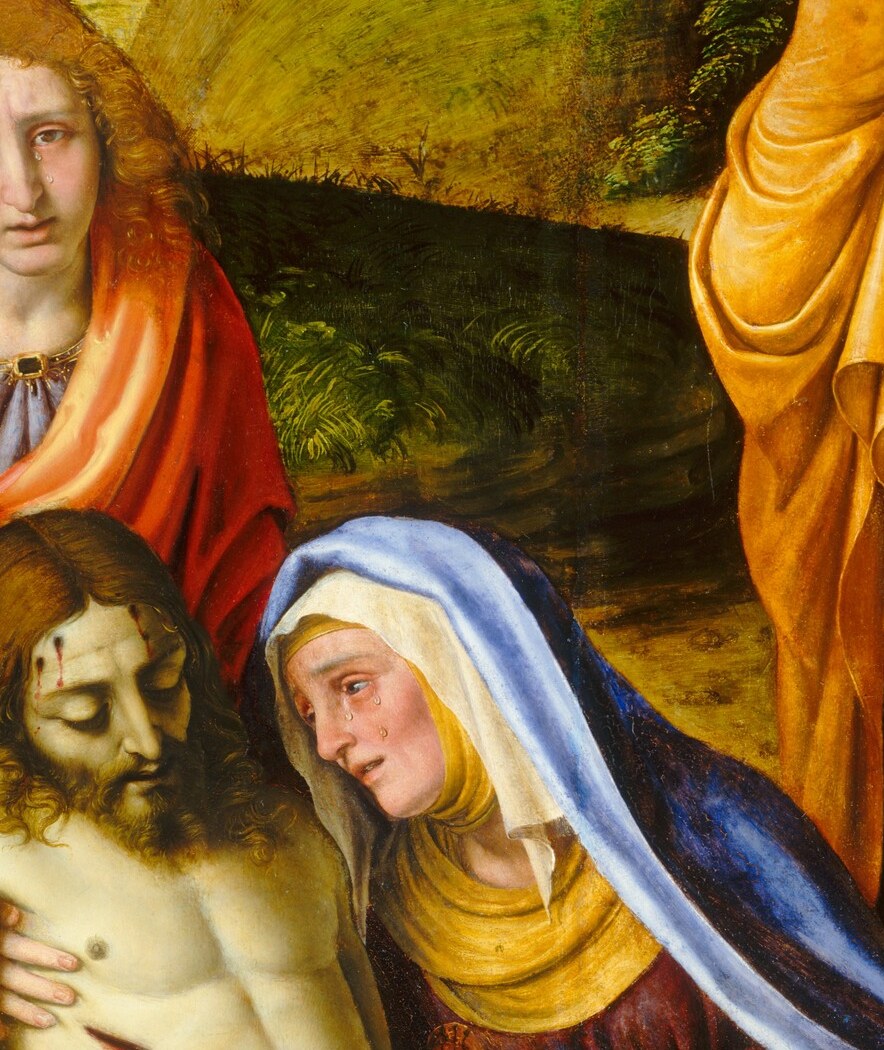
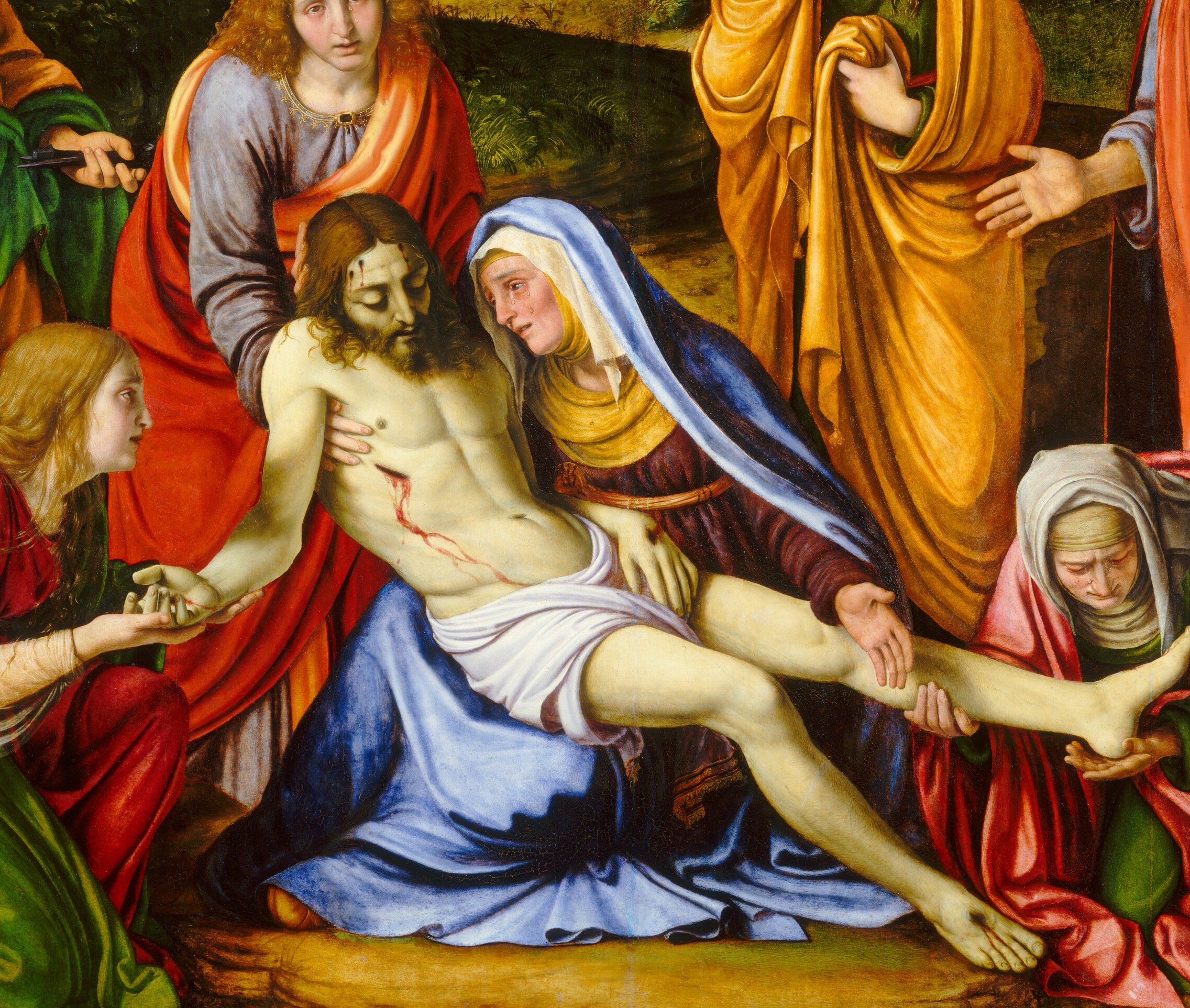
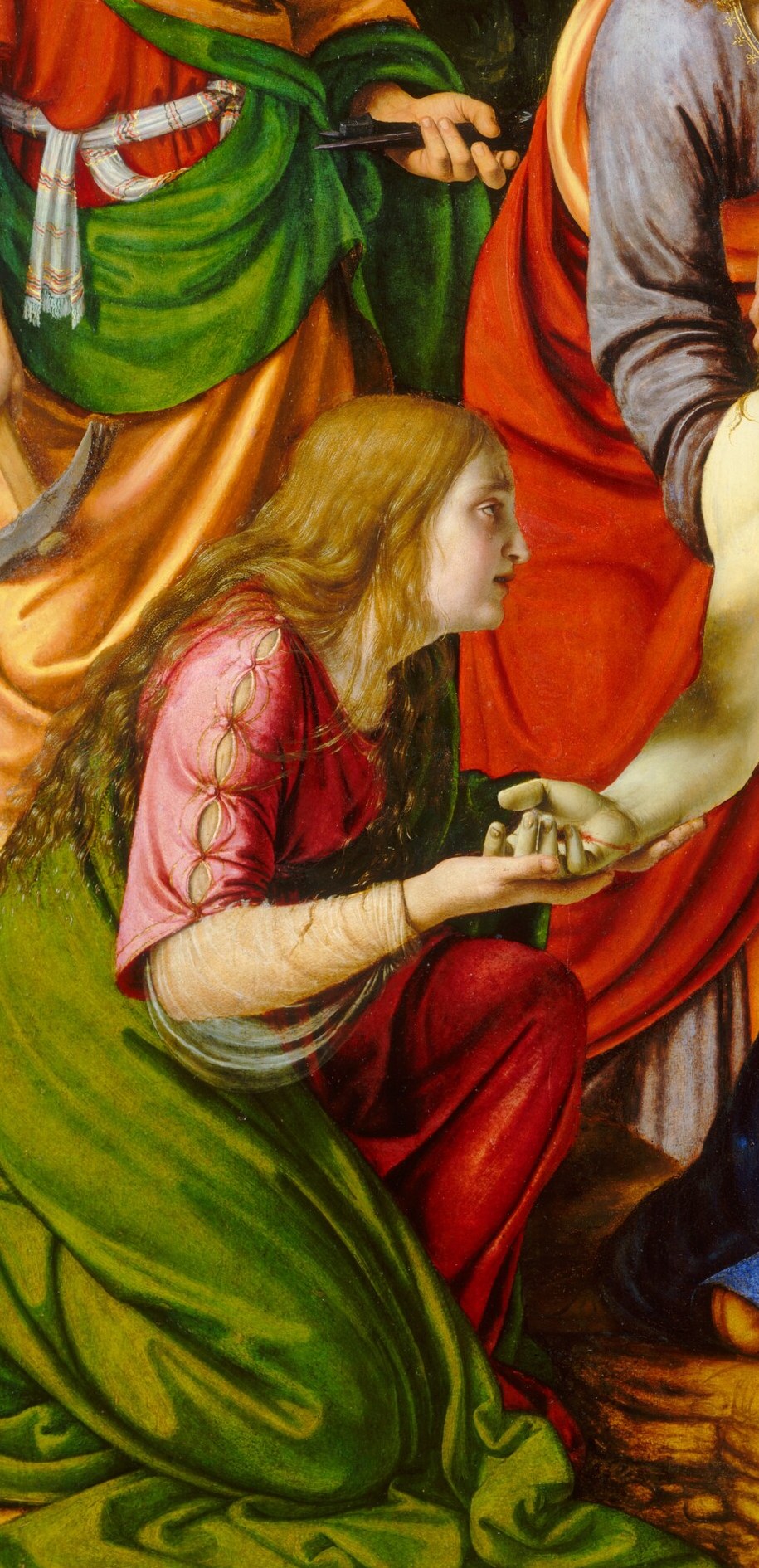
Andrea Solario's Lamentation, painted around 1505, holds a secret most viewers scroll right past. The scene is dominated by the lifeless body of Christ, held by the Virgin Mary and surrounded by mourners whose grief Solario renders with extraordinary sfumato, the soft Leonardesque haze he absorbed working in Milan. It is a painting about the stillness that follows a catastrophe.
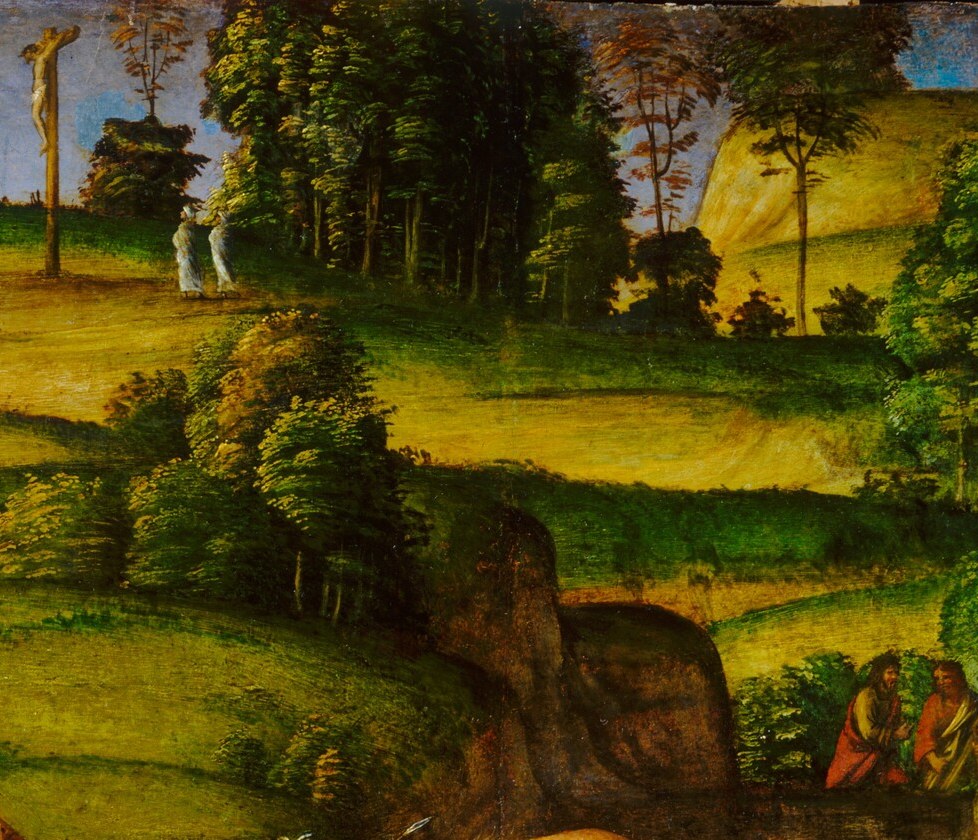
But look beyond the central group, into the upper right corner of the landscape. Just above the green hill where the two empty crosses stand, tiny robed figures are already walking away. They are barely visible, smaller than a fingernail, but they change the entire painting. While Mary and the disciples are frozen in sorrow, the world outside is already in motion.
This is the detail that rewards the patient viewer. Solario, who trained in Venice and worked in France before returning to Lombardy, fused Italian Renaissance softness with a Northern attention to tiny, real-world observation. Those small figures are not just background filler; they are theology made visible. The crucifixion has happened, the earth has shaken, and ordinary life is resuming on the road to Emmaus before the mourning party has even moved.
The painting lives in the Louvre, a quiet masterwork by an artist who learned from Leonardo but kept his own eye for narrative. Next time you stand before a Renaissance Lamentation, look into the distance. The painter may have hidden a second story there.
Details

Transcript
A mother holds her son one last time. His friends gather close, their world just ended. But the painter tells two stories at once. Look just above the mourners, into the green hill. Tiny figures are already walking away from the crosses. Life goes on. The world outside this grief is already moving.