Flowers in a Cut Glass Vase by Babcock, William Perkins
Flowers in a Cut Glass Vase by William Perkins Babcock, 1850s, housed at the [Museum Name]. This painting sparked controversy and was rejected by the official salon for its unflinching portrayal of decay.
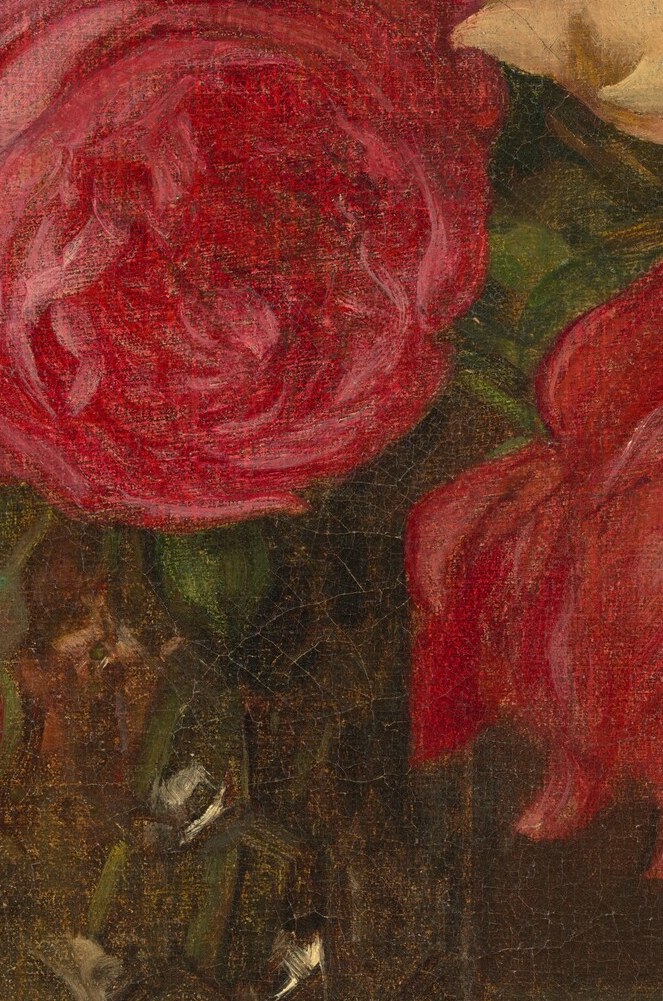
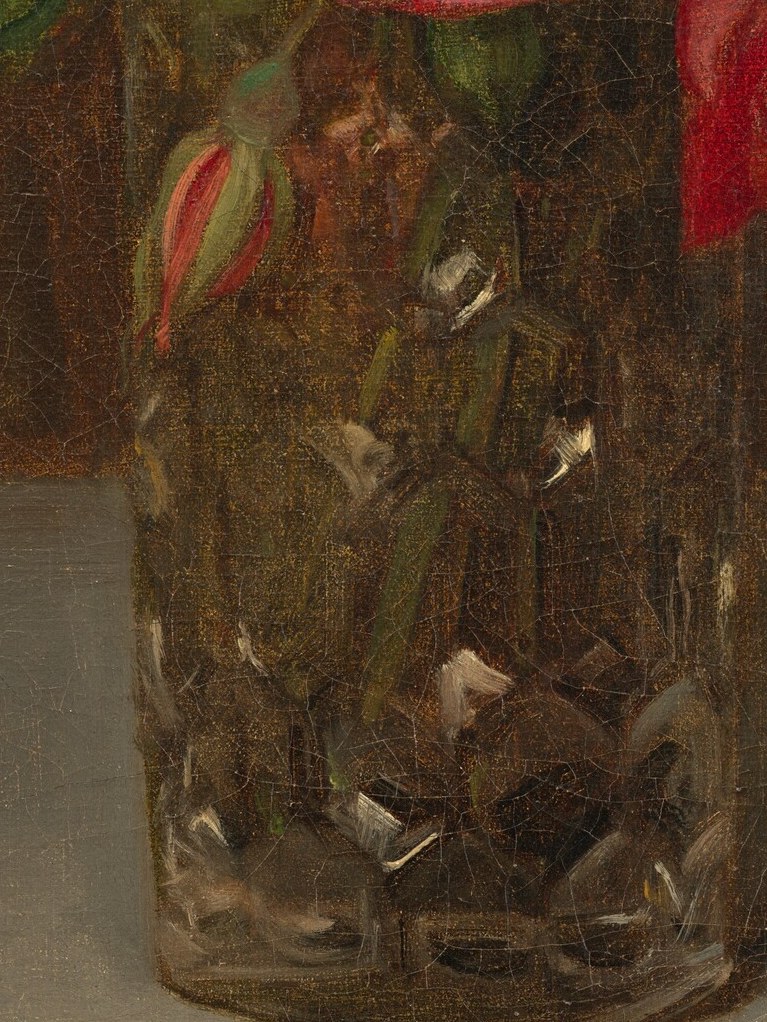
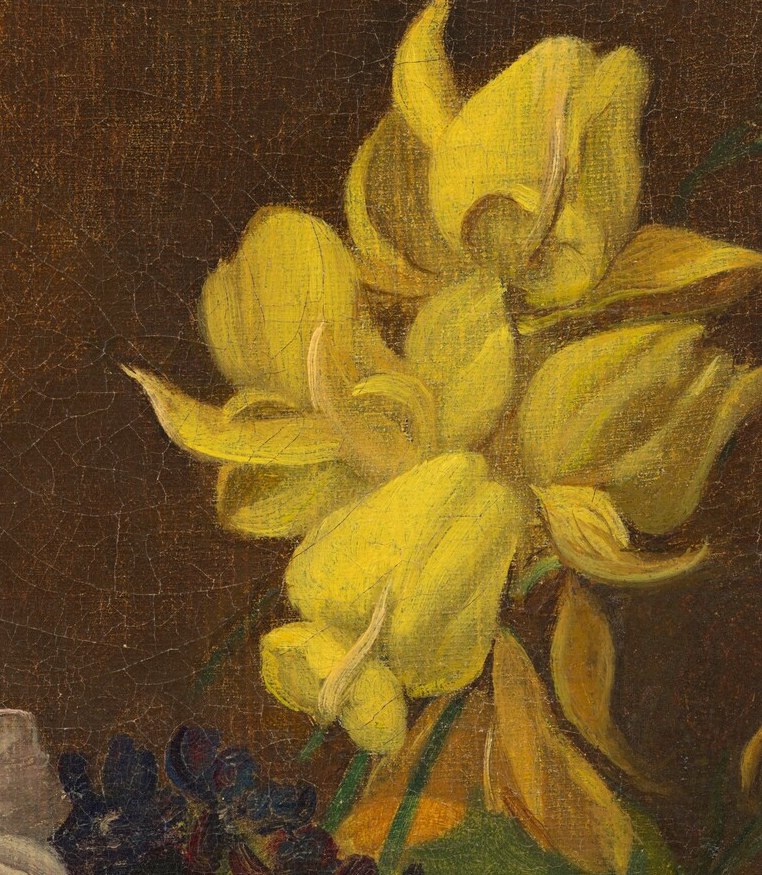
Observe the rich red rose, the creamy yellow rose, and the delicate pink geraniums. Notice how the artist used glazing to achieve the luminous quality of the petals and the transparency of the cut glass vase.
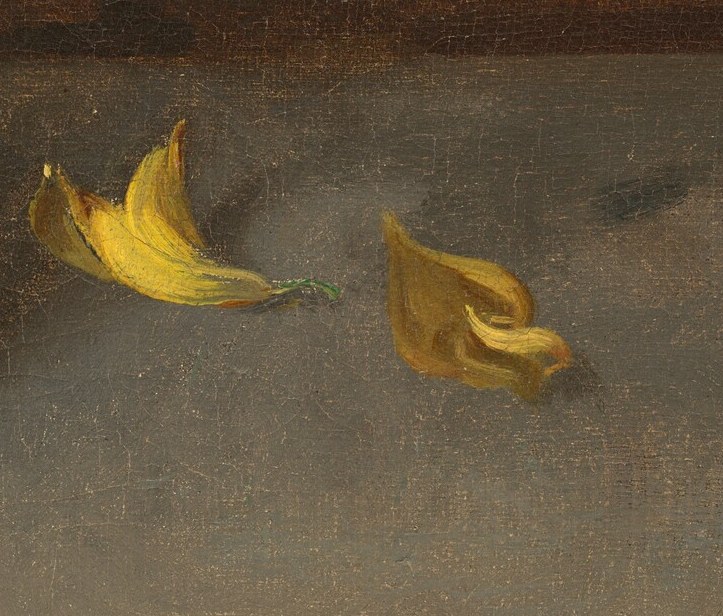
Painted in the mid-nineteenth century, a time when still-life art was gaining traction, Babcock's work was considered too stark. The scattered yellow petals on the table were seen as a symbol of fading beauty, a message that scandalized contemporary audiences who preferred more idealized floral still lifes.
Ultimately, Babcock's unflinching realism found its audience, but only posthumously. The painting now stands as a testament to an artist who dared to depict nature's transience.
Details
Transcript
This is not just a flower painting. Look at the velvety red rose. Its creator used thin, translucent paint layers. This glazing technique made the glass seem real. But the public saw decay in these petals. Yellow petals lie scattered and drying. The painting was rejected by the official salon. Fame came only after the artist's death.