Market by the Seashore by Salomon van Ruysdael
This is Market by the Seashore, painted by Salomon van Ruysdael in 1637. It is a witness to a working strandmarkt, a beach market, on the North Sea coast of the Dutch Republic, and it is now in the collection of The Metropolitan Museum of Art.
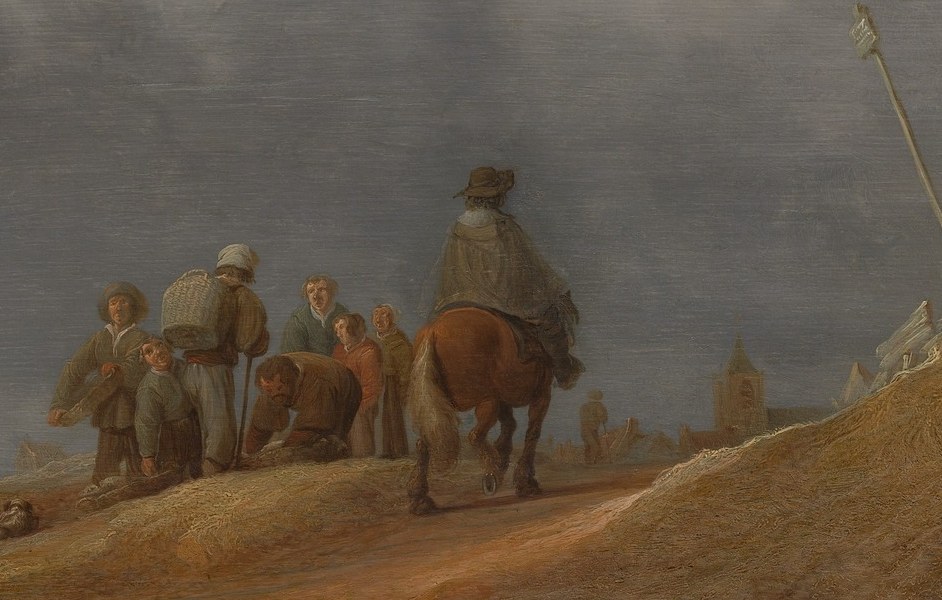
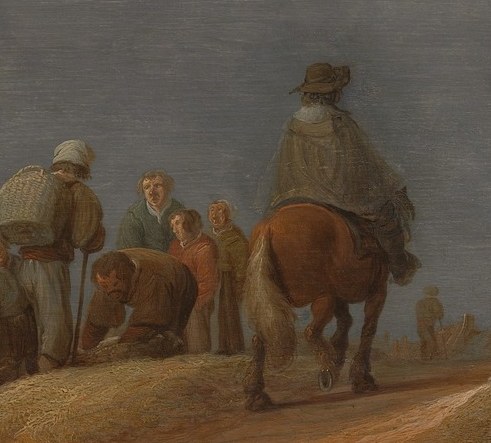
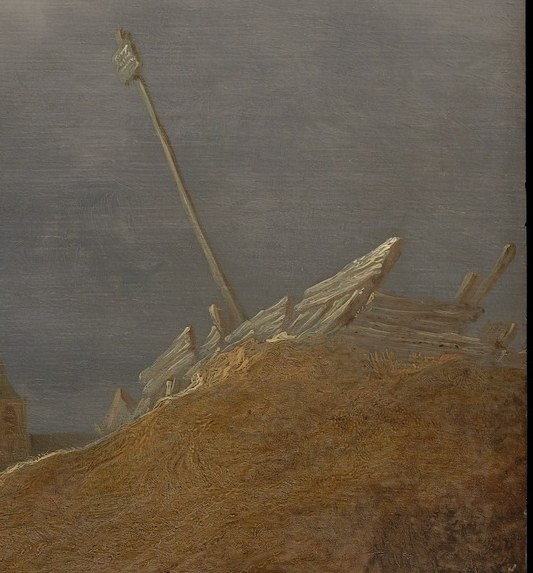
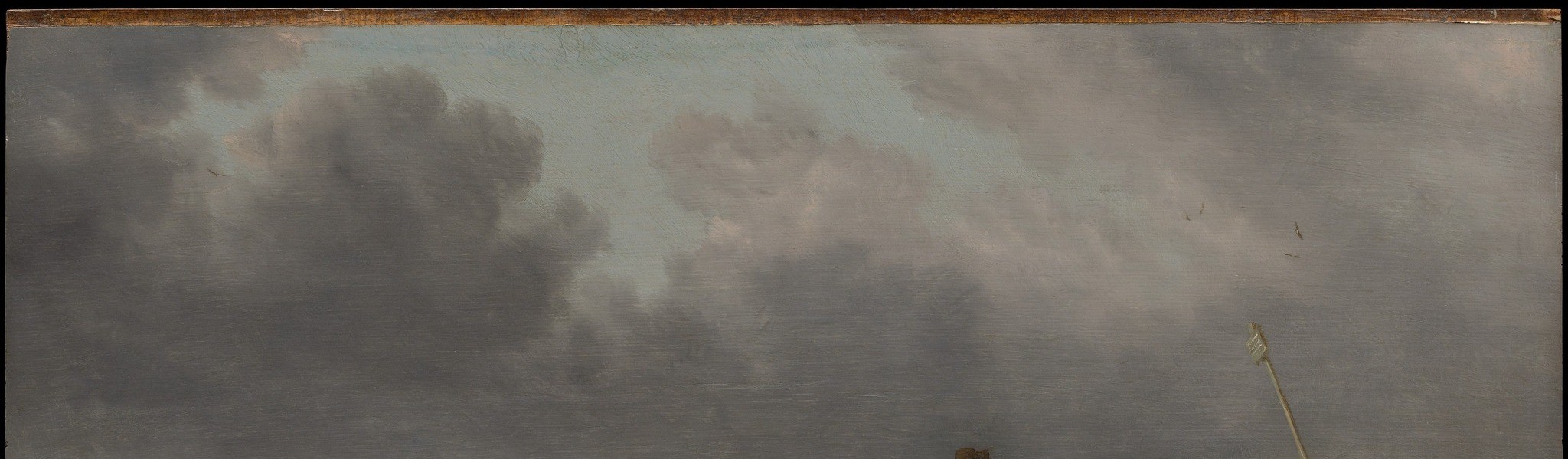
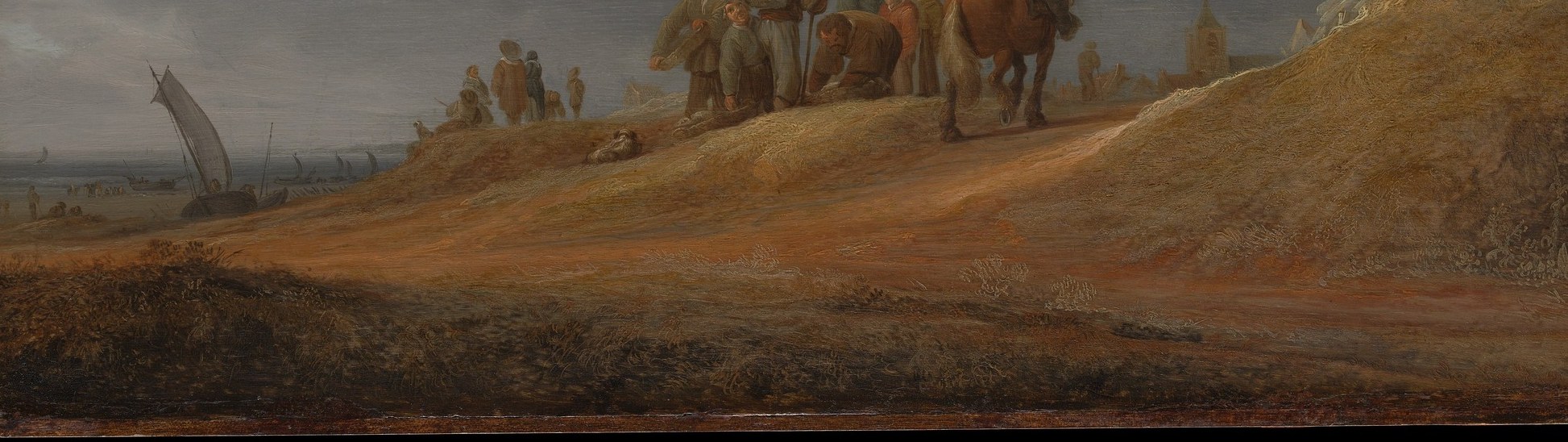
Start with the sky. The storm cloud mass is the painting's true subject: a dark, layered weight that physically overpowers the small gathering below. The figures cluster on a sandy dune, mid-transaction, while a lone horseman begins to move away. At the right edge, a beached mast or boat structure anchors the scene, this is a commercial landscape, not a scenic one. Everything visible had an economic purpose.
Ruysdael was the uncle of the more famous Jacob van Ruisdael, but he was a major landscape painter in his own right, and this work shows why. The tonal control in the clouds is extraordinary, built through gradation, not drama for its own sake. The thin bright strip along the horizon is a classic Dutch device: it keeps the sea readable and gives the eye somewhere to go beyond the storm. The beach itself, warm ochre sand in the foreground, is handled with real tactile weight.
The Dutch coast in the 1630s was a busy, working edge of a maritime empire. A strandmarkt was a temporary, practical thing, goods landed, deals made, everyone dispersed. The weather set the schedule. In this painting, the weather is about to close the day.
Details
Transcript
A storm is coming, and the market is packing up. The Dutch called a beach market like this a strandmarkt. Fish, imported goods, and local wares changed hands right on the sand. A single horseman is leaving. The deal is done. That beached boat brought the goods, and will carry them away before the weather turns. 1637. The Dutch economy ran on coastal trade, and storms like this one ruled the calendar. Ruysdael painted the market small and the sky enormous. He knew who was in charge.