Portrait of a Lady by Manet, Edouard
This "Portrait of a Lady" by Édouard Manet, painted around 1879, is an oil on wood panel, now housed at a major institution. It's a striking example of Manet's direct approach to portraiture, and it holds some secrets in its brushwork.
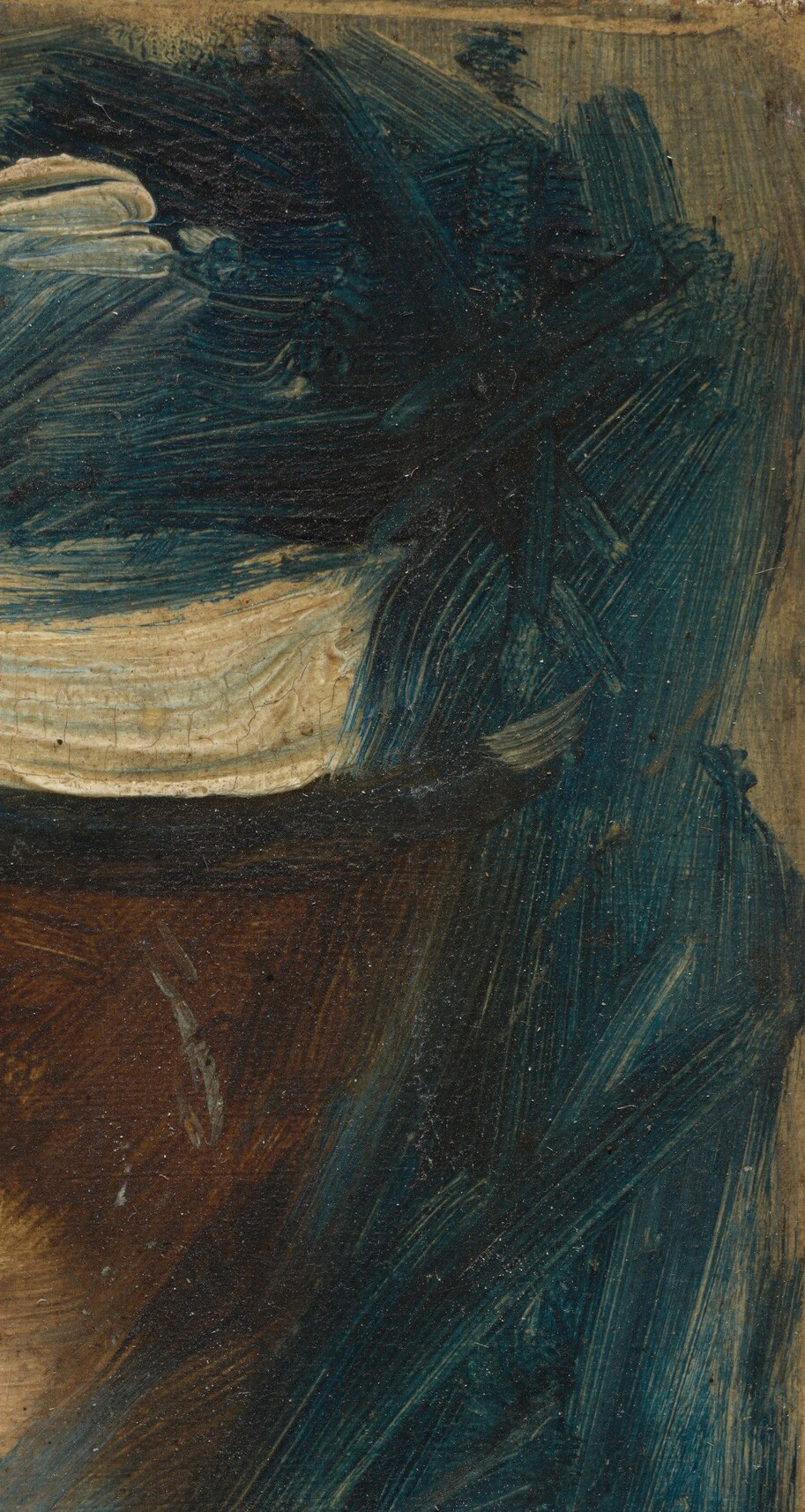
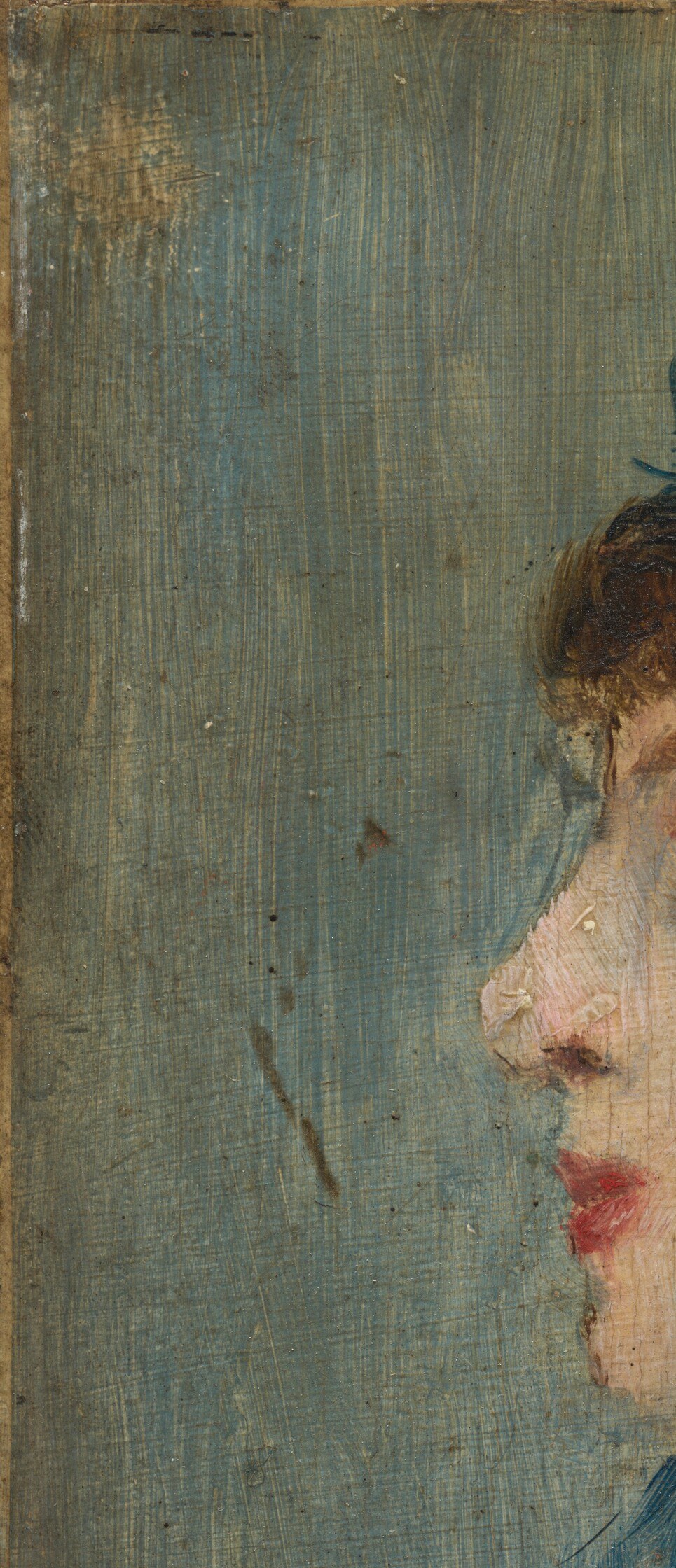
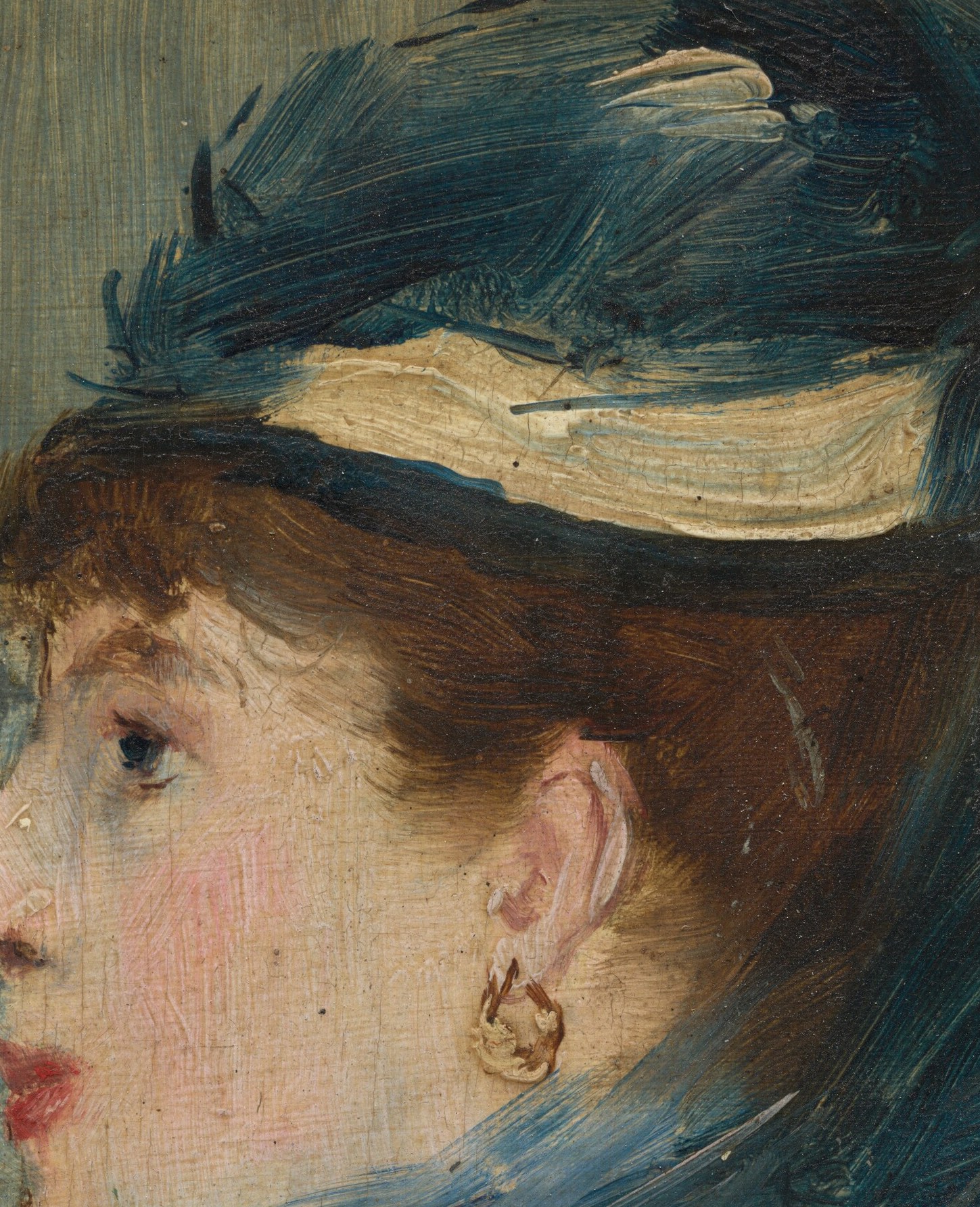
Take a moment to truly look at the background behind the sitter's head. You can clearly see the thinly applied paint, allowing the warm wood panel to show through. This isn't an unfinished work, but a deliberate choice by Manet, who often embraced visible brushstrokes, showing the act of painting itself.
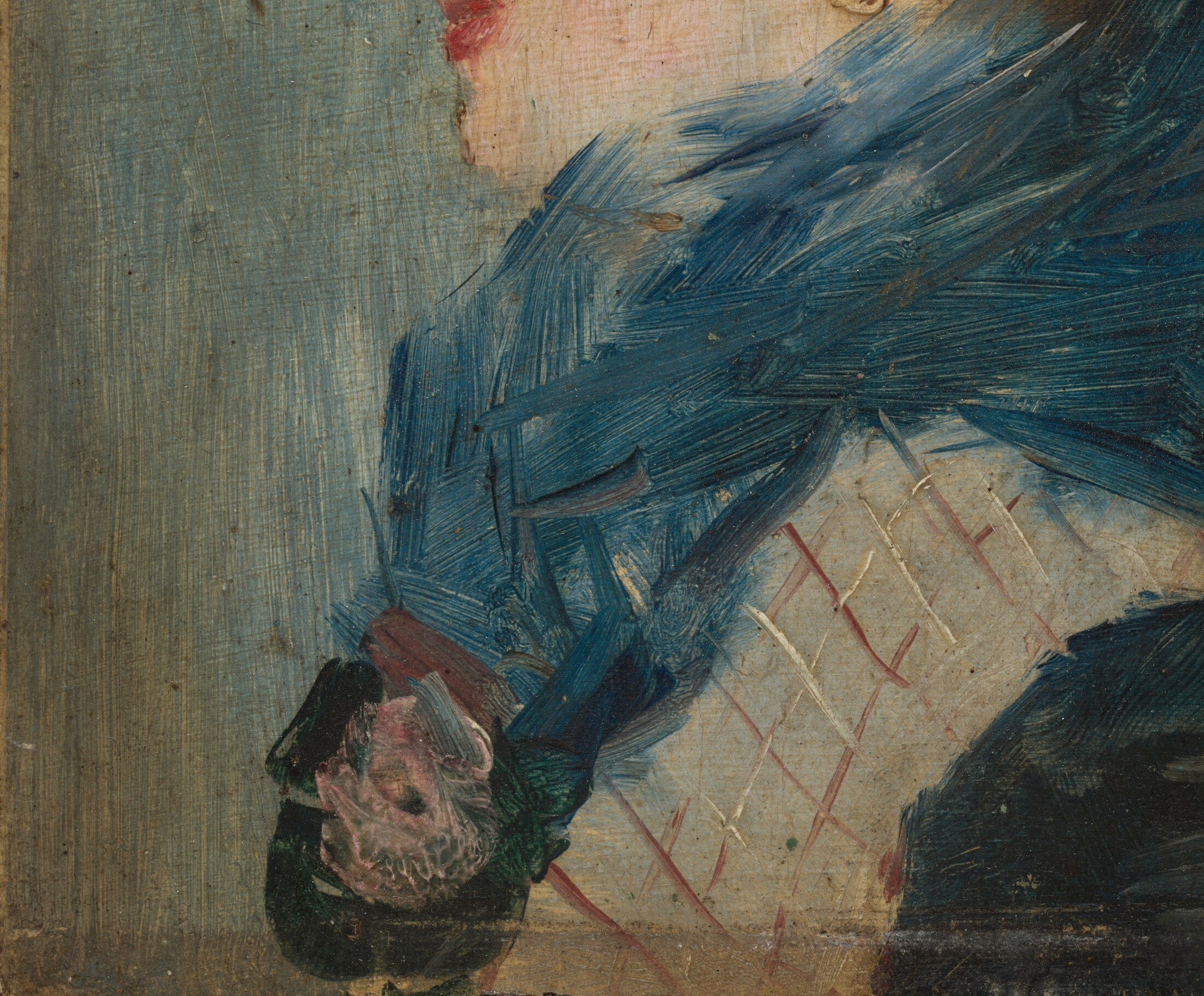
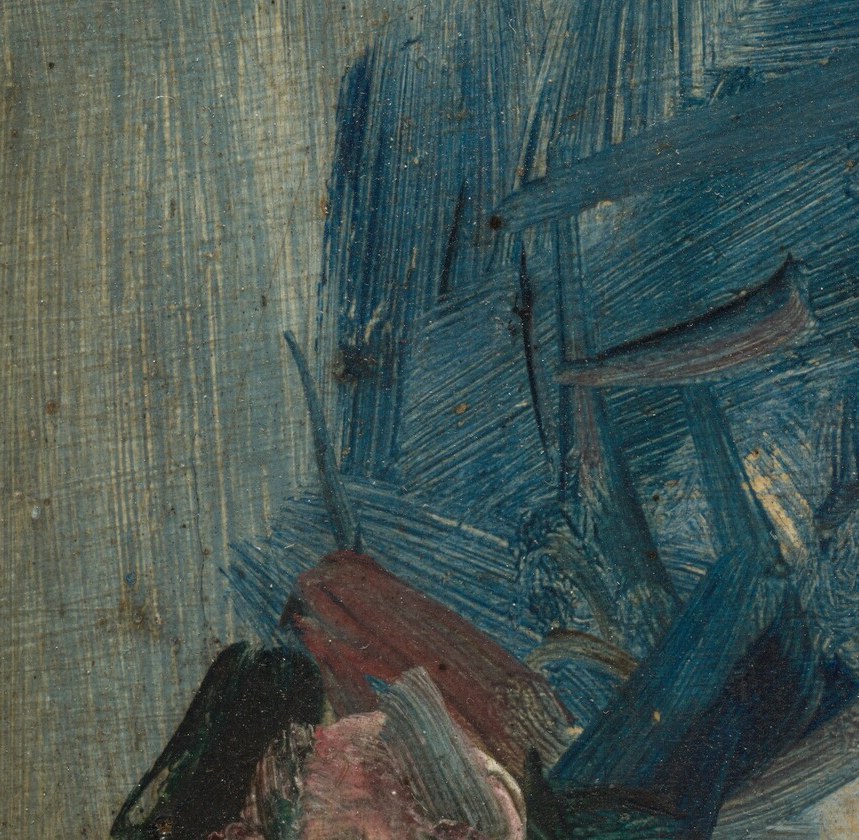
Then, shift your gaze to her chest, near the shoulder. There's a subtle detail, almost hidden: a small pin or flower. These quiet accents often give hints about the sitter's status or the occasion, without distracting from the primary focus, her composed face.
Manet, who died young at 51, was a master of capturing presence and reality. His selective "finish" strategy, combining detailed elements with looser passages, invites us to look deeper, rewarding those who do. What other quiet details do you notice?
Details
Transcript
Édouard Manet often revealed his process. Look closely at the background behind her head. You can see the wood panel, almost bare. He liked rough strokes that showed the painting's making. Now look lower, near her shoulder. A tiny pin or flower, almost lost in shadow. Manet's portraits reward a slow, close look.