The Apostle Paul by Rembrandt van Rijn
View the artwork: The Apostle Paul →
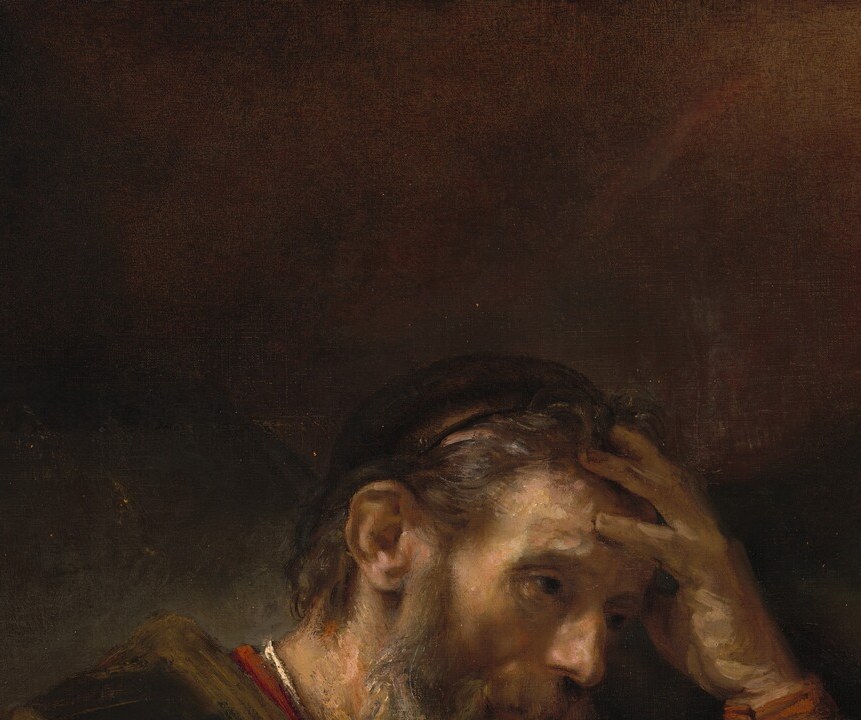
This is Rembrandt's The Apostle Paul, painted around 1657 and now in the National Gallery of Art, Washington. The canvas is nearly a ledger of his own ruin: by the year this was made, Rembrandt had been declared insolvent, his house and possessions auctioned to pay creditors. He paints the apostle not as a triumphant martyr in glory but as a man who thinks in the dark.
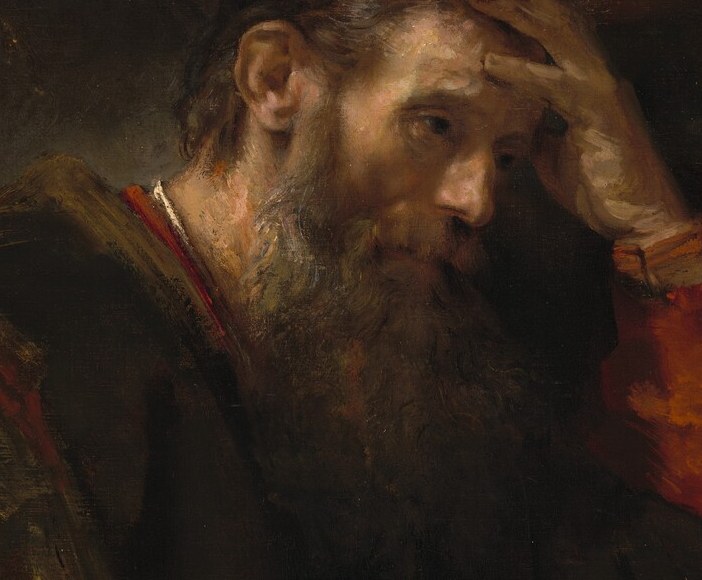
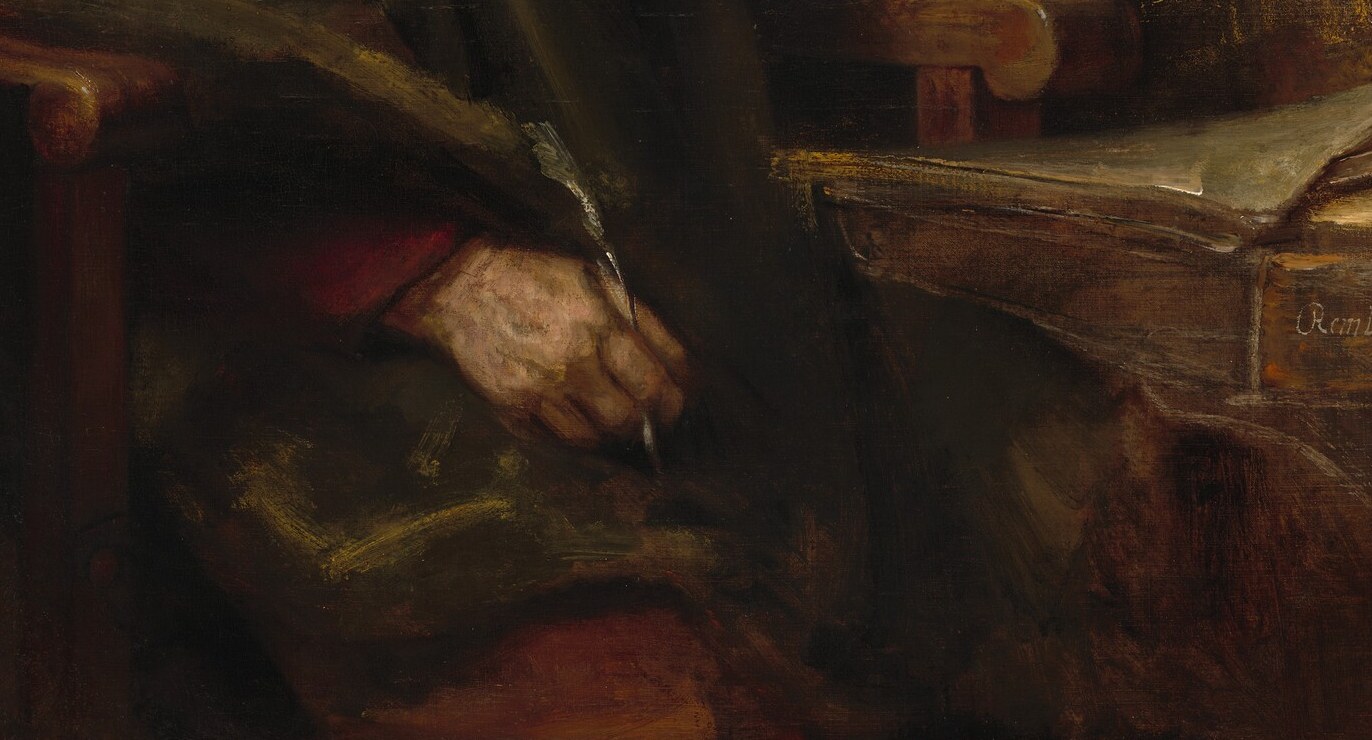
Look first at the light. Two sources compete. A warm shaft falls from above onto Paul's forehead and brow. A second, cooler radiance rises from the open pages of his manuscript, catching the underside of his beard. The book illuminates the man. Rembrandt builds the whole composition on that visual argument: text as light.
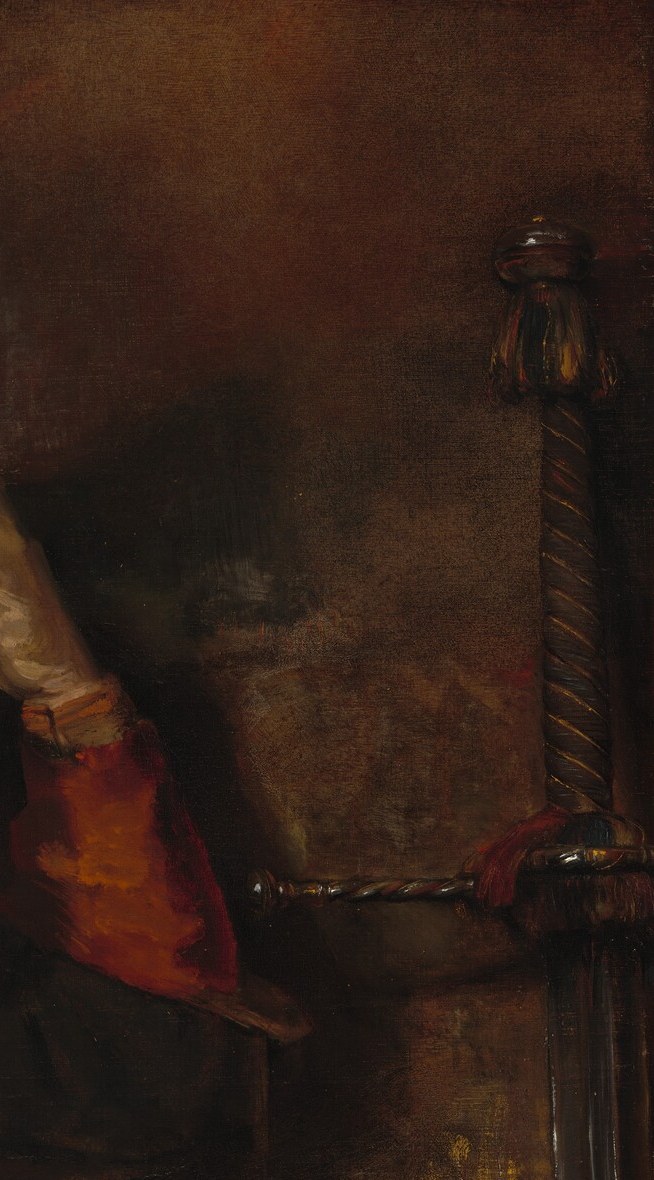
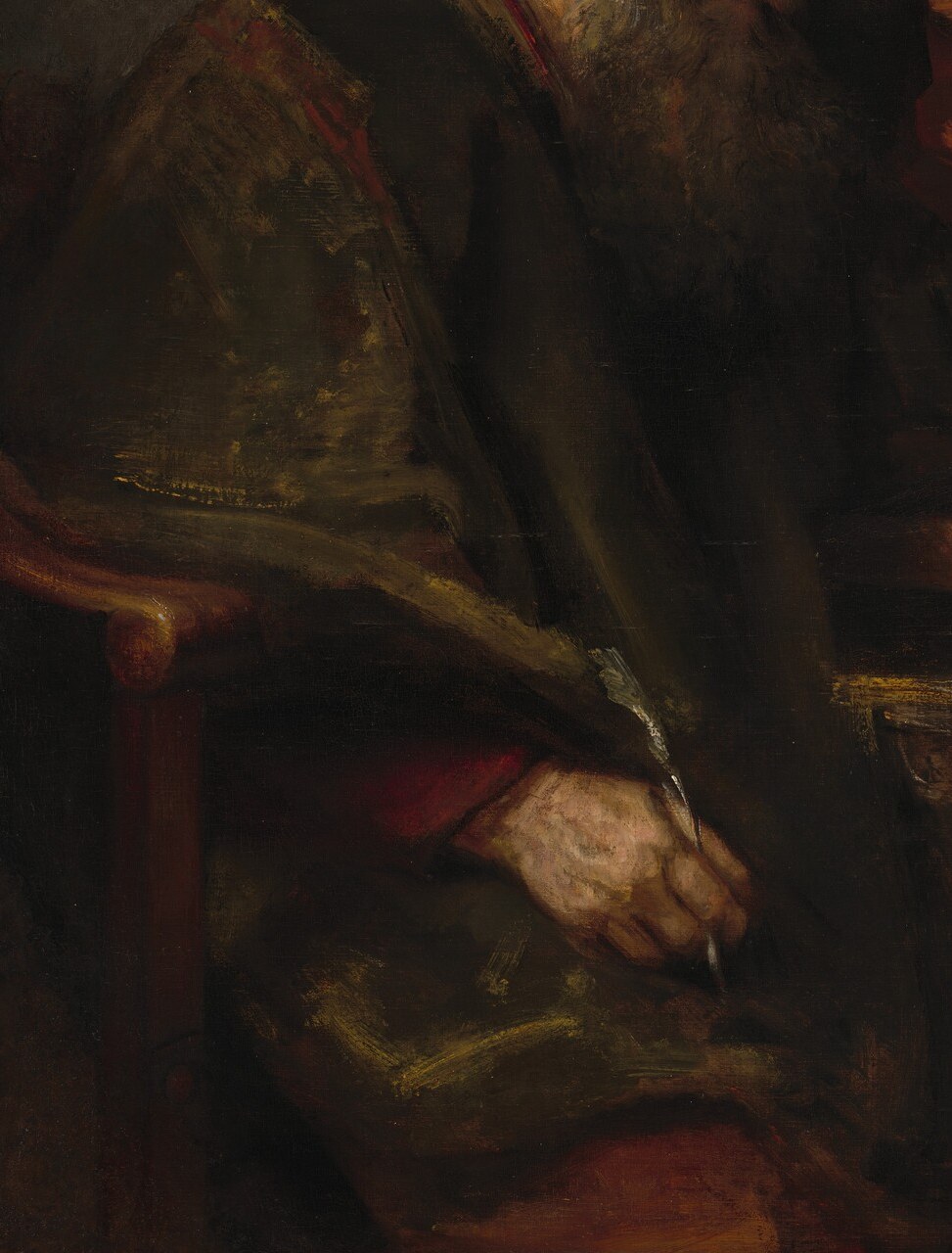
Paul's traditional attribute is the sword of his execution, and it may be here, barely legible in the lower right shadow. But Rembrandt has all but erased it. What remains instead is a hand pressed to a temple, a pen dissolving into darkness, and a face scored by a lifetime of hardship. The saint becomes a scholar; the scholar becomes an old man, tired and real.
No crown, no column, no architecture. Just a figure, a book, and a void. That emptiness is Rembrandt's late style, a technique of radical subtraction where everything not essential to the soul is removed.
#arthistory #rembrandt #dutchgoldenage
Details
Transcript
He holds all the meaning, nearly invisible. The book lights him more than the sky. The sword is down there, buried in shadow. Rembrandt was bankrupt when he painted this. A man thinking in the dark, by a man who had lost everything.