Artwork
The Apostle Paul
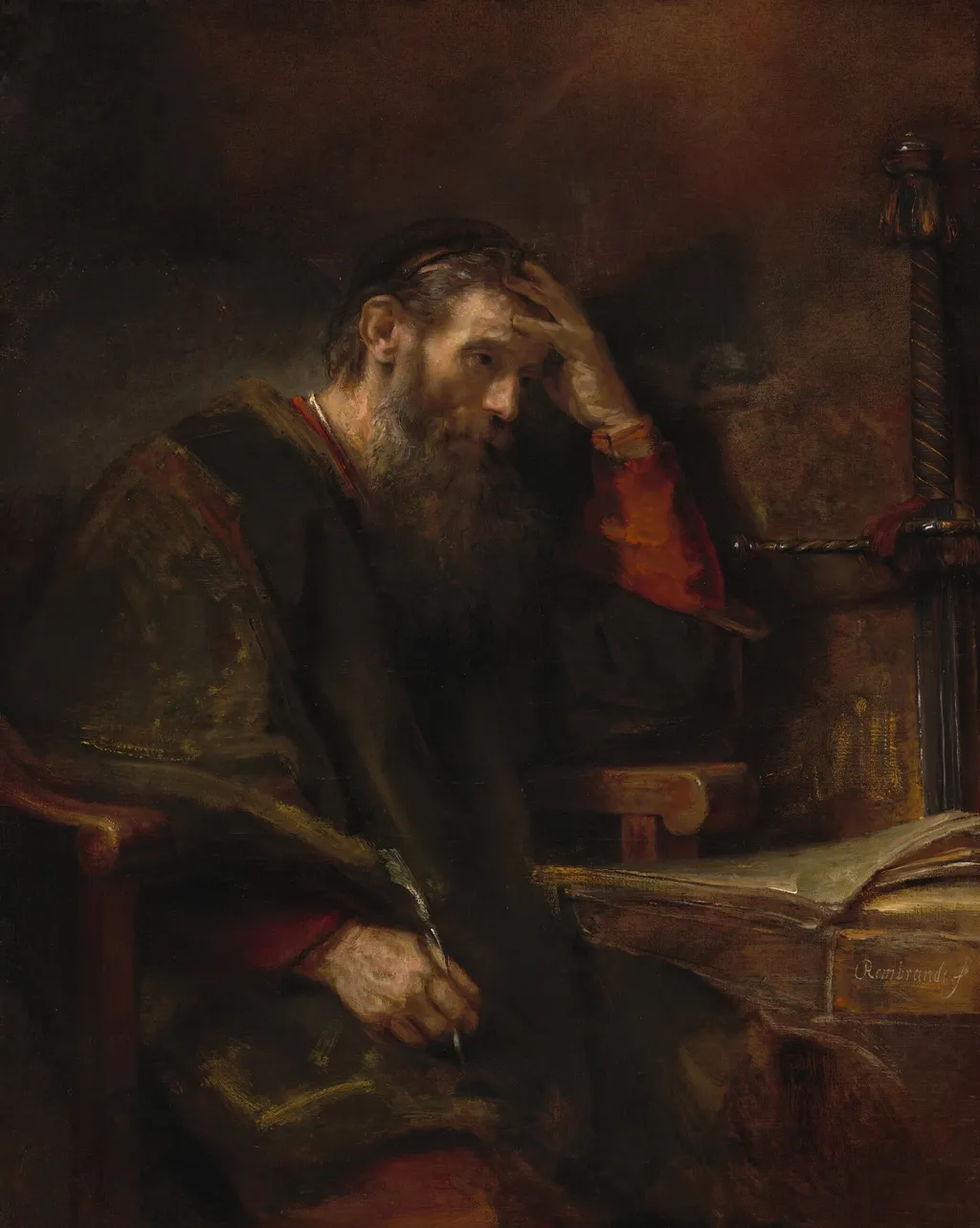
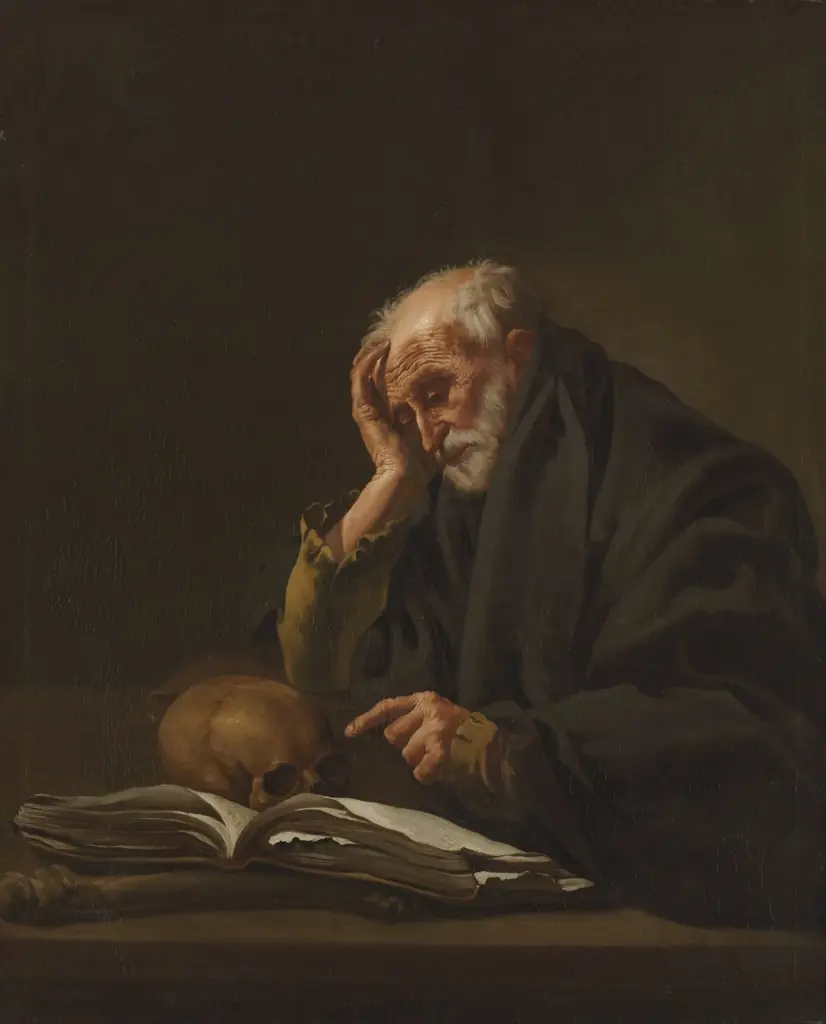
The Apostle Paul is an oil painting by the Baroque artist Rembrandt van Rijn. It dates from 1657 and is held in the collection of the National Gallery of Art.
- Inscription
- Inscribed:lower right on desk: Rembrandt f
About this work
Subject & Meaning
The iconography centers on Paul’s contemplative pose, his furrowed brow suggesting deep reflection.
Rembrandt’s The Apostle Paul (1657) depicts the apostle in a dimly lit prison cell, seated at a table with a quill in hand, evoking the composition of his epistles. The iconography centers on Paul’s contemplative pose, his furrowed brow suggesting deep reflection. A sword, positioned prominently behind him, serves dual symbolic purposes: it alludes to his martyrdom by beheading while also referencing the Christian cross, mirroring his metaphor of the “sword of the Spirit” in Ephesians 6:17.
The work thus embodies Paul’s spiritual labor, writing sacred texts, and his impending sacrifice, reinforcing themes of faith, divine inspiration, and mortality.
Technique & Style
Painted in 1657, The Apostle Paul is an oil-on-canvas work measuring 131.5 by 104.4 cm. Executed in a vertical format, the painting depicts the apostle leaning on a table with a quill in hand, suggesting a moment of composition within a prison cell. Stylistically, the work is attributed to Rembrandt van Rijn, potentially created with assistance from his workshop. The figure appears absorbed in thought, gazing toward a sword that alludes to both the cross and his impending execution.
Technical analysis has examined the painting's evolution and alterations, highlighting the artist's handling of the medium to convey deep introspection and religious metaphor. The surface retains the atmospheric qualities characteristic of Rembrandt's late period, focusing on the spiritual intensity of the subject rather than elaborate background detail.
History & Provenance
The painting is currently held in the collection of the National Gallery of Art in Washington, D.C. It entered the institution in 1942 as a gift from the estate of Peter A.B. Widener, transferred through the power of appointment by his son, Joseph E. Widener. Prior to this acquisition, the work belonged to Peter A.B. Widener at Lynnewood Hall in Elkins Park, Pennsylvania, by 1912. The provided sources detail an extensive provenance chain preceding the Widener ownership, including sales in The Hague (1735), Angers (1791), Paris (1811 and 1865), and London (1845), involving collectors such as Ferdinando Marescalchi and James-Alexandre, comte de Pourtalès-Gorgier.
While the text confirms the work's reception as a donation in 1942 and its current conservation status, it does not list specific temporary exhibition events or loan history.
Overview
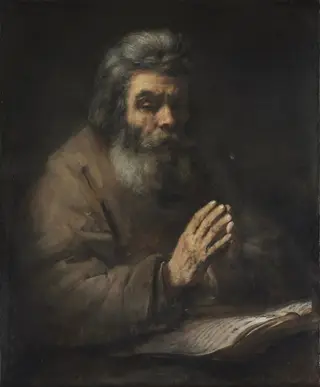
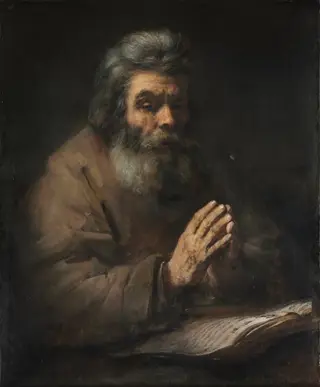
This oil on canvas painting, titled The Apostle Paul, presents a solitary figure engaged in study within a dimly lit, austere setting. The artwork captures a moment of quiet introspection, with the subject, identified as the Apostle Paul, absorbed in a book. It is characterized by a restrained visual narrative that emphasizes spiritual contemplation over elaborate detail.

Own this work as a print
Artist & collection

Artist
Rembrandt Harmenszoon van Rijn, known mononymously as Rembrandt, was a Dutch Golden Age painter, printmaker, and draughtsman.