Fallen Tree by Calame, Alexandre
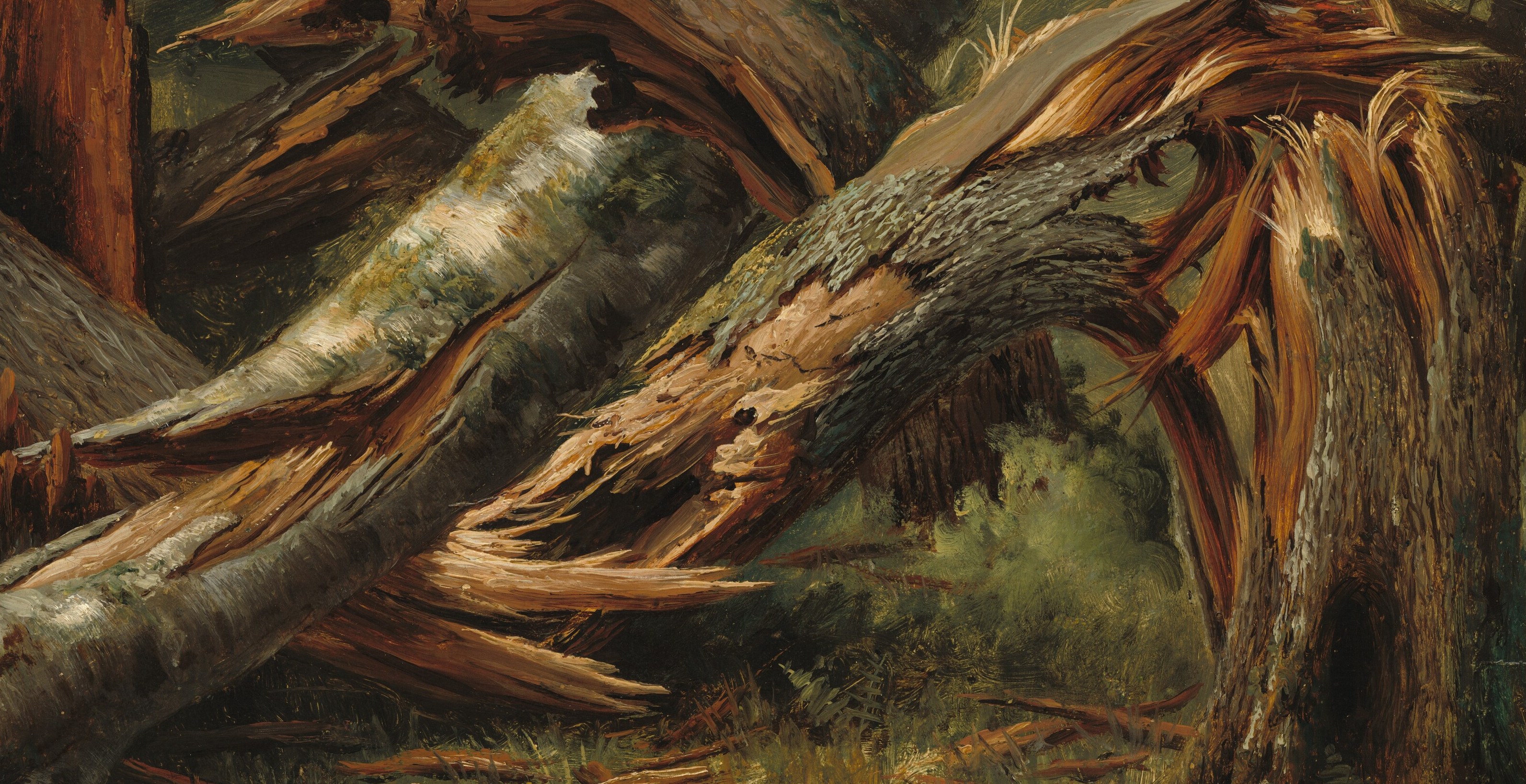
Alexandre Calame's "Fallen Tree," painted in 1842, captures a moment of dramatic disruption in nature. This oil on paper, later mounted on canvas, invites contemplation of nature's cycles of growth and decay, a common theme in Romantic landscape art.
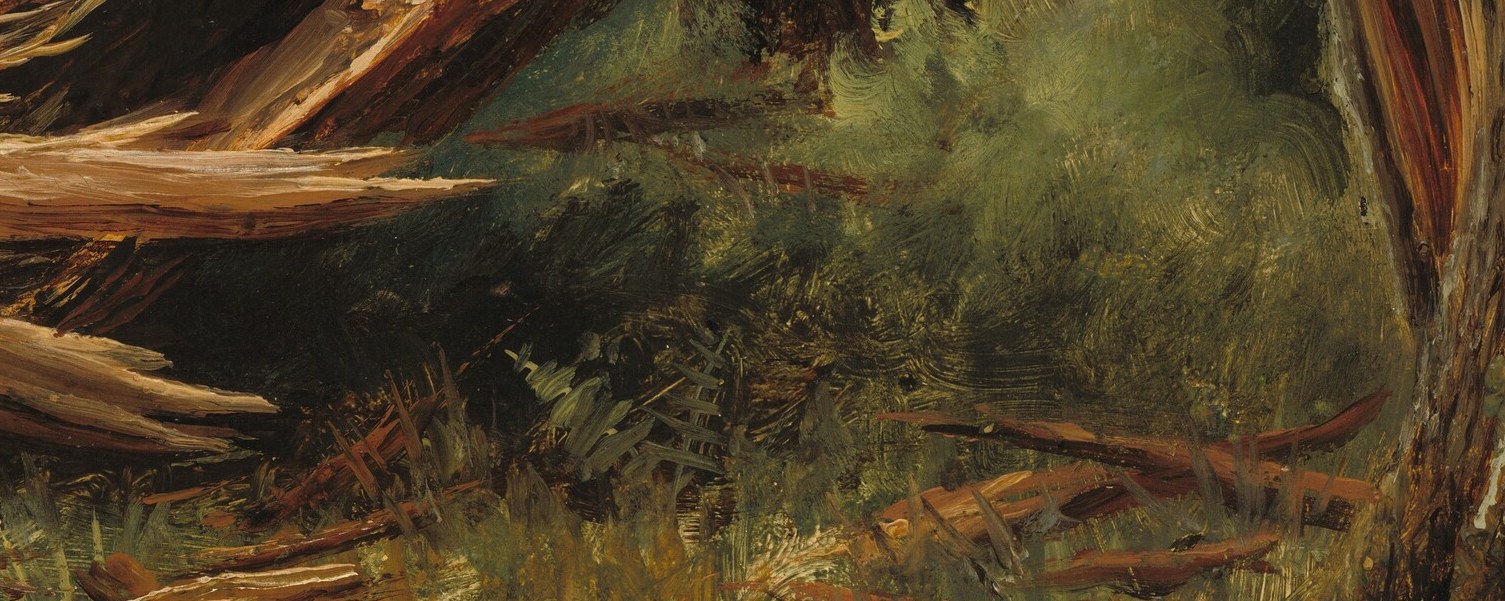
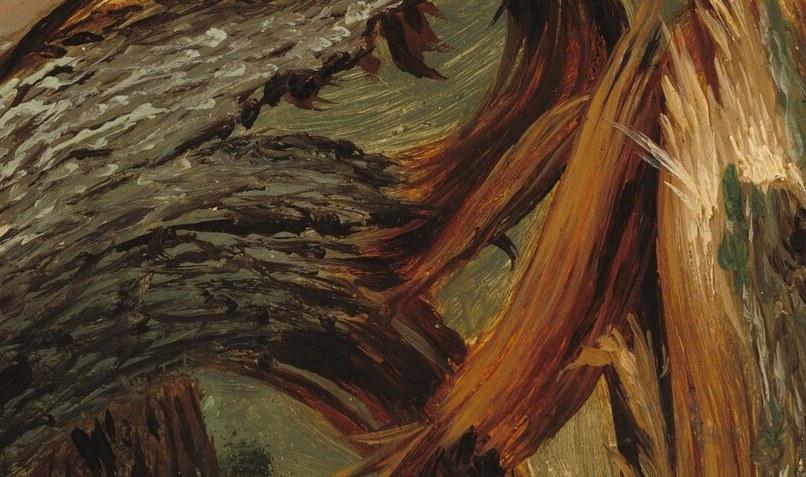
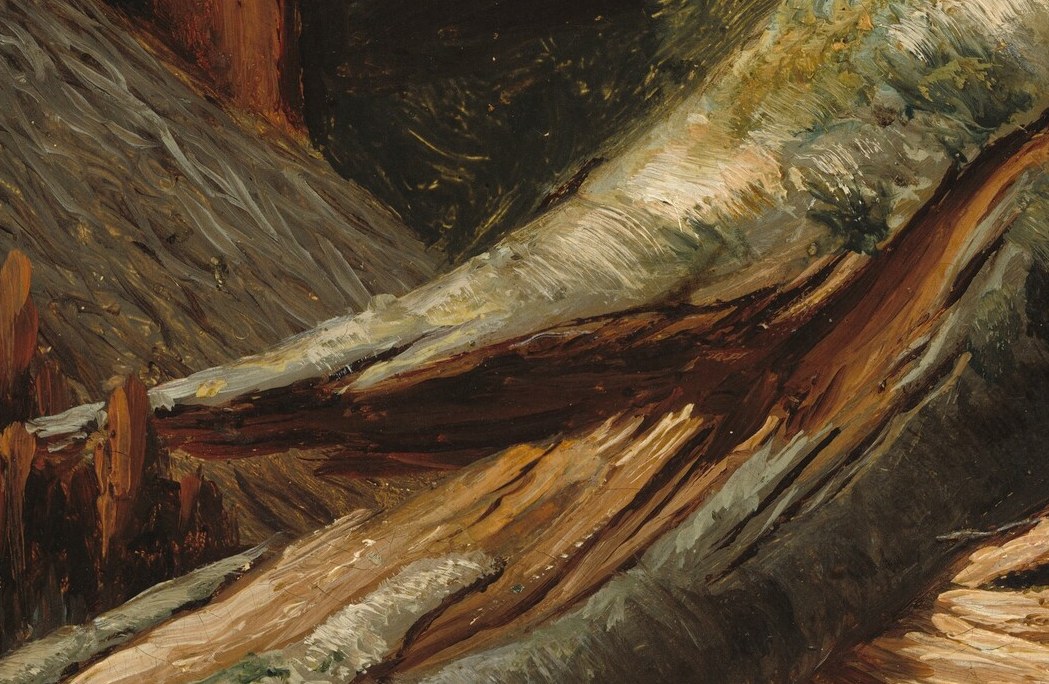
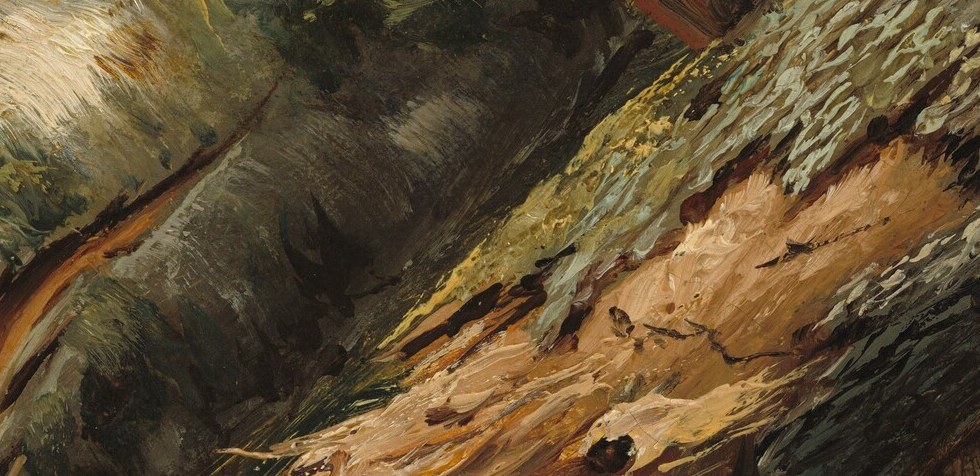
Look closely at the shattered branches and the exposed roots. Calame's thick, expressive brushwork builds a palpable surface texture, especially on the bark and broken limbs, emphasizing the tree's roughness and the force of its fall.
This work reflects Calame’s early period before his later Alpine subjects. The choice of oil on paper was practical for his studio practice at the time, allowing for the visible impasto that makes the tree's texture so vivid. Its dramatic treatment aligns with Romantic landscape conventions, focusing on emotional resonance over precise naturalism.
What do you notice first about this powerful scene?
Details
Transcript
This painter often captured the quiet power of nature. But here, something violent has happened. A massive tree, ripped from the earth. Its trunk is splintered, its branches shattered. The artist used thick paint to capture the raw texture. It's an oil painting, but on paper, then canvas. Even in ruin, life clings to the fallen wood.