Interior of the Oude Kerk, Delft by Emanuel de Witte
Emanuel de Witte painted the interior of Delft's Oude Kerk around 1650, and the real subject isn't the architecture. It's the air.
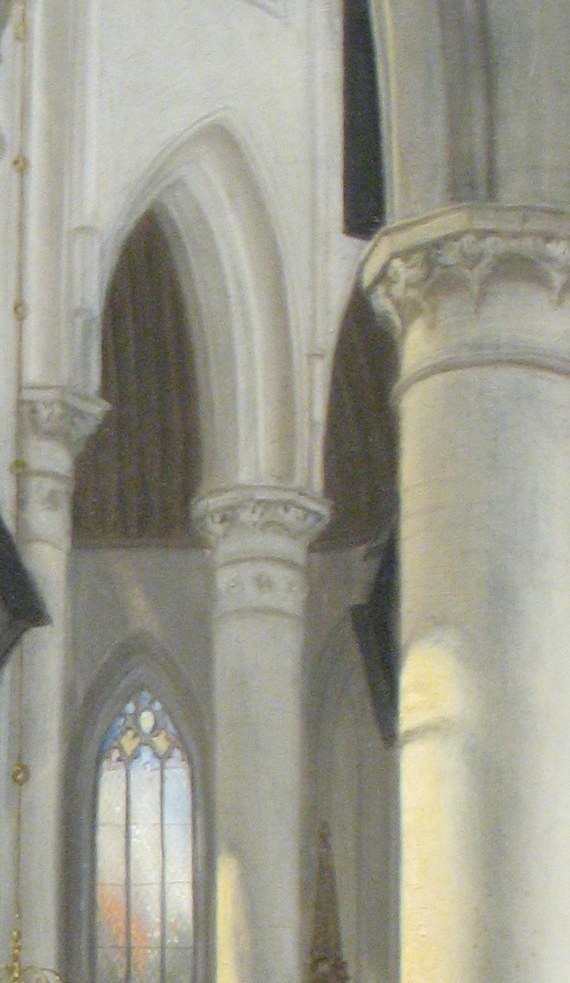
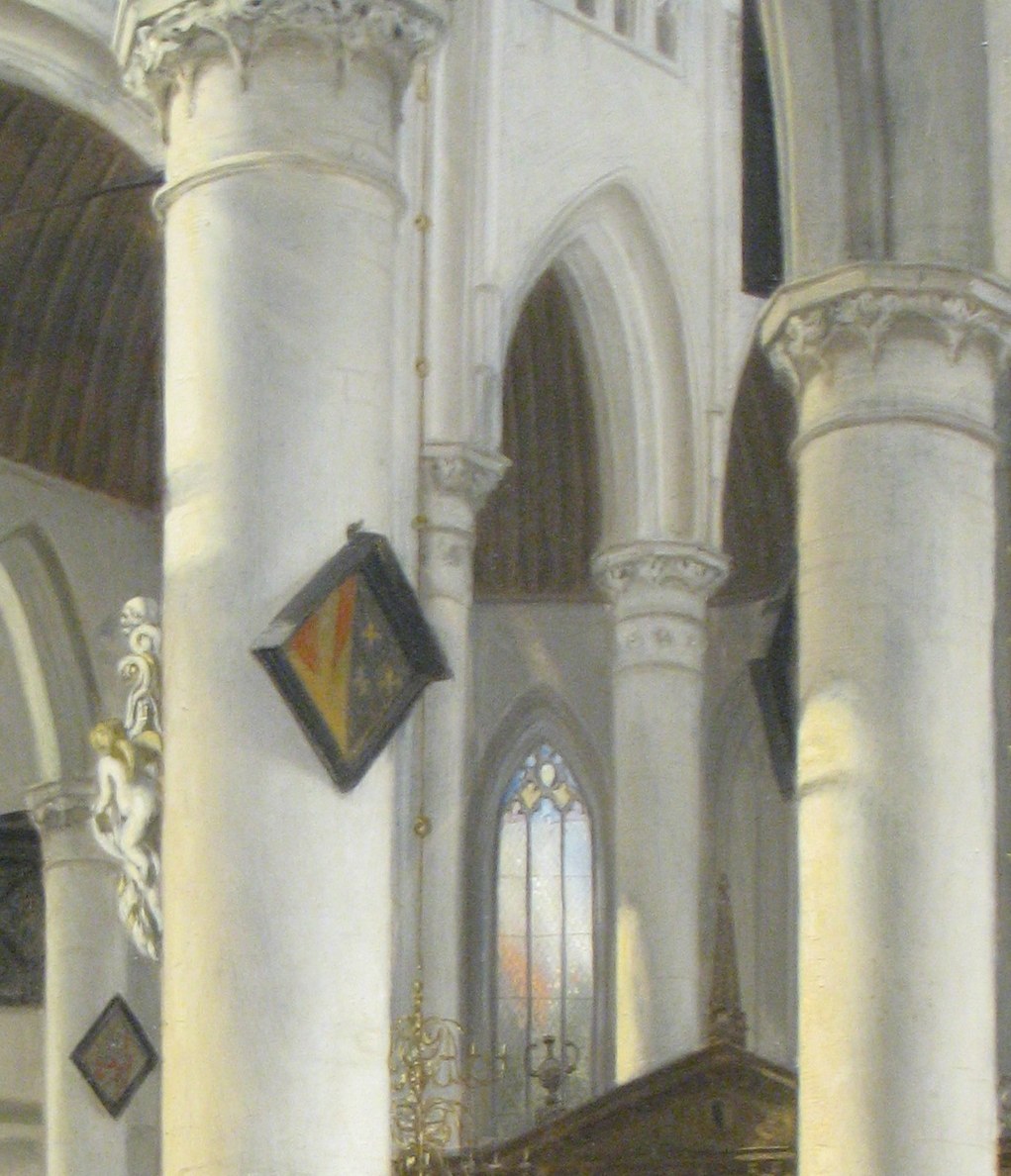
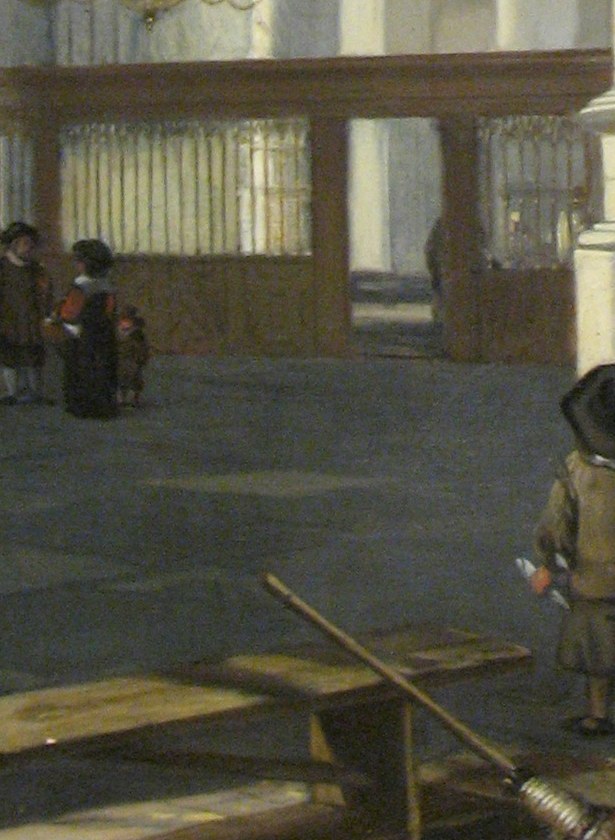
Look at the columns. They don't fall into black shadow the way a stone pillar should. Instead, the light wraps around them, softening every edge. The far wall of the church barely registers as solid, it dissolves into a grey-gold haze. De Witte achieved this by building up the paint in countless tiny tonal shifts, never letting a single hard shadow interrupt the atmosphere. The result is a space that feels flooded with light, even though you can't point to a single sunbeam.
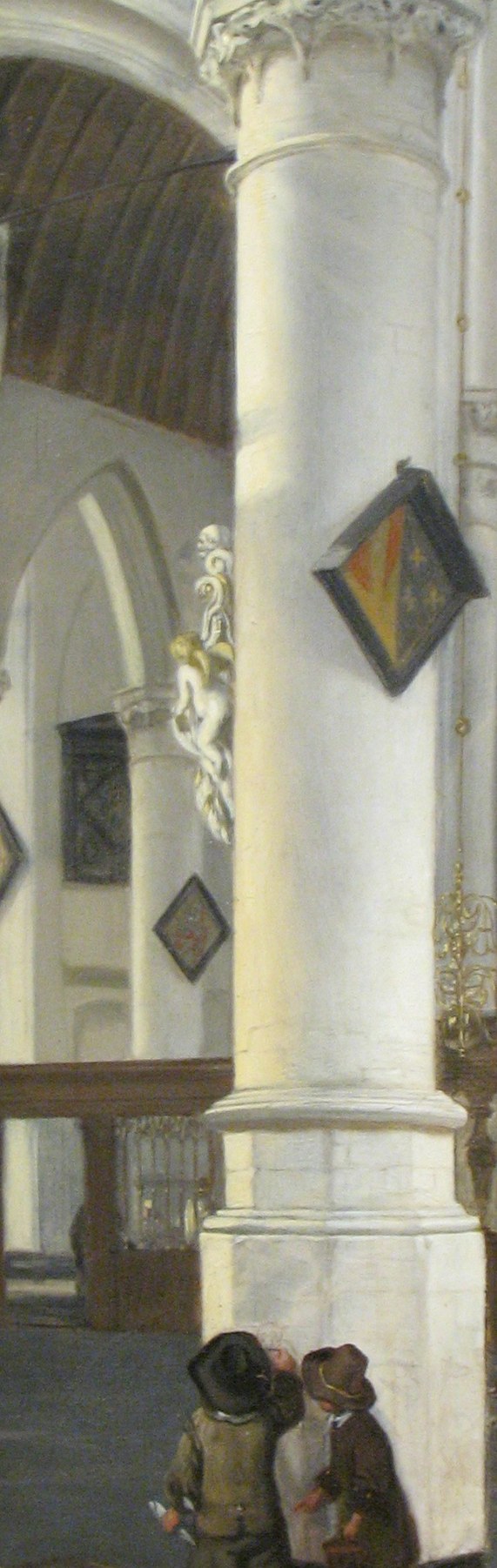
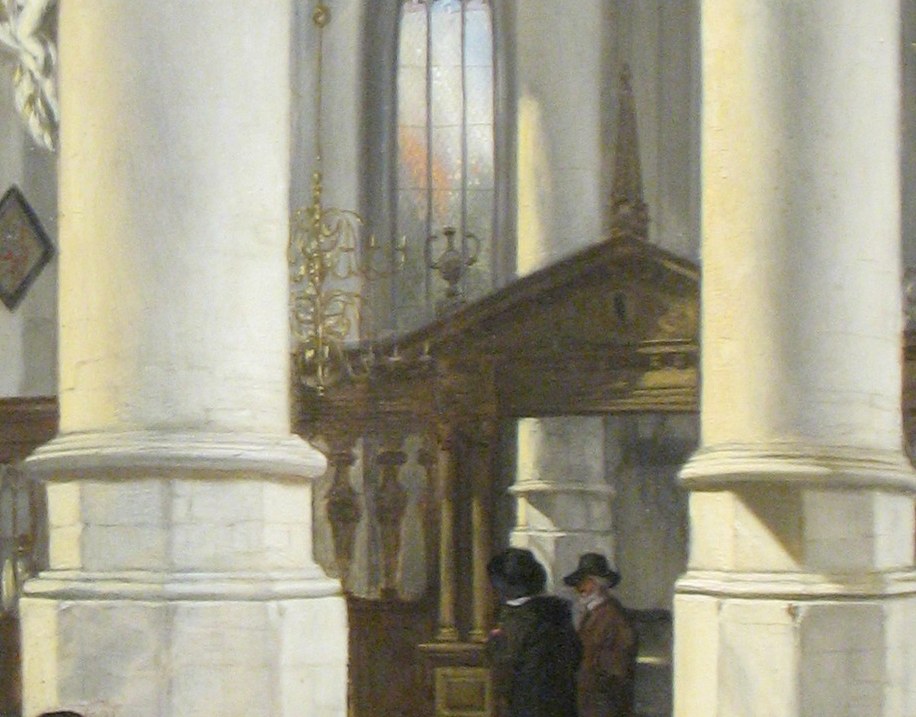
Dutch church interior painters faced a technical problem: how do you make a vast stone void feel full, not empty? Saenredam solved it with crisp geometry. De Witte solved it with tone. He understood that distant objects don't just get smaller, they lose contrast. The air between you and them scatters the light. That's what he painted: the scattering itself. The two children in the foreground are sharp; the figures at the far end are nearly ghosts.
The Oude Kerk was a living civic space, not a monument. The whitewashed walls are a Protestant edit, Catholic frescos were scrubbed away during the Reformation. The diamond-shaped hatchment on the column marks a recent death in a local family. The white dog wanders through like it owns the place. This is a church full of people and memory, and De Witte makes you feel the quiet weight of all of it pressing into the light.
Next time you're in a large indoor space, notice how the far wall looks. Chances are, it looks a lot like this painting.
Details
Transcript
A church built of cold stone should feel dark. But this space glows. The light isn't a single beam. It's everywhere at once. De Witte didn't paint the light source. He painted the air the light travels through. Tiny shifts in tone. Warm grey to cool. Never a hard edge. By the time your eye reaches the far wall, the stone has dissolved into atmosphere.