The Crucifixion of Saint Andrew by Caravaggio
View the artwork: The Crucifixion of Saint Andrew →
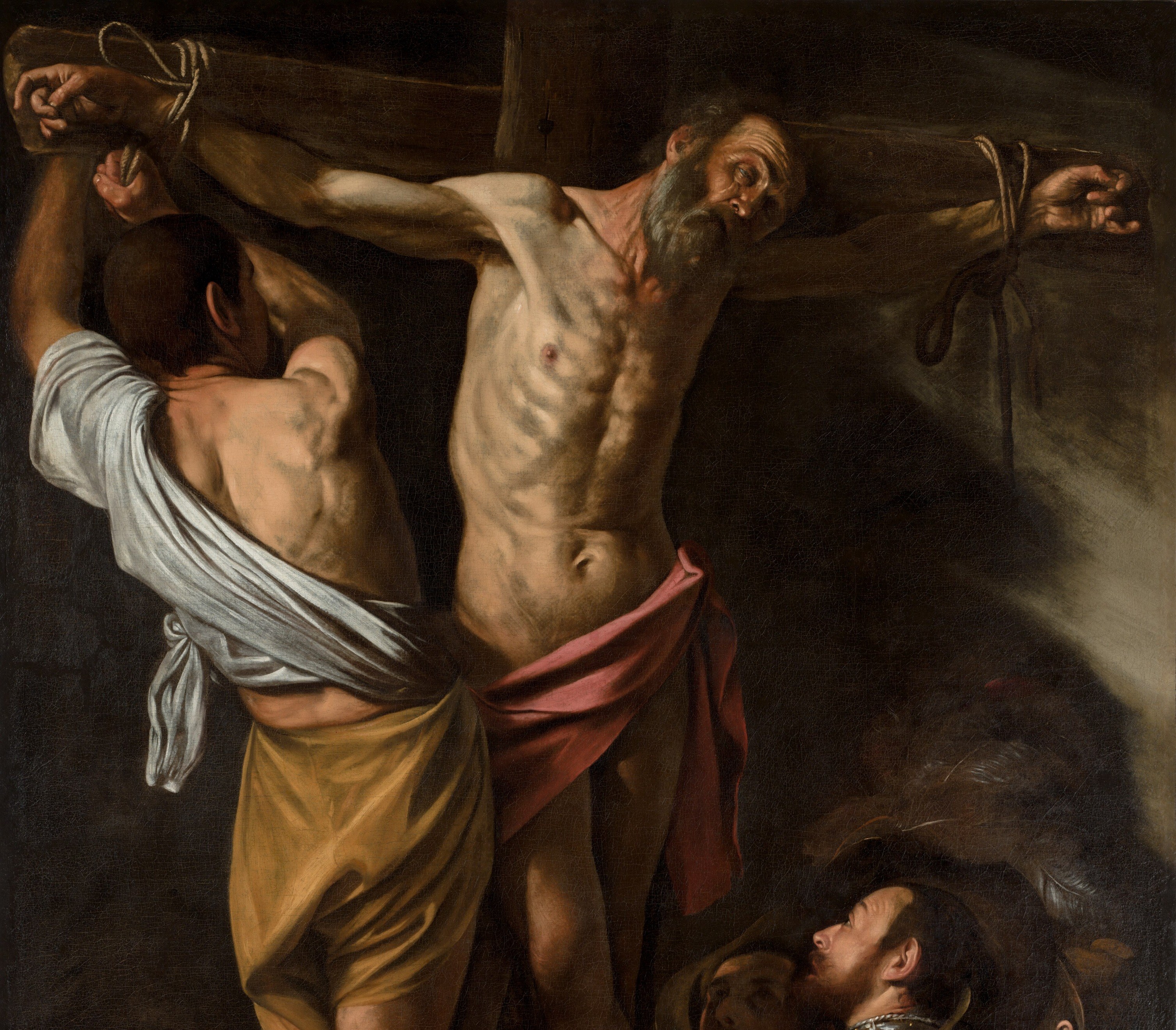
Caravaggio's The Crucifixion of Saint Andrew is a fugitive's meditation on a death willingly chosen. Painted in Naples in 1607, it arrived just three years before the artist himself would die on a desperate journey to secure a papal pardon for murder. The Cleveland Museum of Art acquired this Baroque powerhouse in 1976, tracing its path from Naples to the Spanish Viceroy's palace and finally to Madrid.
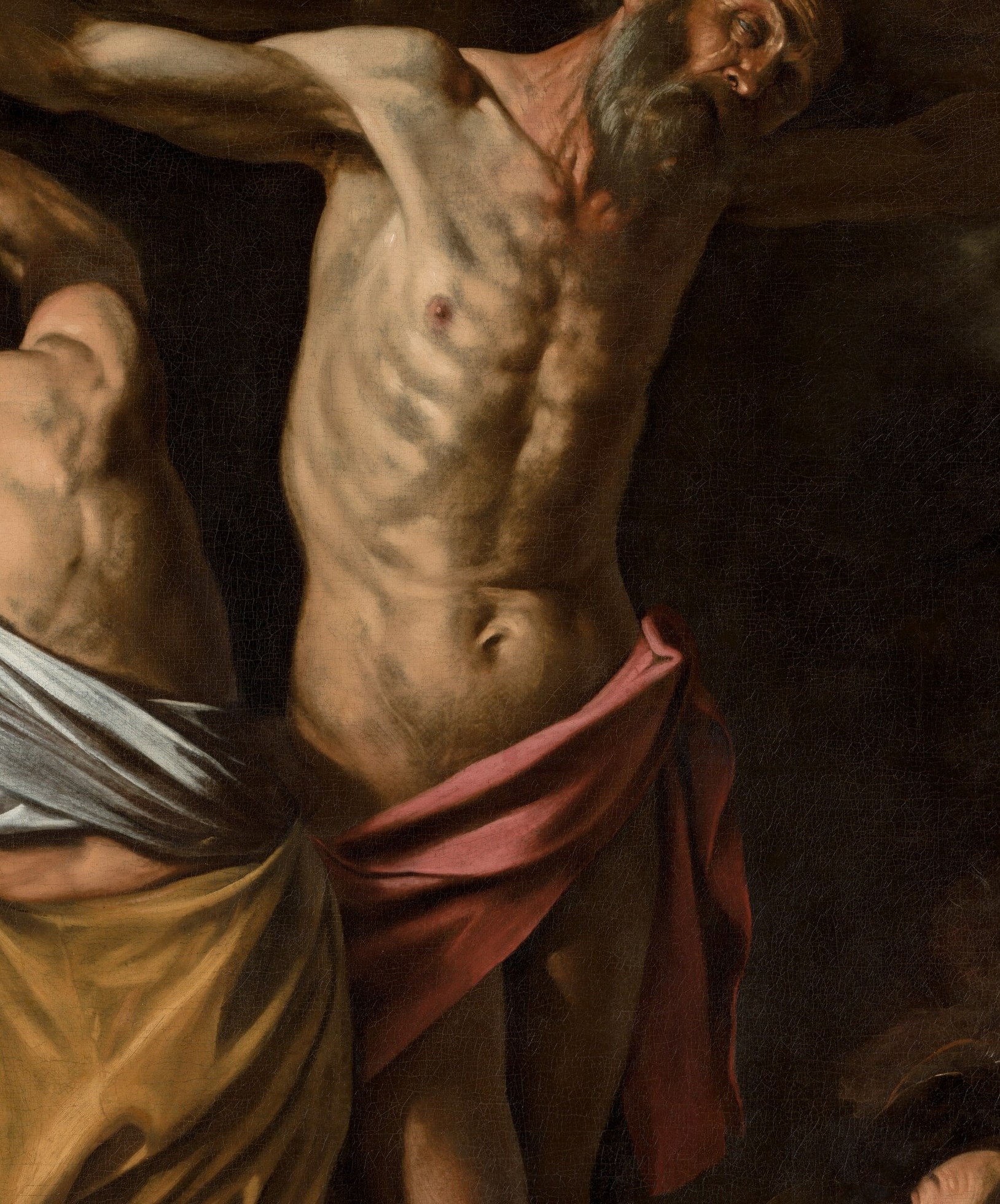
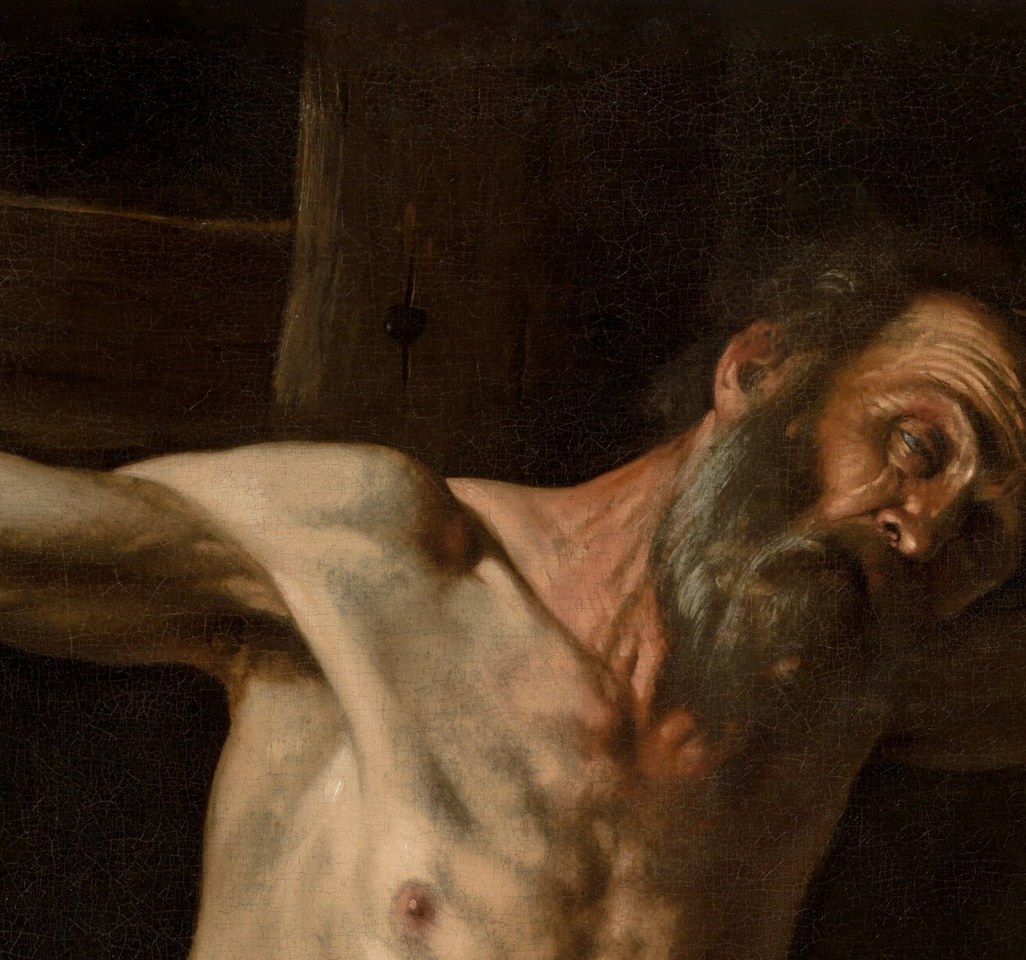
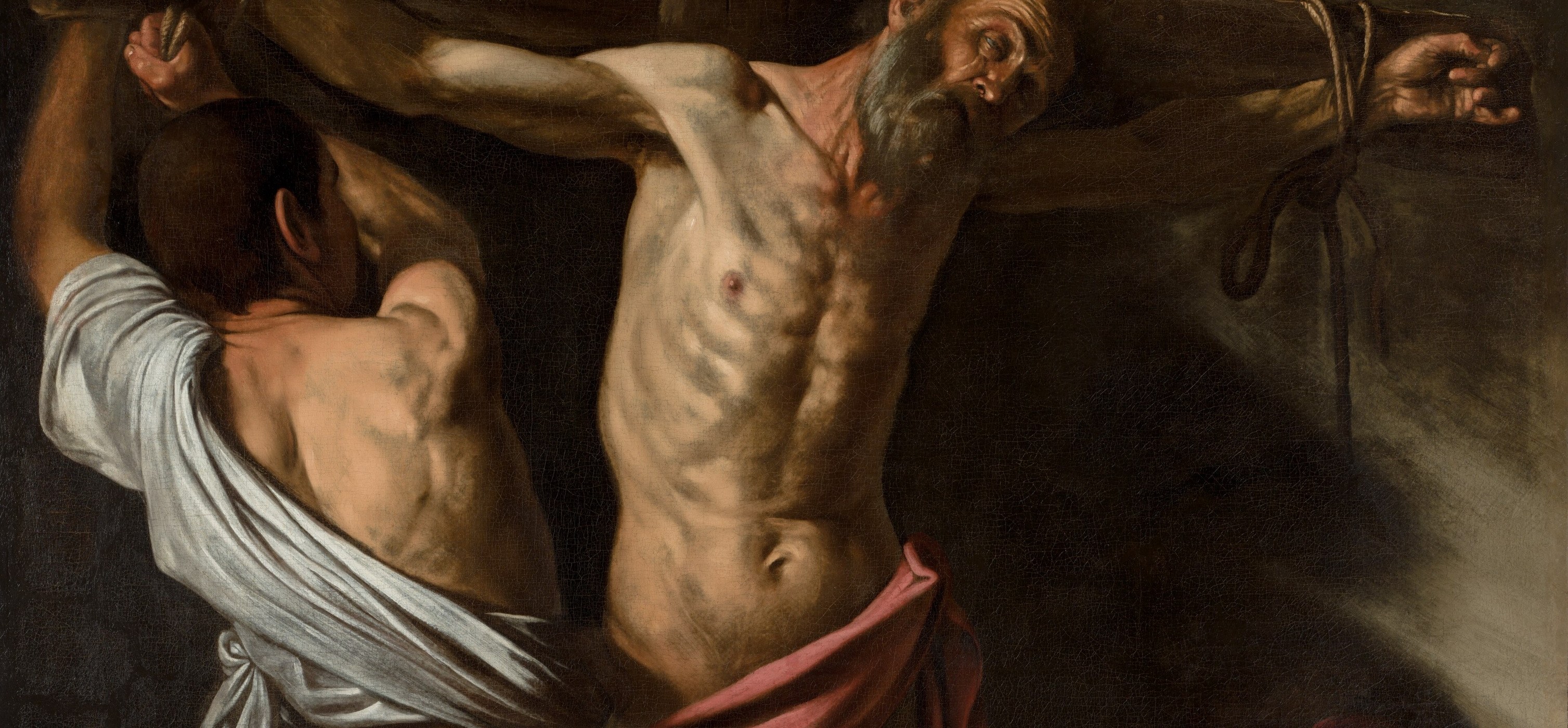
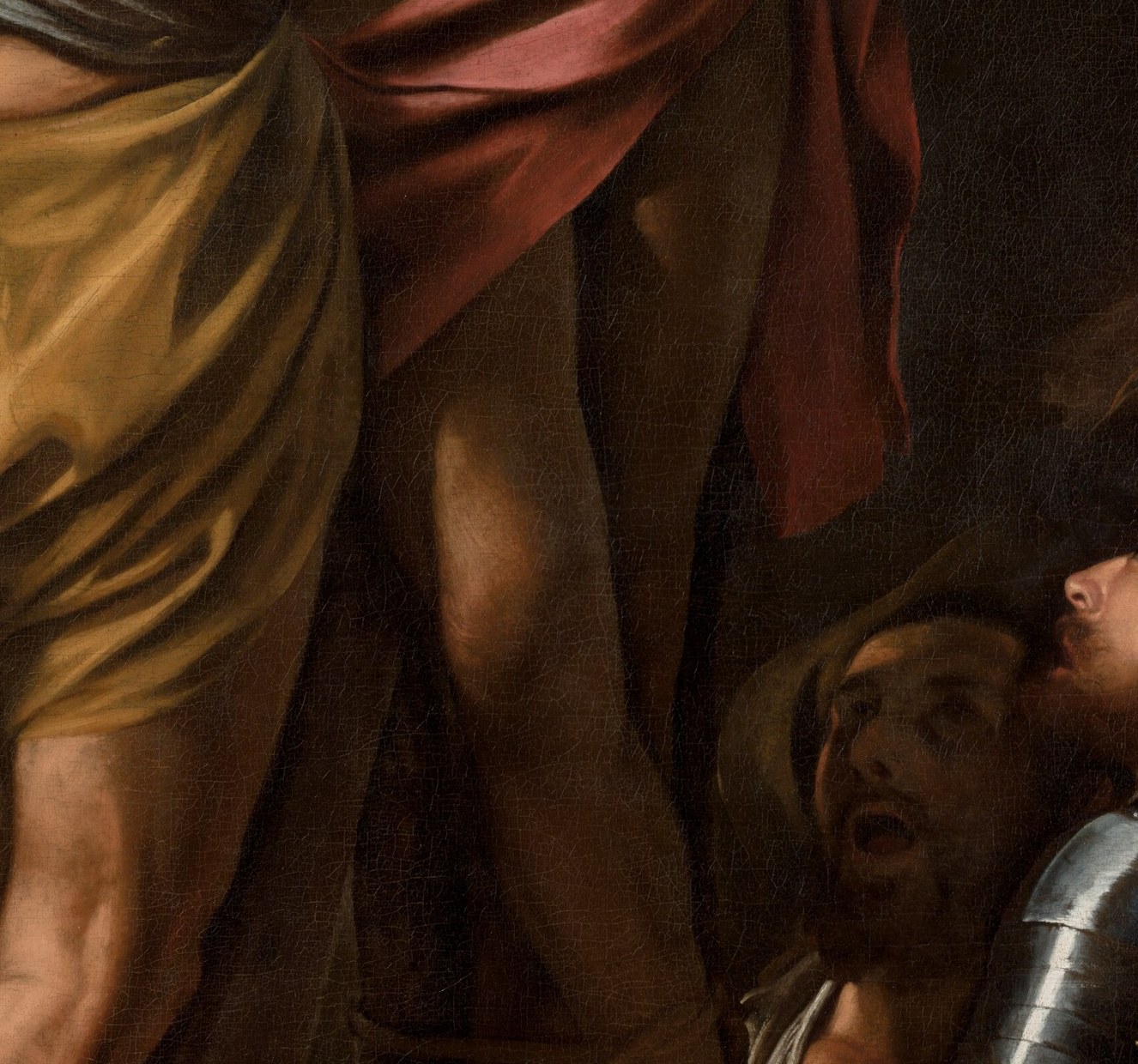
Watch where Caravaggio places his light. Andrew's torso blazes against a void so complete it feels like an active presence. His head is thrown back, his mouth open in ecstasy rather than agony, he prayed for martyrdom, not rescue. The ropes binding his wrists are a crucial doctrinal detail: he was bound, not nailed, so he could survive on the cross preaching to the crowd, converting them until they demanded his release. The darkness behind him is the painting's true engine; Caravaggio eliminates setting entirely so you have nowhere to retreat from the confrontation.
The figure lower right is the Roman Proconsul Aegeas, who ordered Andrew taken down. When his soldiers moved to obey, they were struck by a miraculous paralysis in answer to the saint's prayer. Andrew wanted this death. Caravaggio, a man who knew violence intimately, painted that paradox with terrible clarity, the joy inside the agony, the victory inside the defeat.
What would it cost to look at your own death and see only light?
#arthistory #caravaggio #baroque
Details
Transcript
1607. Caravaggio is a wanted man. He has fled Rome after killing a man. In Naples, he paints a saint begging for death. Andrew's mouth is open in ecstatic prayer. He will preach for two days from this cross. Below, the Roman proconsul ordered him freed. His soldiers were struck paralyzed for defying a saint's wish.