Artwork
The Crucifixion of Saint Andrew
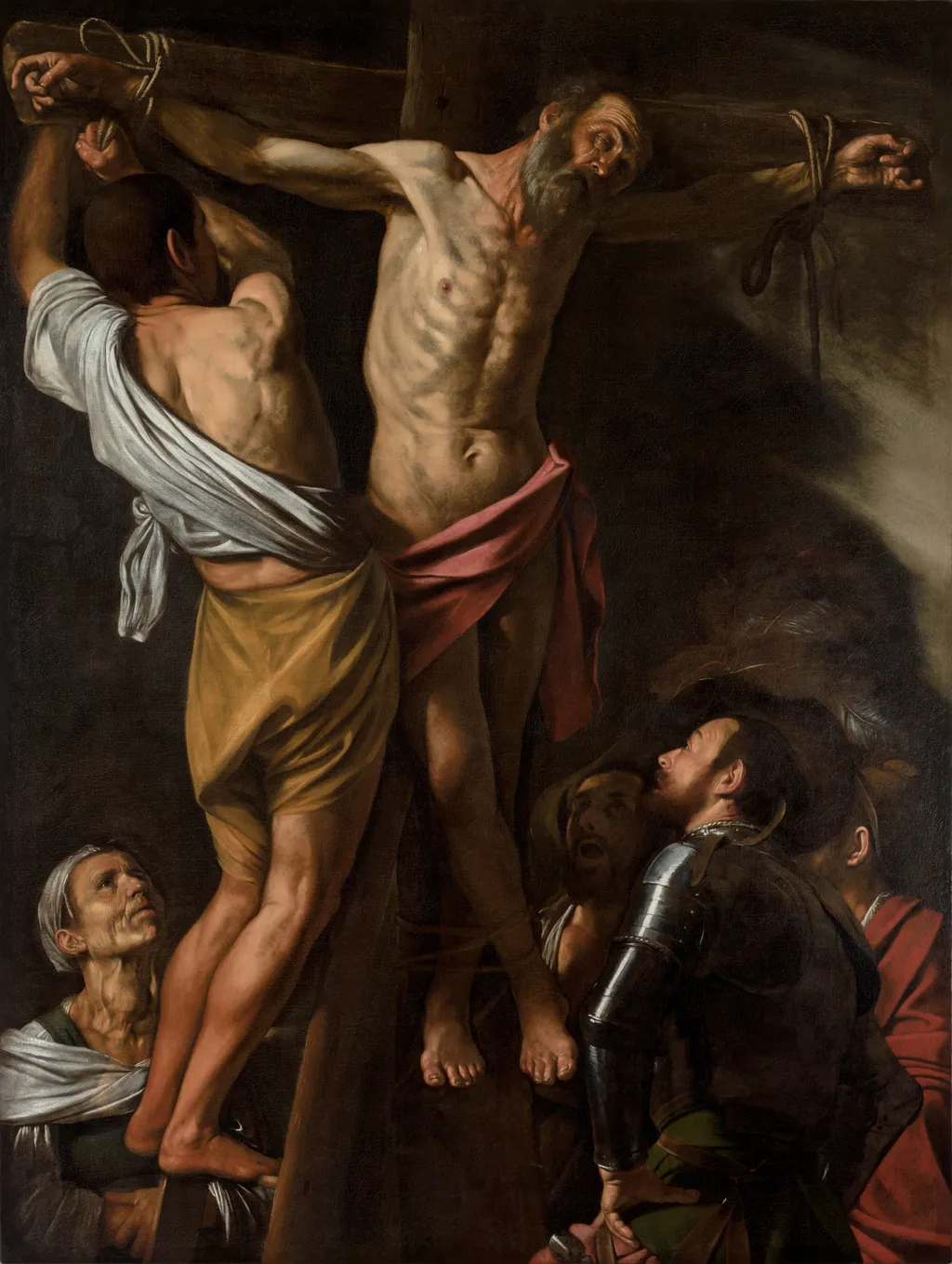
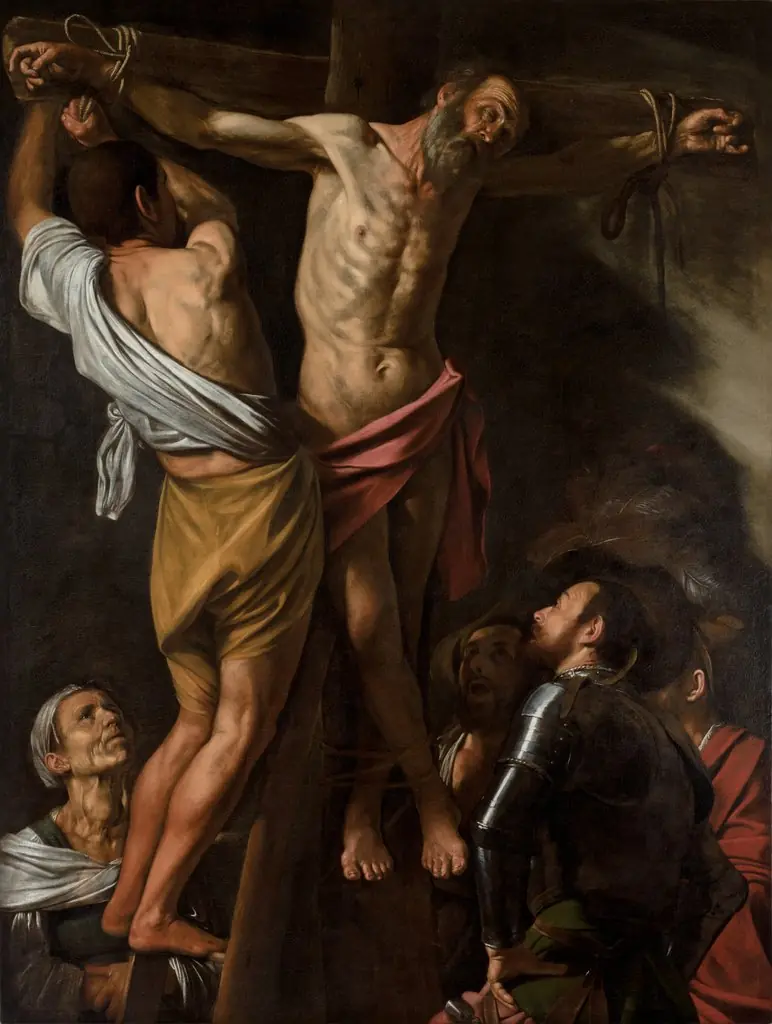
The Crucifixion of Saint Andrew is an oil painting by the Baroque artist Caravaggio. It dates from 1607 and is held in the collection of the Cleveland Museum of Art.
About this work
In 1610 the Spanish Viceroy of Naples carried this canvas to Valladolid, where it hung for centuries before reaching the Cleveland Museum of Art in 1976.
In 1610 the Spanish Viceroy of Naples carried this canvas to Valladolid, where it hung for centuries before reaching the Cleveland Museum of Art in 1976. Caravaggio painted the apostle Andrew bound with ropes to a Latin cross, not the usual X shape, his body twisting as executioners struggle to free him. The proconsul Aegeas, who ordered the martyrdom, watches from the lower right as divine light cuts through the dark.
Subject & Meaning
The painting depicts the martyrdom of Saint Andrew, who according to the Golden Legend was bound to a cross and survived two days preaching, converting the crowd. Caravaggio captures a miraculous moment: as the proconsul Aegeas, shown lower right, orders his release, the saint dies just as the divine light fades, signifying his acceptance of martyrdom. The saint's emaciated figure, with contracted hands and wide eyes, conveys physical and spiritual intensity.
Unusually for later iconography, Andrew is crucified on a Latin cross rather than the diagonal X-shaped cross, reflecting 16th-century belief. Bystanders include a realistically rendered old woman and an armored proconsul; the composition, with a gap near Aegeas, invites the viewer to participate in the scene. The work's meaning centers on steadfast faith and miraculous divine intervention.
Technique & Style
Executed in oil on canvas, the painting measures 202.5 × 152.7 cm. Belonging to the Baroque period, it showcases Caravaggio's characteristic tenebrism and naturalism. The saint is depicted on a Latin cross rather than the traditional diagonal form, reflecting 16th-century iconographic conventions. The composition employs a low-angle half-length view, inviting the viewer into the scene.
Handling is marked by striking realism: the old woman at lower left displays a prominent goiter, the executioner's physique recalls Michelangelo, and the proconsul's armor is finely detailed. The saint's emaciated body, wide eyes, and open mouth convey his moment of death. The dramatic chiaroscuro enhances the miraculous event.
History & Provenance
The painting was commissioned by Juan Alonso Pimentel de Herrera, 5th Duke of Benavente and Spanish Viceroy of Naples, who was especially devoted to Saint Andrew. It was likely painted in 1607, though some sources date it between 1606 and 1610. When the viceroy returned to Spain in 1610, he brought the work to his family palace in Valladolid.
There it was appraised in 1653 at 1,500 ducats, the highest value painting in the family collection. At an unknown date, it was transferred to a Castilian convent before emerging in the 20th century in the Arnaiz collection in Madrid. The Cleveland Museum of Art acquired it from that collection in 1976.
The Cleveland version is widely accepted as Caravaggio's original, though three other versions exist, one of which has been attributed to Caravaggio as a second version since 2011.
The painting is held in the collection of the Cleveland Museum of Art, which acquired it in 1976 from the Arnaiz collection in Madrid. It was brought to Spain in 1610 by Juan Alonso Pimentel de Herrera, the 5th Duke of Benavente and Spanish Viceroy of Naples, and was later installed in the family palace in Valladolid. No accession number or detailed exhibition history is recorded in the provided sources.
Context
The painting's critical reception began early, as it was appraised in 1653 at 1,500 ducats, the highest value in the Benavente collection. Scholarly debate has centered on authorship of multiple versions: mid-20th-century art historians Giuseppe Fiocco, Hermann Voss, and Antonio Morassi attributed one copy to Caravaggio, but the 1974 rediscovery of the Cleveland canvas prompted a reassessment. Since 2011, the former Back-Vega version has been reattributed to Caravaggio as a second autograph work.
The painting was recognized as an original by Xavier de Salas and acquired by the Cleveland Museum of Art in 1976. Made for the Spanish Viceroy of Naples, it exemplifies Caravaggio's Baroque style and features an iconographically unusual Latin cross, reflecting the artist's wider context of patronage and his influence on religious art.
Overview
Caravaggio's oil painting, The Crucifixion of Saint Andrew, completed in 1607, is a notable example of Italian Baroque art. This work vividly portrays the final moments of Saint Andrew's martyrdom, rendered with intense realism and dramatic lighting. The canvas is part of the collection at the Cleveland Museum of Art, having traveled from Naples to Spain before its eventual acquisition. It exemplifies the artist's signature approach to religious narrative through stark contrasts and emotional depth.
Own this work as a print
Artist & collection
Artist
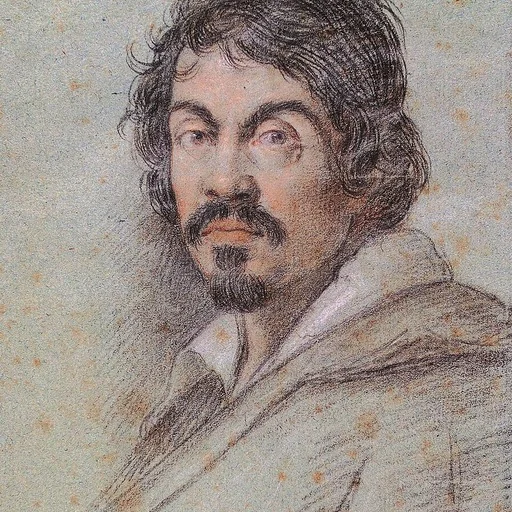
Michelangelo Merisi da Caravaggio (also Michele Angelo Merigi or Amerighi da Caravaggio; 29 September 1571 – 18 July 1610), known mononymously as Caravaggio, was an Italian painter active in Rome for most of his artistic life.

 Compared in the Caravaggio & Baroque course