The Resurrection of Christ and the Harrowing of Hell by http://www.wikidata.org/.well-known/genid/99778a3964e83bf78f489816ff9cc4fe
This is a Russian Orthodox icon from around 1800, titled 'The Resurrection of Christ and the Harrowing of Hell'. It is not one scene but two fused into a single theological diagram. The surface is a code, and every object you see carries a precise meaning built over centuries of iconographic tradition.
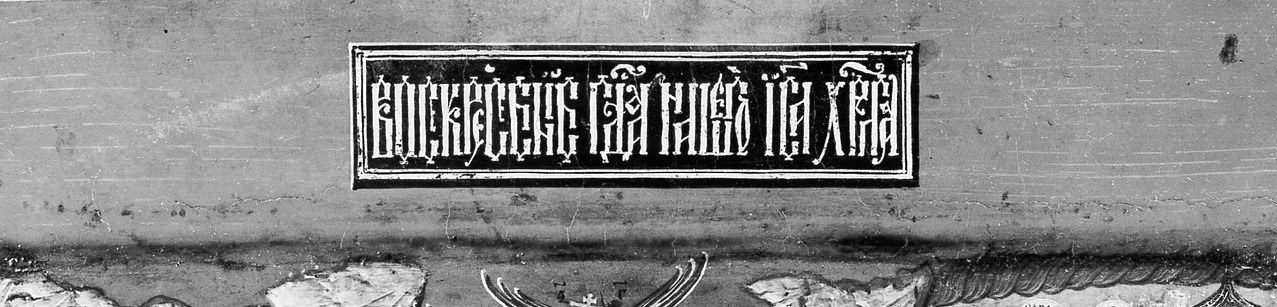
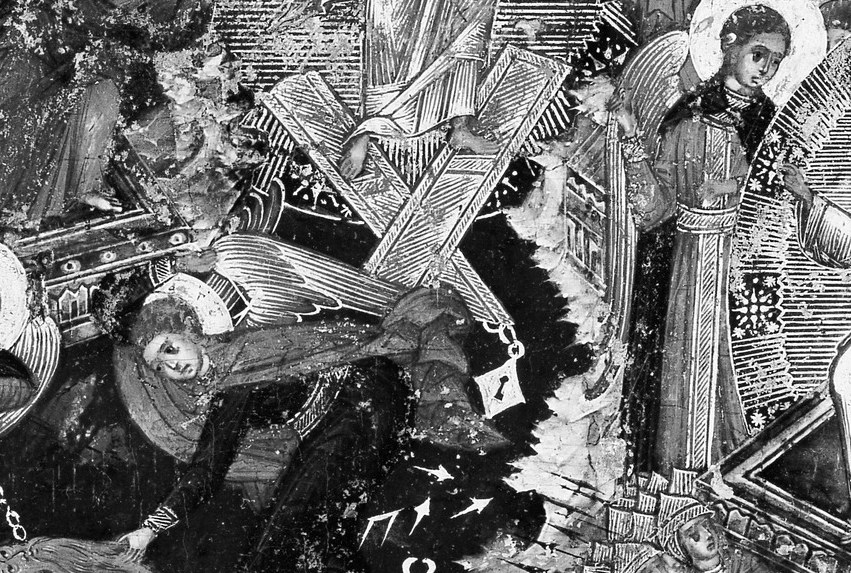
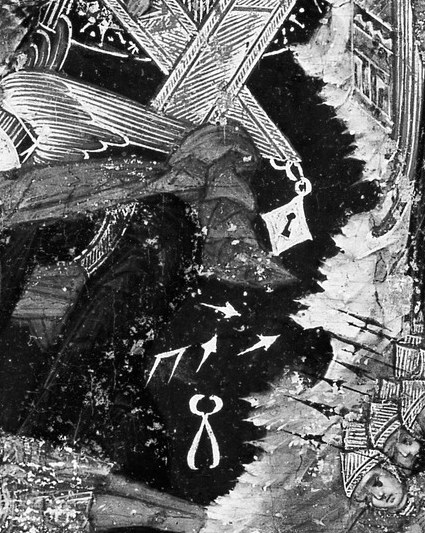
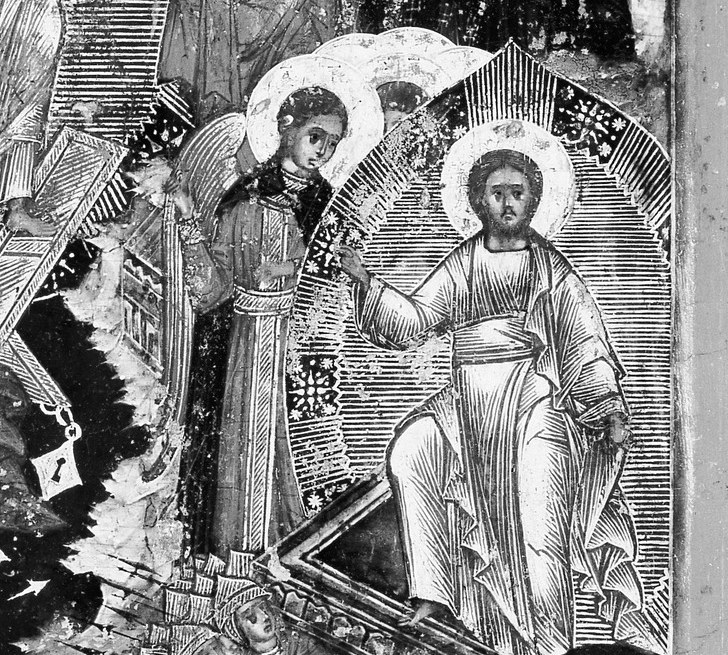
Start at the top. The Cyrillic inscription names the event, and a small dove at the apex completes the Trinity. The sharp starburst around Christ is the mandorla, a visual sign for uncreated divine glory, not natural light. Below his feet, the crossed doors with their broken locks and scattered keys are the literal gates of Hell, smashed from within.
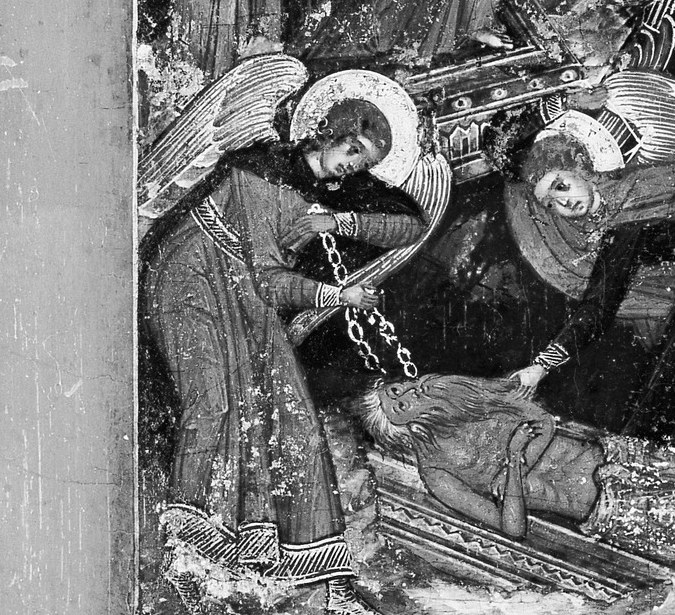
The warrior angels flanking the scene, armed with spears, reframe the Resurrection as a military victory. Orthodox theology calls this the Harrowing of Hell: Christ storming the underworld to free the captives. The first captive he grasps by the wrist is Adam, still prostrate, being pulled from the abyss.
Painted around 1800, this icon follows a visual language far older than the nineteenth century, one where drapery and posture carry more weight than facial expression. Every saint in the upper registers, every chained demon in the pit, is placed to teach. The painting wants you to read it.
Details
Transcript
It starts with an alphabet you may not read. It says: the Resurrection of the Lord Jesus Christ. The starburst around him is not light. It is a mandorla: divine glory made visible. Under his feet: shattered doors, locks, and bolts. These are the actual gates of Hell. The broken lock means death has no key left. Two angels wear full armor and carry spears. This is not a passive miracle. This is a military conquest of the underworld. And the first person he pulls from the pit is Adam.