Still life with flowers by Nicolaes Lachtropius
Nicolaes Lachtropius’s “Still Life with Flowers,” painted in 1667, is a prime example of 17th-century Dutch still-life painting, now housed at the Rijksmuseum. It subtly carries a profound message about life’s transience amidst its delicate beauty.
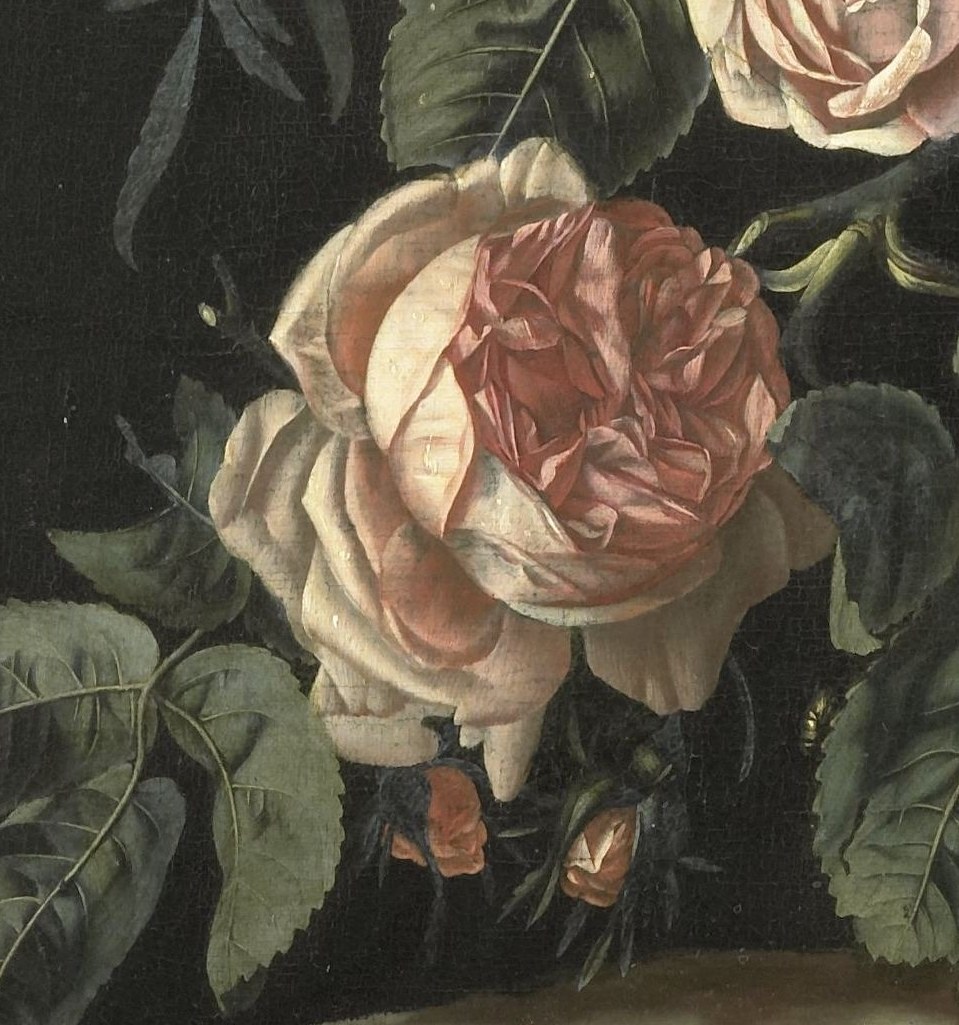
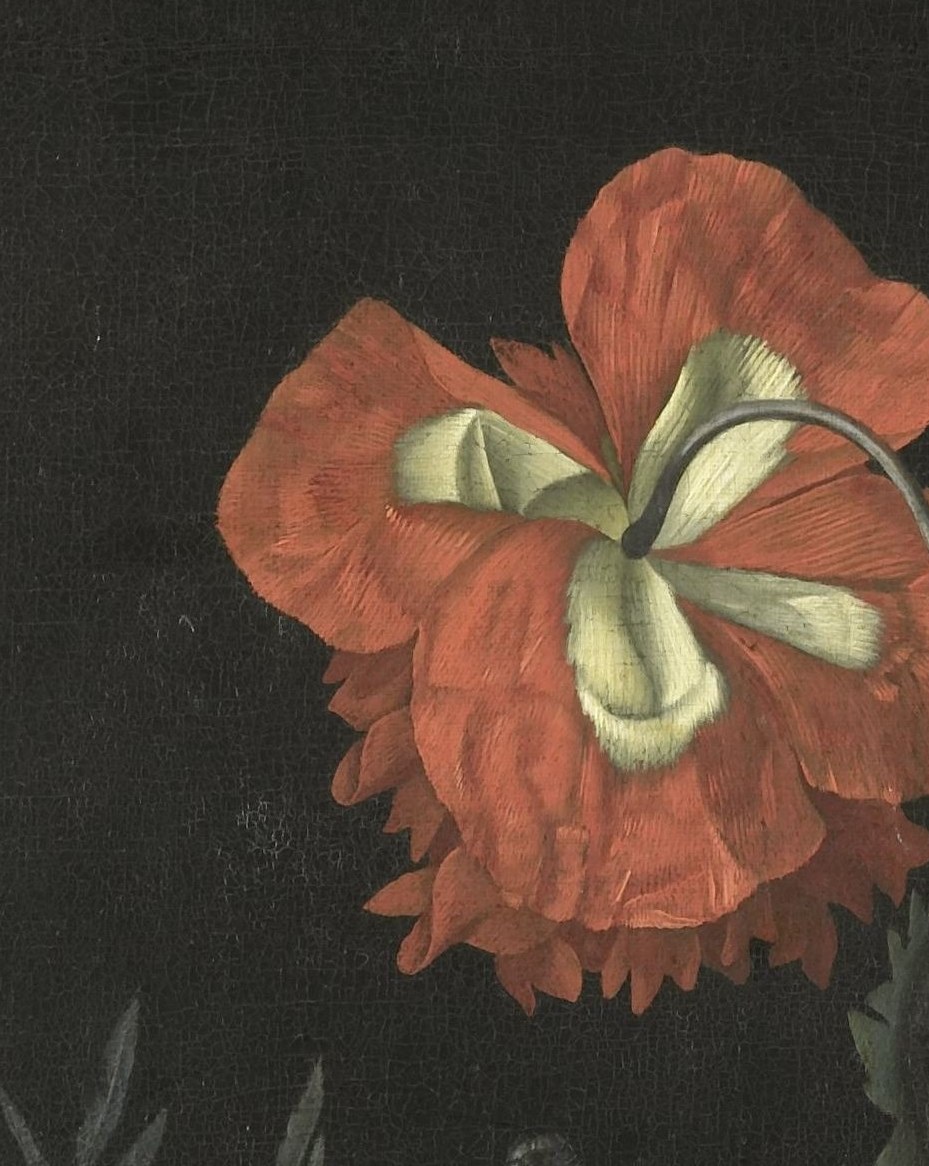
Observe the exquisite detail in each petal and leaf, achieved through layered glazing that gives the flowers a luminous, three-dimensional quality. The vibrant hues are intensified by the dark backdrop, drawing the eye to the central arrangement of poppies, roses, and a white bloom.
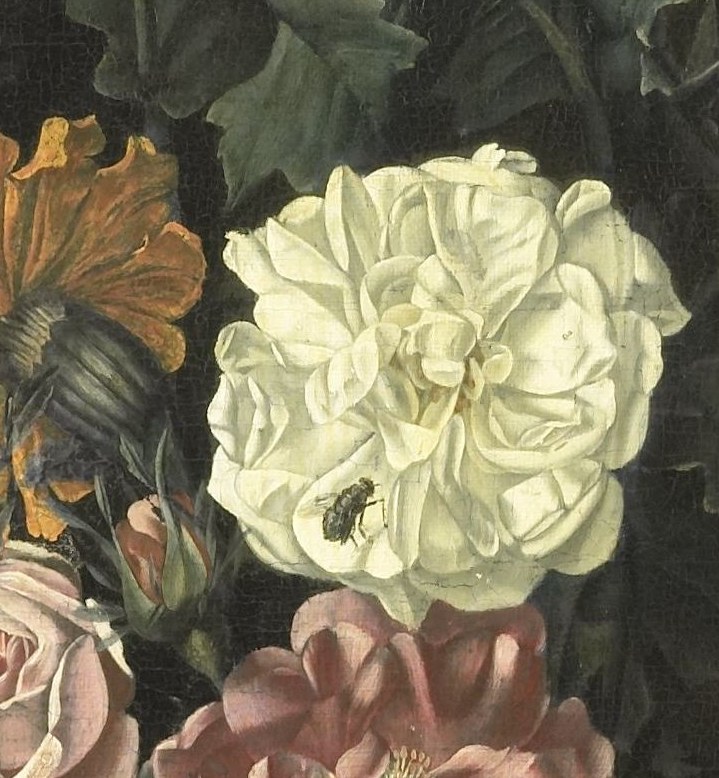
Yet, the painting subtly includes elements of memento mori, reminders of mortality. A tiny fly rests on a white rose, and a snail glides across the marble ledge. These small details, common in Dutch still lifes, invite contemplation on the fleeting nature of beauty and life itself.
Lachtropius's work aligns with the Dutch Golden Age tradition of showcasing both technical skill and philosophical depth through art. What other hidden details do you notice?
Details
Transcript
This 1667 still life shows delicate flowers, a Dutch specialty. The artist used layered glazing for depth and a gentle glow. He captures the fleeting beauty of cultivated nature. But look closely, there's a tiny intruder. A fly, a memento mori, reminds us beauty is transient. Even a snail on the ledge suggests nature's cycle.