Hagar and Ishmael by Robert Loftin Newman
Robert Loftin Newman’s "Hagar and Ishmael," painted in 1894, captures a poignant moment of biblical exile with profound emotional depth. Now part of the American Wing collection, this oil on canvas embodies Newman’s talent for narrative and mood-driven themes.
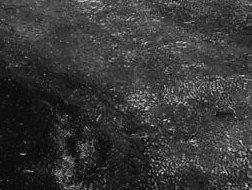
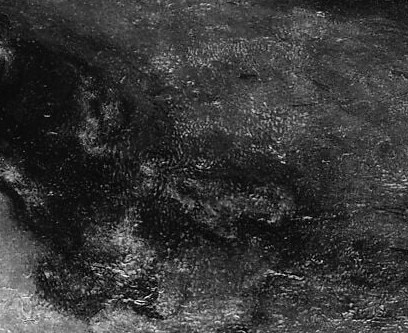
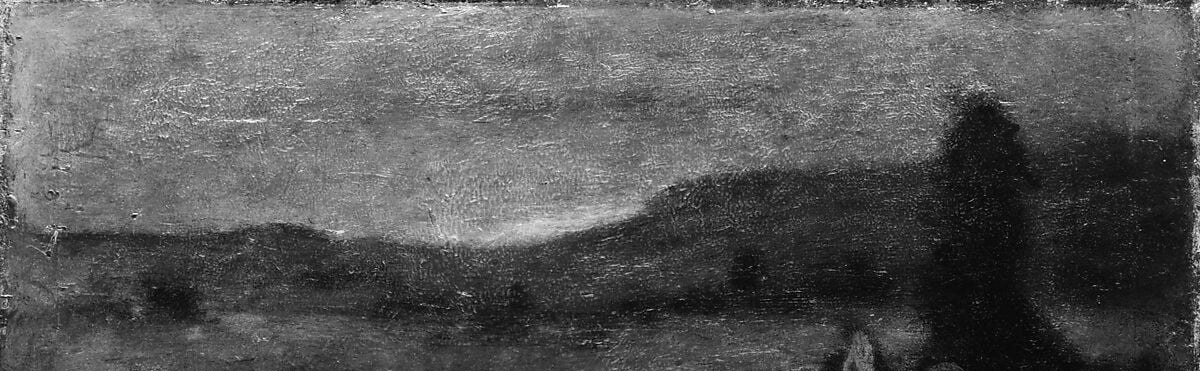
The painting shows Hagar, despairing with her head in her hands, and her son Ishmael, looking hopefully upwards in a barren desert. Newman's use of muted earth tones and soft brushwork evokes both the harshness of their situation and a quiet sense of introspection.
Newman, an American painter and stained-glass designer, was associated with American Impressionism, yet his approach often leaned into Realism's focus on human emotion. During the late 1800s, many American artists explored universal themes through religious subjects, a trend Newman embraced with his distinct focus on personal feeling over overt didacticism.
This work continues to resonate, illustrating themes of despair, resilience, and the fragile glimmer of hope found even in desolation.
Details
Transcript
This painting, by Robert Loftin Newman, dates to 1894. It shows Hagar and her son Ishmael, exiled in the desert. Hagar cradles her head, consumed by despair and exhaustion. Her heavy robe emphasizes her vulnerability and suffering. Ishmael stands nearby, looking up with a tentative hope. Newman focused on mood and emotion, not just biblical narrative. His subdued colors convey desolation, but also quiet introspection.