Distinguished Crow Indians by Catlin, George
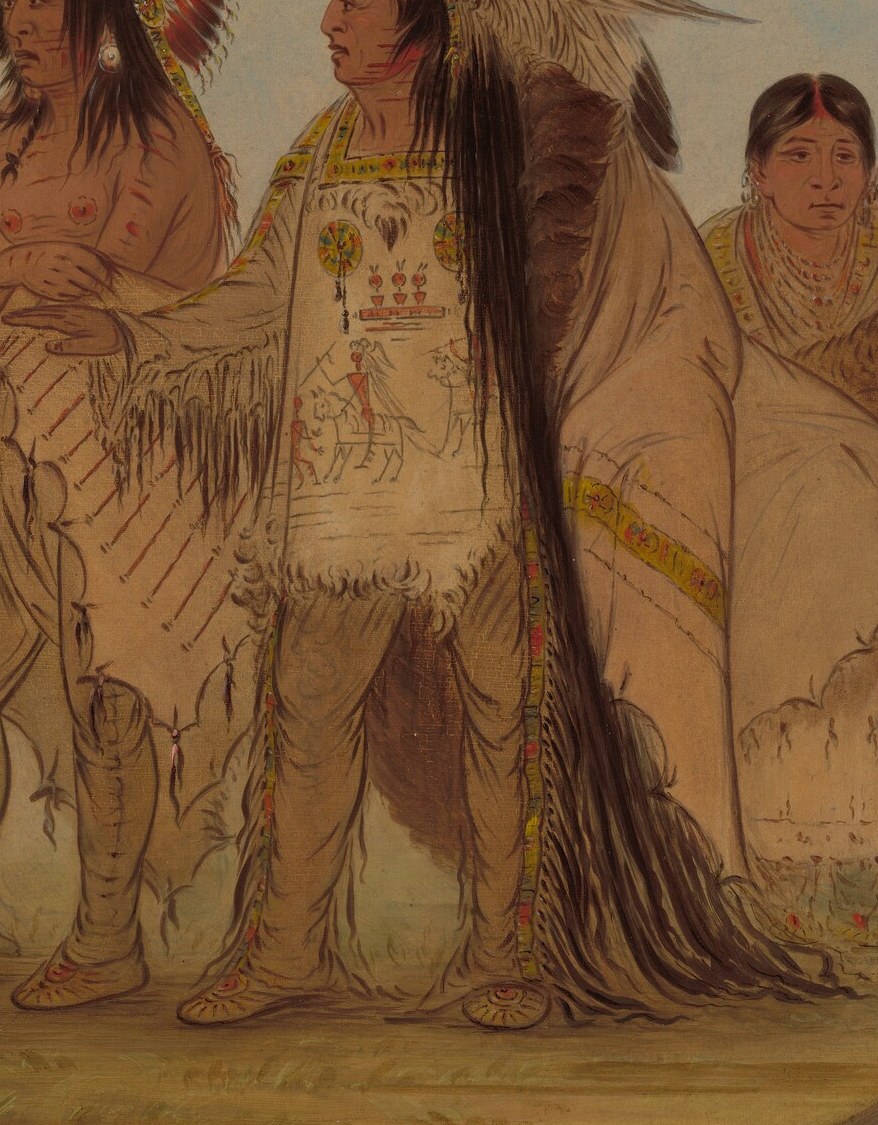
In "Distinguished Crow Indians," George Catlin (1861/1869) captured the rich cultural practices of Native Americans, a painting now held at the National Gallery of Art in Washington, D.C. This work is part of his lifelong effort to document Indigenous life in the American West.
Look closely at the figures' regalia. The central figure's elaborately patterned robe and feathered headdress are not merely decoration; they are rich with symbolic meaning, connecting the wearer to status and the spirit world. The eagle perched on his shoulder further emphasizes power and vision, while a bow on the far left quietly speaks to skills in hunting and defense.
Catlin, a lawyer-turned-painter, traveled the American West five times in the 1830s, creating extensive visual records of various tribes. His straightforward, unidealized style, characteristic of American folk art, aimed to preserve the appearance and customs of Plains peoples before widespread Euro-American settlement. This painting reflects a 19th-century interest in documentation, striving for an authentic portrayal.
What details in their attire or expressions tell you about their individual stories?
Details
Transcript
This painter traveled the American West five times. He sought to document Indigenous cultures and traditions. Their elaborate regalia, like this robe, told stories. The eagle on his shoulder symbolizes power and vision. His feathered headdress connects him to the spirit world. Even a simple bow on the left suggests readiness. The artist created a visual record of their dignity.