Saints Peter and John Healing the Lame Man by Nicolas Poussin
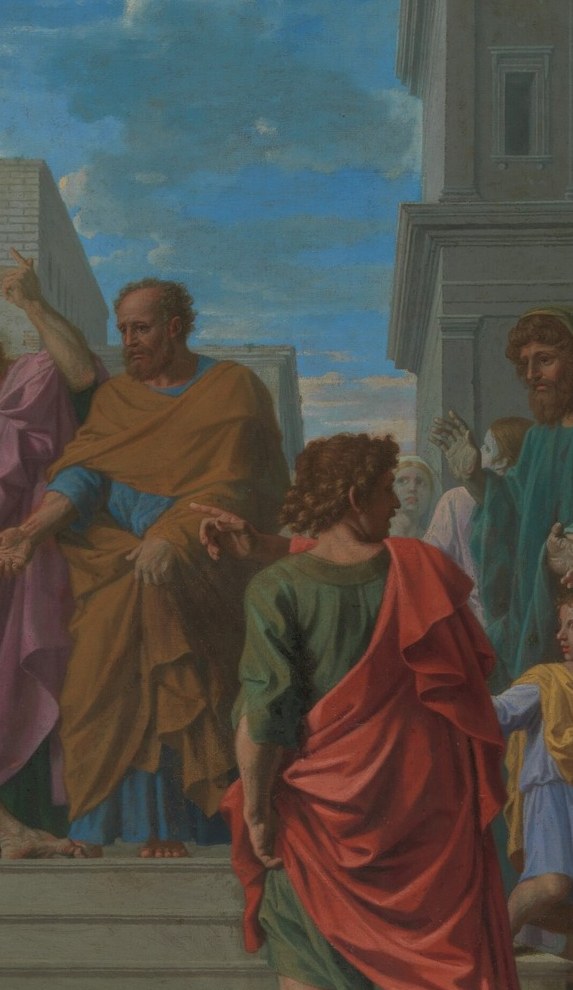
This is Nicolas Poussin's 'Saints Peter and John Healing the Lame Man,' painted in 1655 and now in the Metropolitan Museum of Art. When the French Academy first saw it, they rejected it outright. The problem was not the biblical subject but its treatment: Poussin had staged a Christian miracle inside a pagan world, and the Academy found the result too cold, too intellectual, too severe.
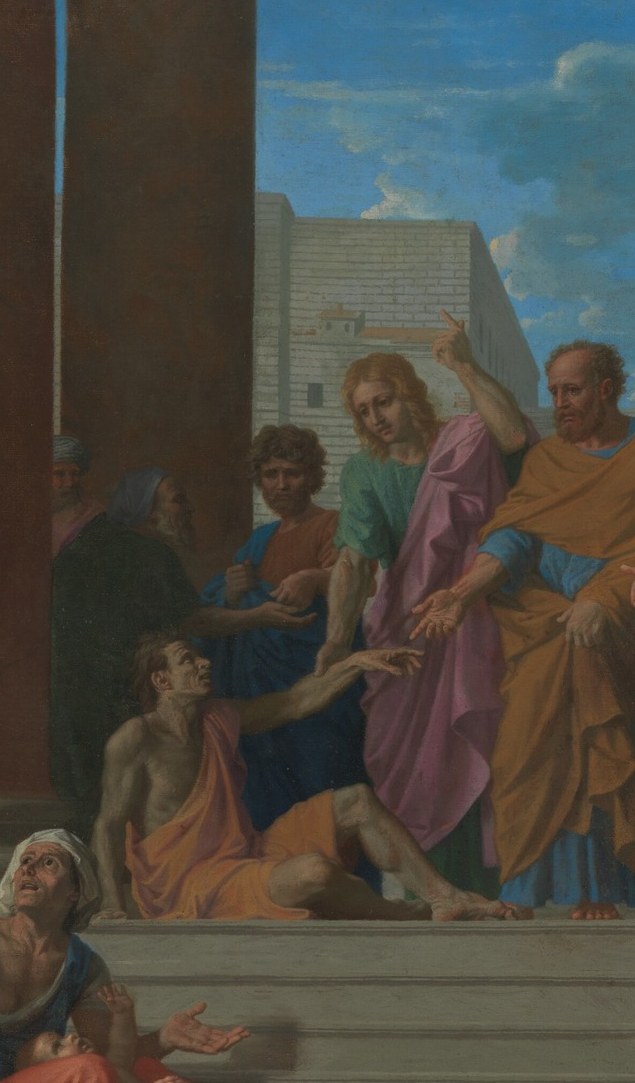
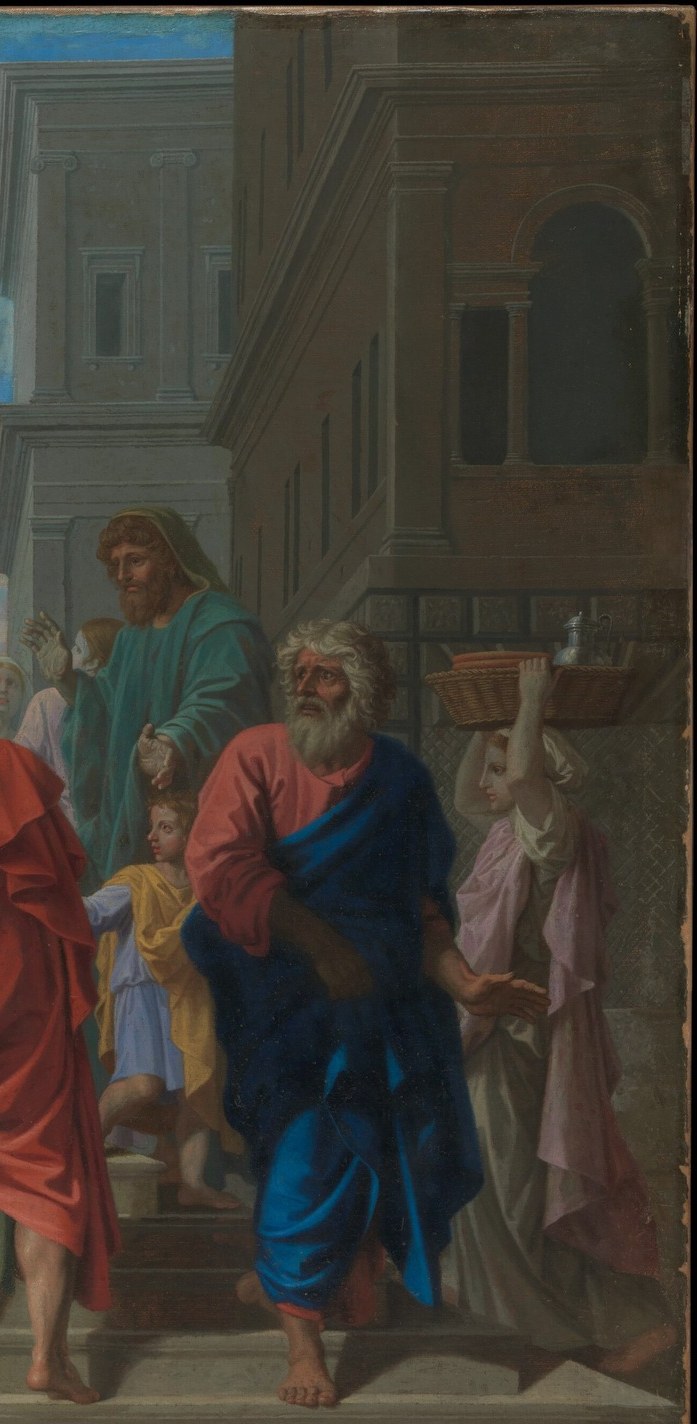
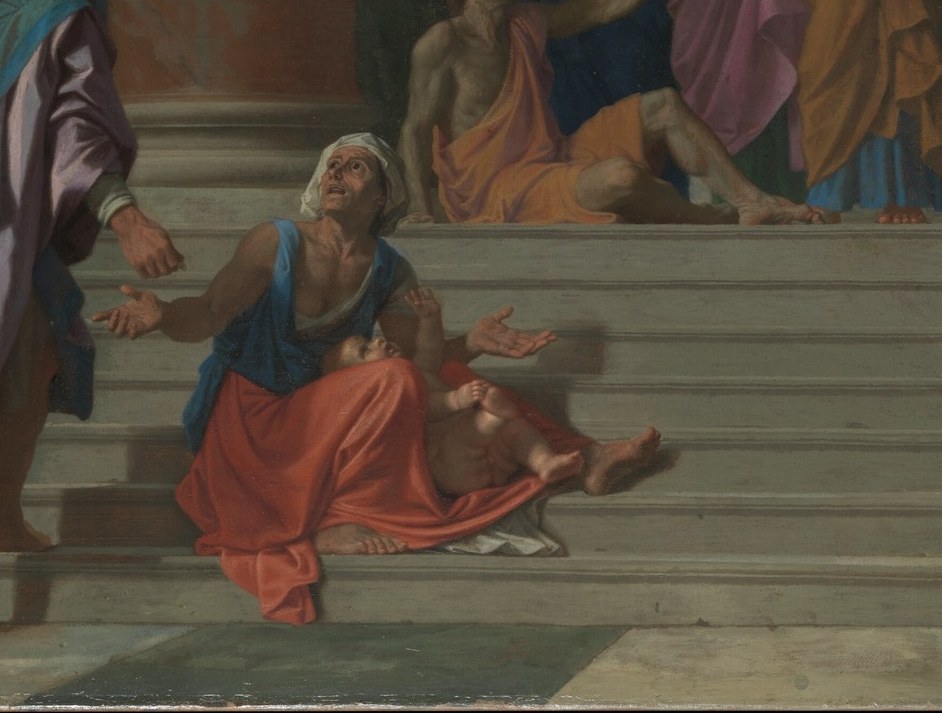
Look at the classical columns on the right. Poussin was in Rome, and he deliberately modeled Solomon's Temple on Roman imperial architecture, collapsing biblical and antique time into a single frame. The crowd is full of individual reactions, craned necks, whispered commentary, gestures of amazement, but the central transaction between Peter and the lame man is almost unnervingly restrained. No angels, no light beams, just a hand extended over rough stone steps.
Poussin was sixty-one when he painted this and living permanently in Rome. He had briefly served as First Painter to the King under Louis XIII, but court life exhausted him, and he retreated back to his classical studies and Stoic philosophy. The Academy wanted grandeur and emotion; Poussin gave them intellectual clarity and archaeological rigor. They said no. He didn't change a thing.
This is a painting that insists a miracle can happen quietly, in full daylight, while the world behind the gate carries on unaware.
Details
Transcript
They look like a crowd watching an ordinary beggar. But this painting was rejected in 1655. The French Academy called it too severe, too intellectual. Poussin refused to soften it. He painted these columns to look like pagan Rome. The Temple of Solomon, but dressed as a classical ruin. A biblical scene staged in a world without Christianity yet. That was the real scandal: antiquity, not miracle.