House of Père Lacroix by Cezanne, Paul
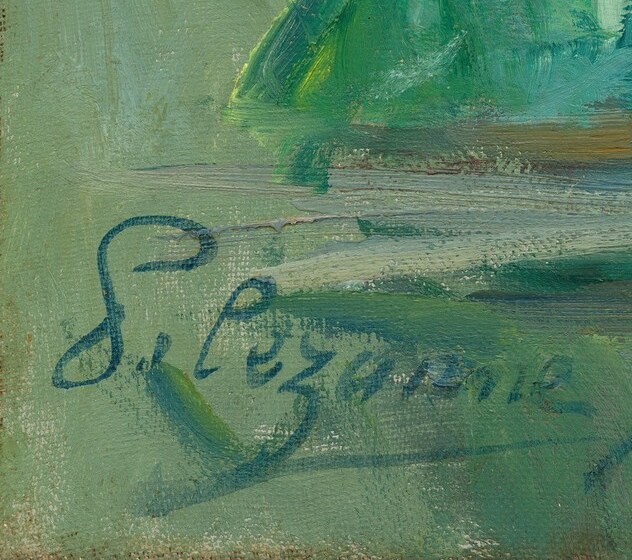
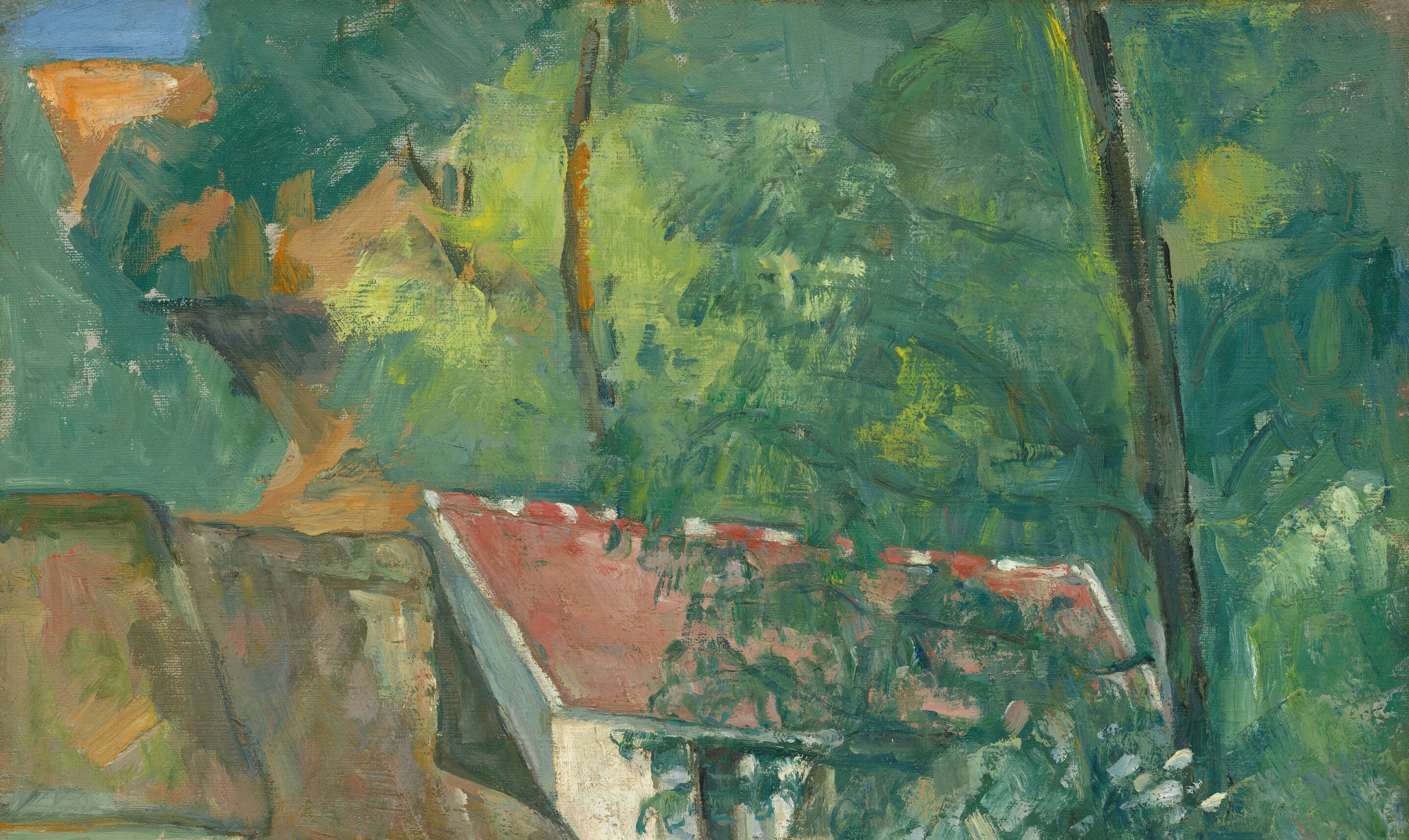
This is Paul Cézanne's House of Père Lacroix, painted in 1873 and now in the National Gallery of Art, Washington. The title names a neighbor, the house belonged to a man called Lacroix, but the only name on the canvas is Cézanne's own, scratched discreetly into the lower left corner.
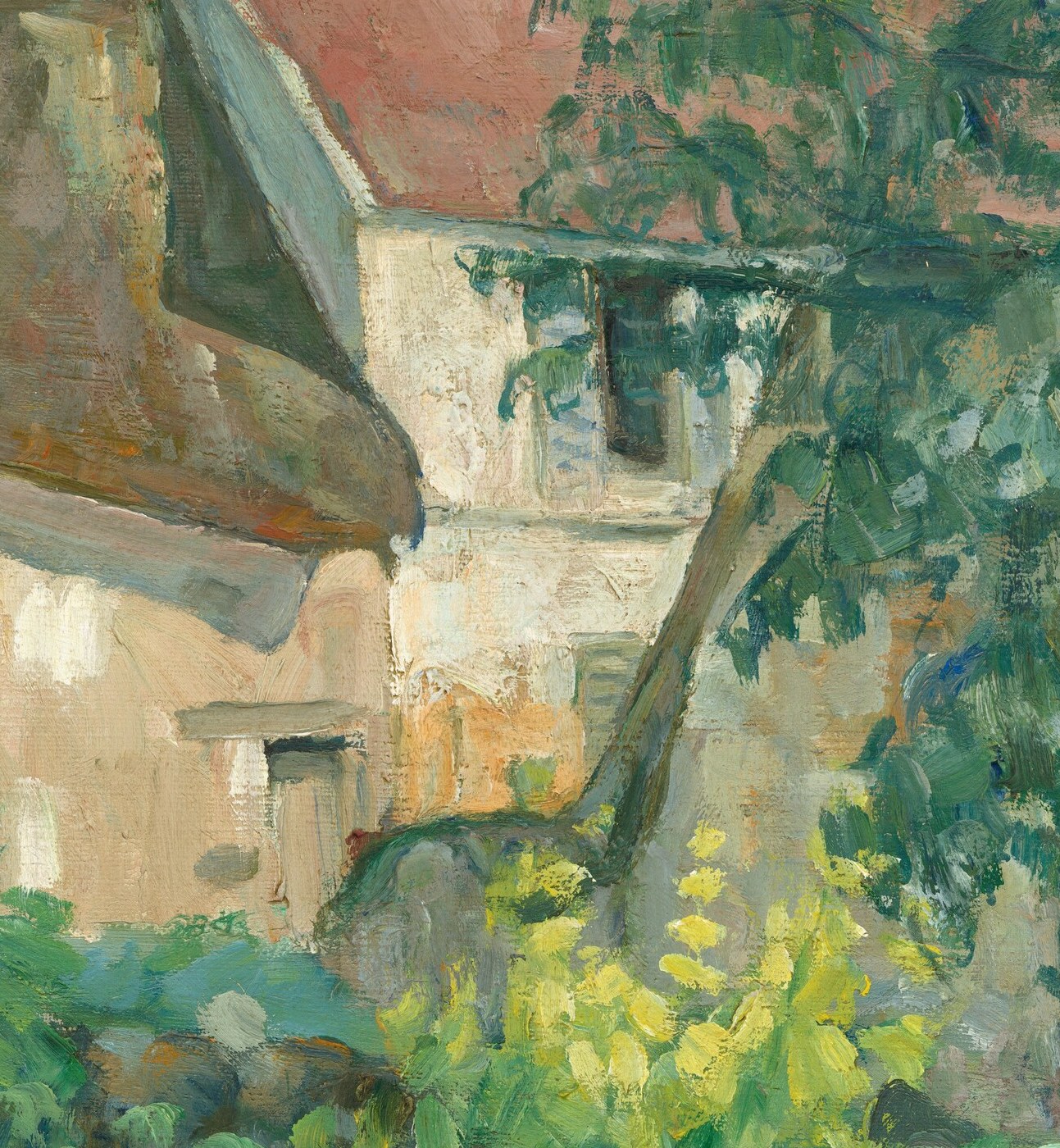
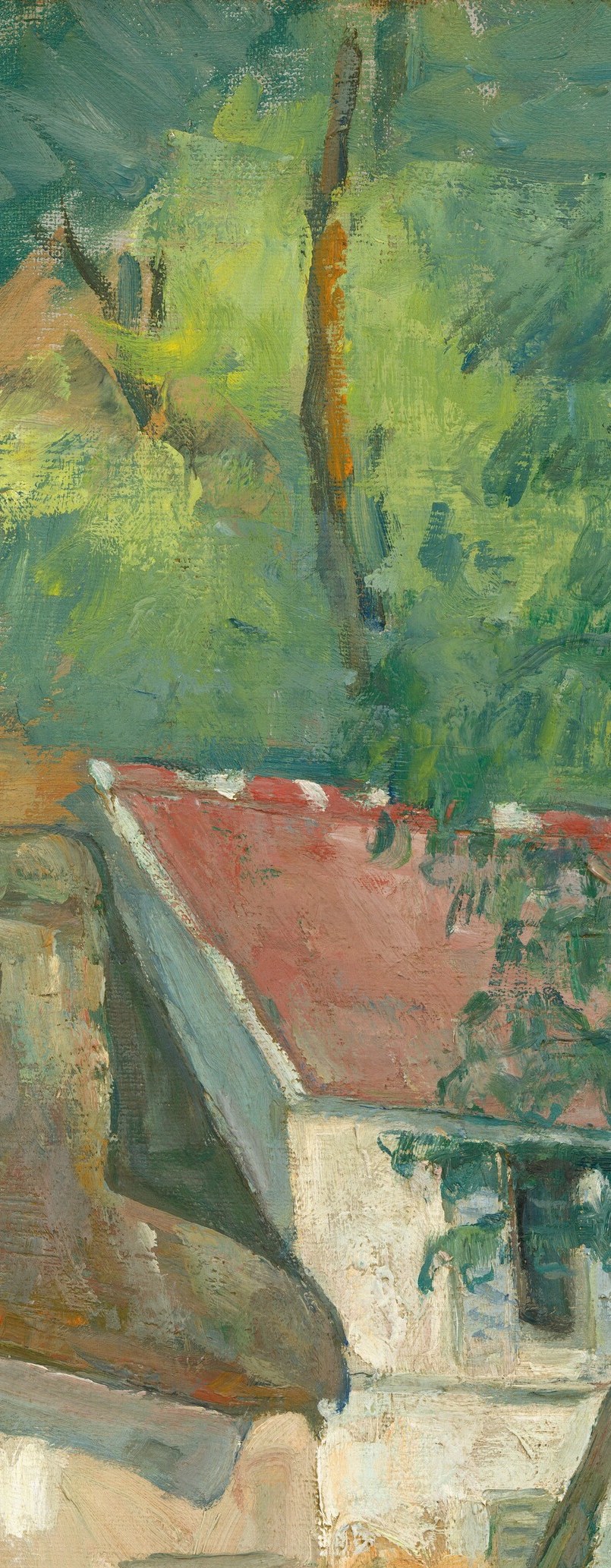
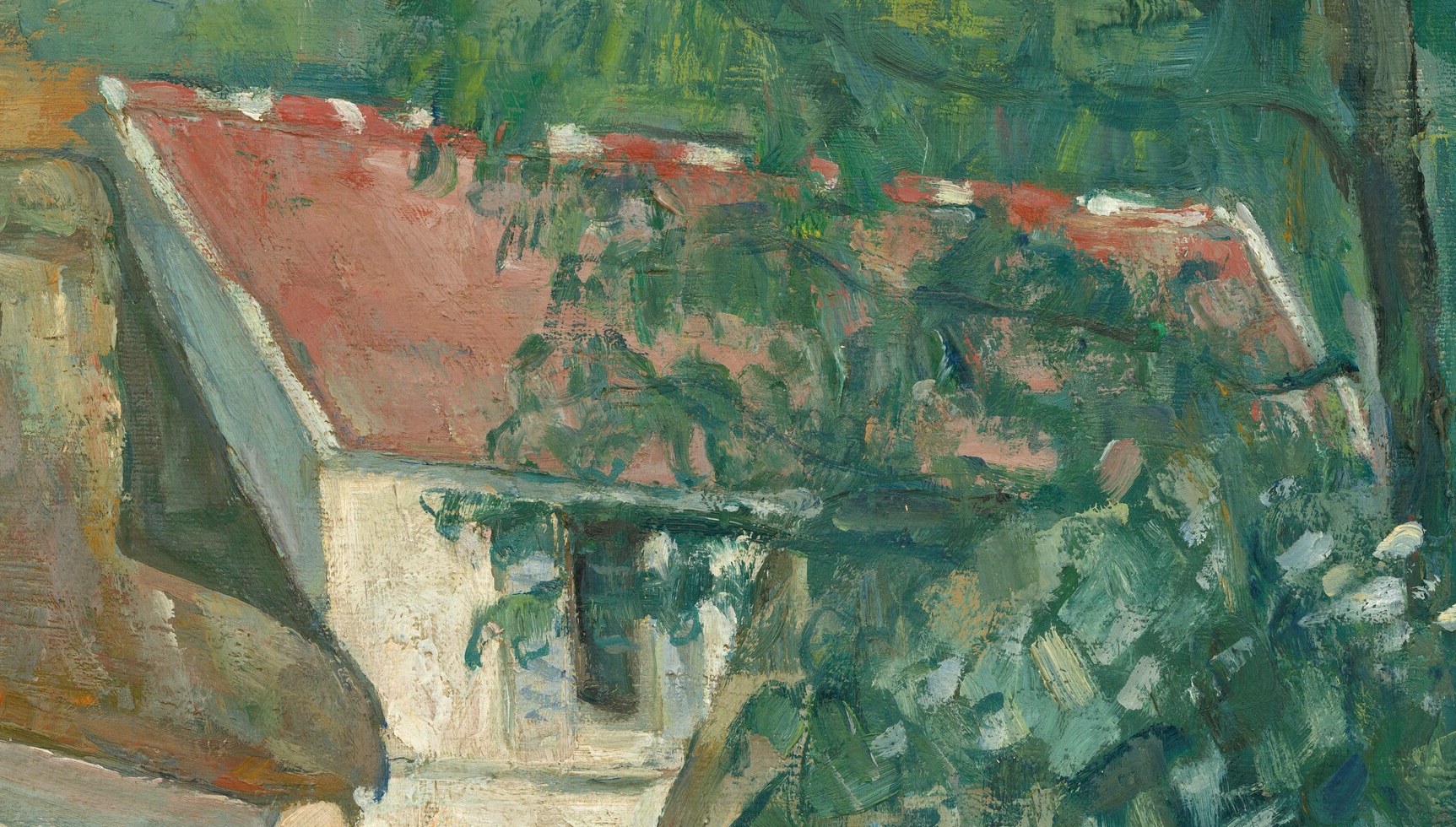
Look at the big tree trunk running straight down the left of center. It flattens the picture and blocks part of the house, a move that irritated critics in the 1870s. Cézanne wasn't trying to please them. He was working out how a painting could hold space without relying on traditional perspective, and that trunk is a structural beam holding the composition together. Behind it, the white wall of the house glows through the foliage, and a single dark window suggests someone might be inside.
Cézanne painted this in 1873, the year after his son Paul was born. He was living between Paris and Provence, lightening his palette under Pissarro's influence, and beginning the long study of how color builds form that would make him the pivot between Impressionism and Cubism. This quiet house in the trees is an early step on that road.
A neighbor's house, a borrowed name, and a signature hidden in the weeds. There is no drama here, only a painter learning to see.
Details
Transcript
A house, a tree, a garden. Quiet enough to scroll past. Painted in 1873, when Cézanne was still finding his way. Look how the tree trunk divides the canvas in two. That flat split annoyed critics. Later painters saw the future in it. Now find the signature, lower left. The title says 'Père Lacroix.' The signature says Cézanne. Lacroix was the neighbor. The house was his, but the painting was always Cézanne's.