Eagle Head, Manchester, Massachusetts (High Tide) by Winslow Homer (American, 1836–1910)
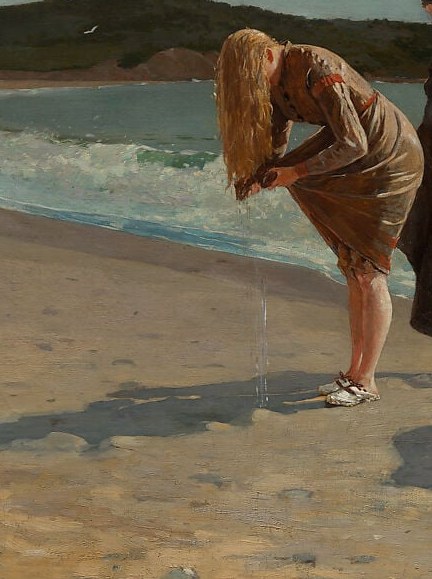
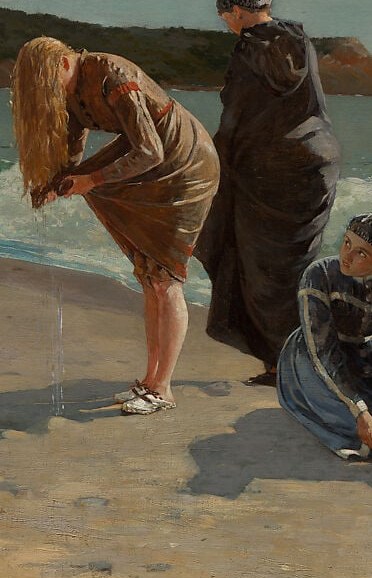
Winslow Homer painted "Eagle Head, Manchester, Massachusetts (High Tide)" in 1870, just five years after the American Civil War ended. The painting holds a striking stillness. Three women rest on a beach as high tide rolls in beneath an overcast sky, a scene of everyday peace that feels almost radical against the memory of national trauma.
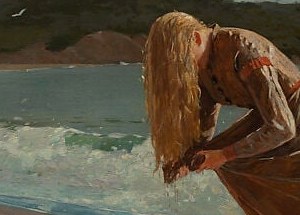
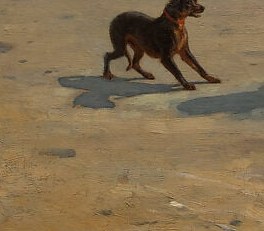
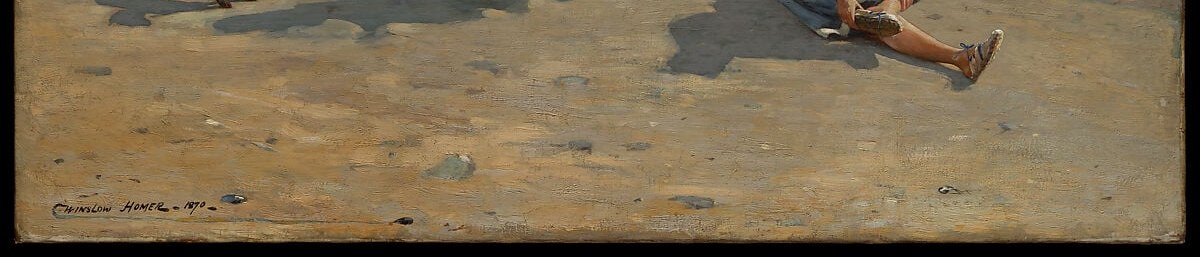
Homer made a bold compositional choice. He left the foreground sand largely empty, pushing the figures into the middle distance and isolating the small black dog trotting at far left. That dog is easy to scroll past. It is the only element caught in motion, a tiny restless note in a canvas built on calm. The bending woman's unbound hair, streaming forward as she examines the sand, was another quiet statement. Respectable women in 1870 did not appear in public with loose hair, yet Homer paints it without comment, granting his figures an unselfconscious physical freedom.
The painting belongs to the Metropolitan Museum of Art's American Wing. Homer, largely self-taught and already known as a Civil War illustrator for Harper's Weekly, was turning toward the marine subjects that would define his career. The wet sand at the waterline catches a thin mirror of sky light, a luminous passage that previews the watercolor mastery he would develop over the next decades. Eagle Head, the dark promontory at upper right, anchors the geography but feels almost an afterthought beside the human quiet below.
A painting can hold two moods at once. Calm and restlessness, stillness and a small black dog still walking.
Details
Transcript
Three women, a summer beach, a quiet afternoon in 1870. Look at the bending woman. Her hair hangs loose. Public, unbound hair was a small freedom for women then. Now scan left, across the wide empty sand. A small black dog trots alone. No one is watching. It is the only creature in the painting that is still moving.