Visiting Grandfather by Julius Exner
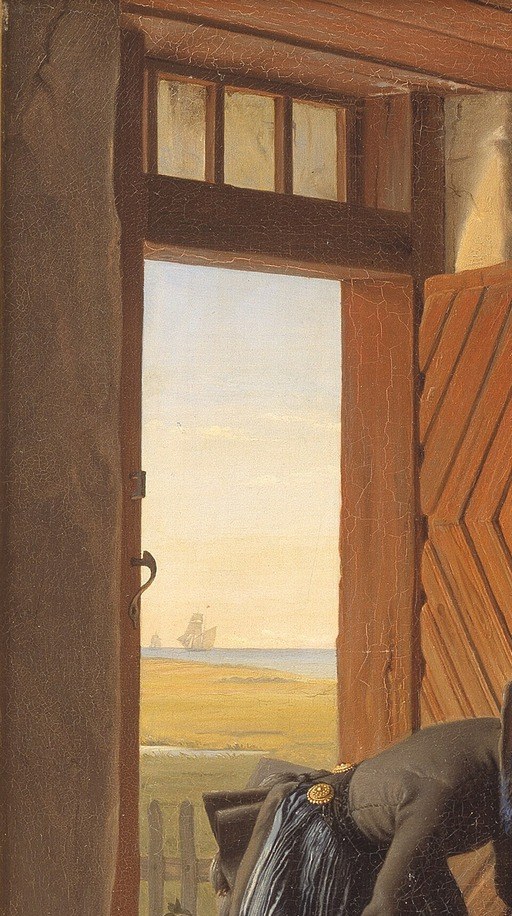
A farmhouse interior shouldn't glow like this. But Julius Exner's *Visiting Grandfather* (1853, Statens Museum for Kunst) is a quiet masterclass in making light change temperature across a room. The painting shows a family moment in Amager, Denmark, but the real subject is the air itself and how a single window can model an entire world.
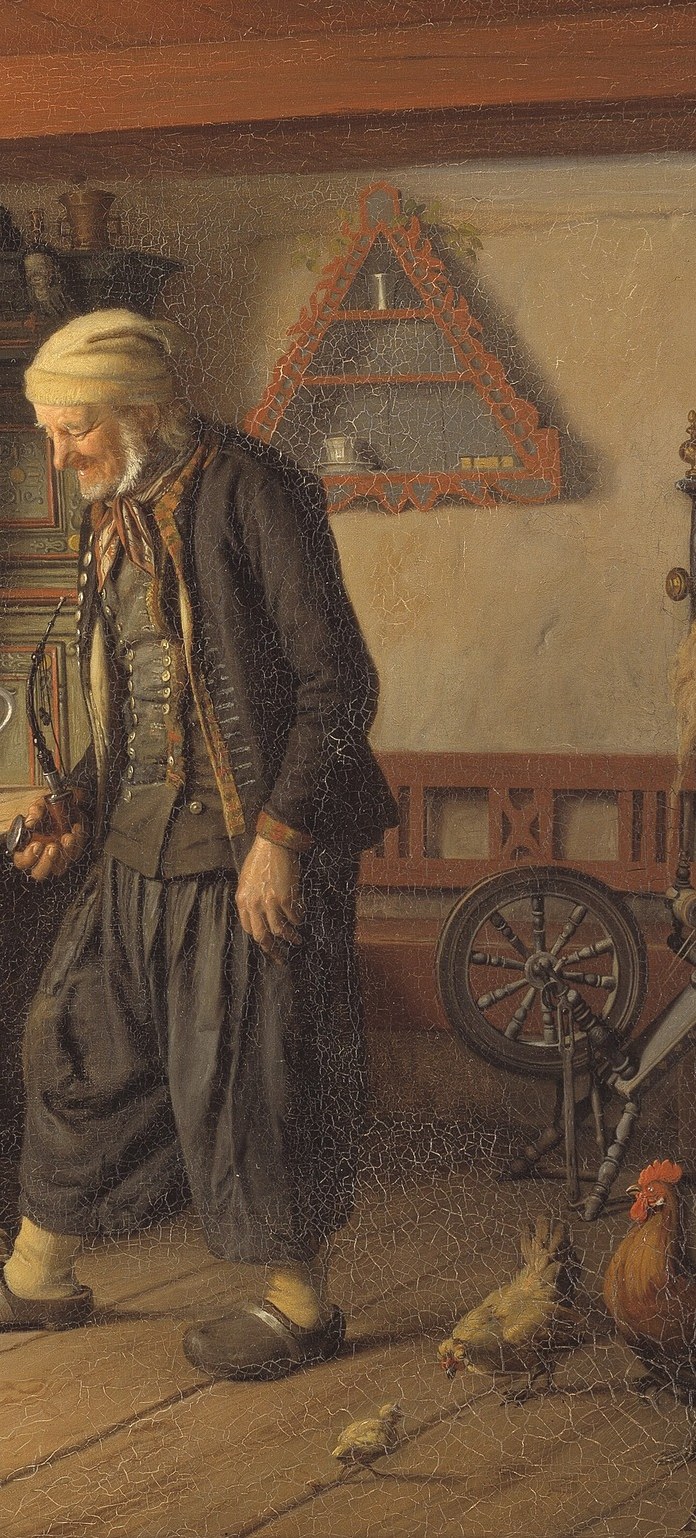
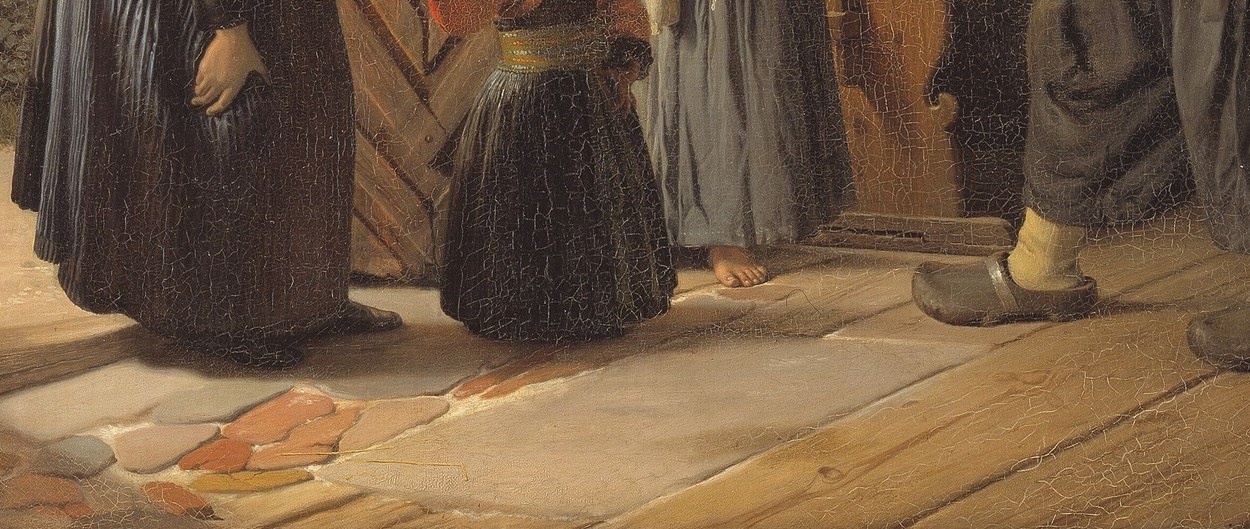
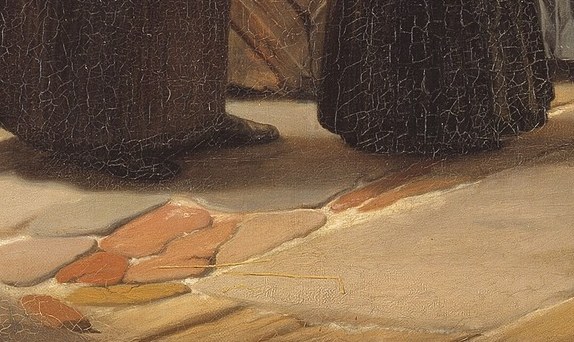
Follow the light from left to right. Cool, pale daylight pours through the tall window and sculpts the figures from one side, the bending woman, the shy child, the weathered grandfather. Their forms read with crisp, almost crisp clarity against the darker interior. Then the light hits the floor and warms, shifting into a welcoming amber that pools around the wooden clog in the foreground. The transition is seamless, painterly, and completely deliberate.
Exner was a Danish genre painter working during the National Romantic period, when artists turned inward to celebrate uniquely Danish rural life. Born in Copenhagen to a Czech musician father, he originally trained as a history painter but found his real gift, and his income, in scenes of ordinary people. Here, he treats a modest working household with the same luminous attention earlier masters reserved for marble halls.
Next time you look at this painting, notice the tiny glass pitcher on the back table. It holds the single brightest highlight in the room's interior shadow, the final touch in a carefully engineered welcome.
Details

Transcript
This room should feel dark. Low beams and a single window. A cramped farmhouse. But Exner turns that window into his whole light trap. Cool daylight carves every figure from a single side. Now look down. The light changes temperature. It pools across the bare wood, suddenly amber and warm. One tiny glass on the table catches the room's brightest highlight. He painted welcome as a temperature shift you can feel.