Woman Holding an Apple by Titian
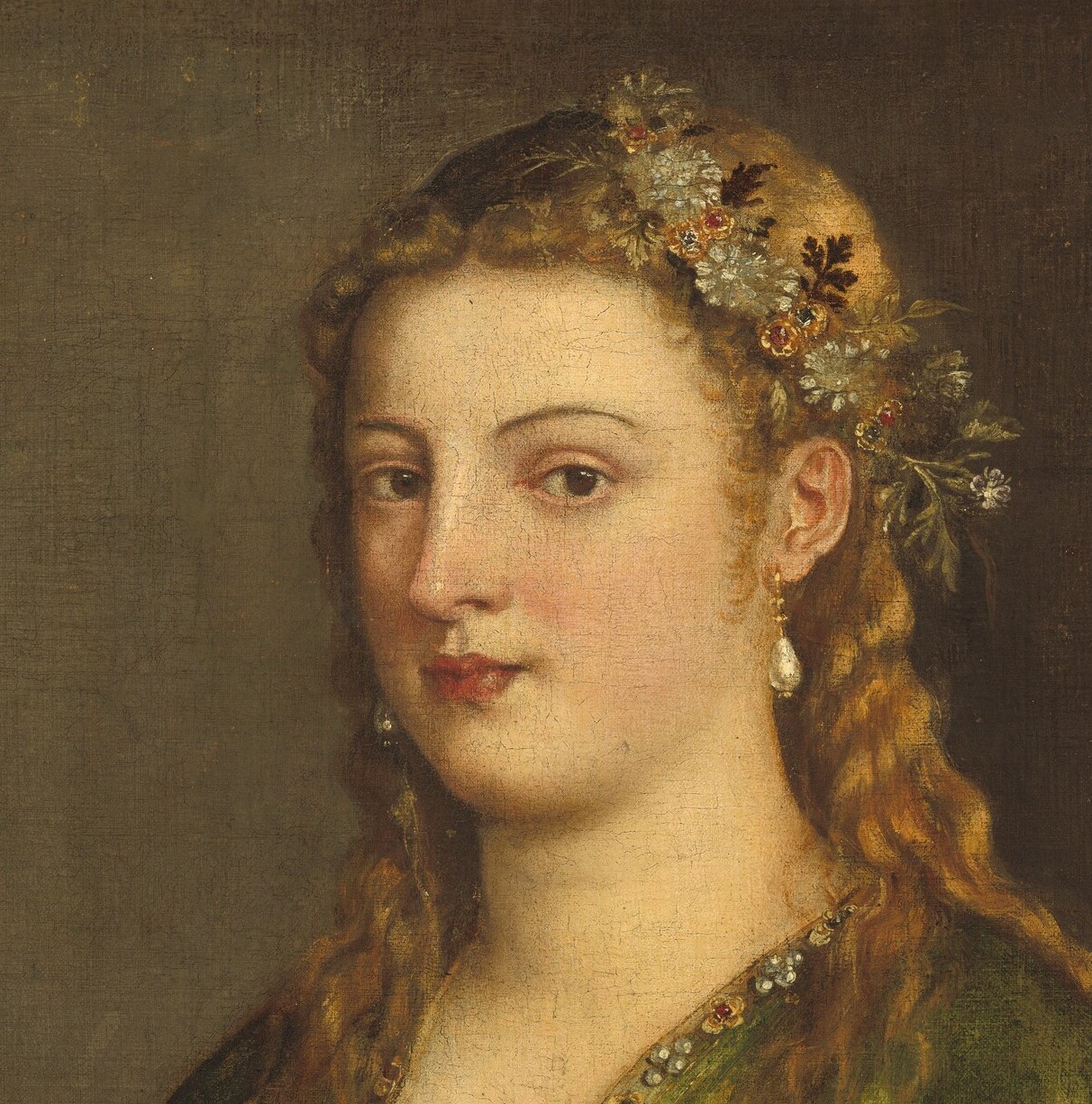
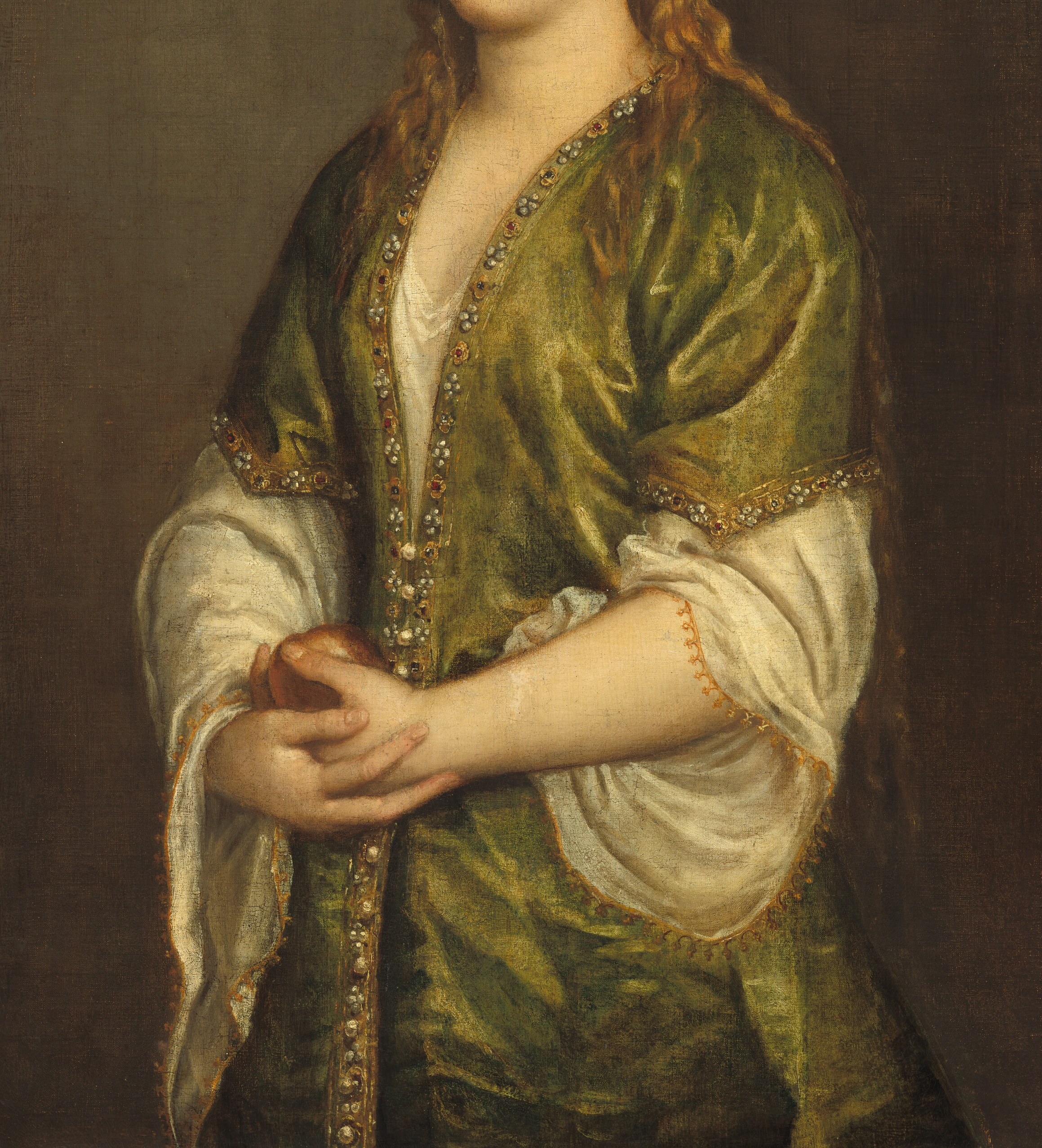
This is Titian's "Woman Holding an Apple," painted around 1550 and now in the National Gallery of Art in Washington, D.C. The painting has a quiet surface: a woman in green silk, a dark background, a slight turn of the head. But one object turns the portrait into a Renaissance puzzle.
Look at the apple. In a single golden fruit, Titian collapsed three identities. The apple is the prize Venus won in the Judgment of Paris, so she is the goddess of love. It is also the fruit Eve offered in the garden, so she is temptation itself. And in sixteenth-century Venice, a woman holding an apple could be a bride, her hand extended in a gesture that is equal parts gift and test.
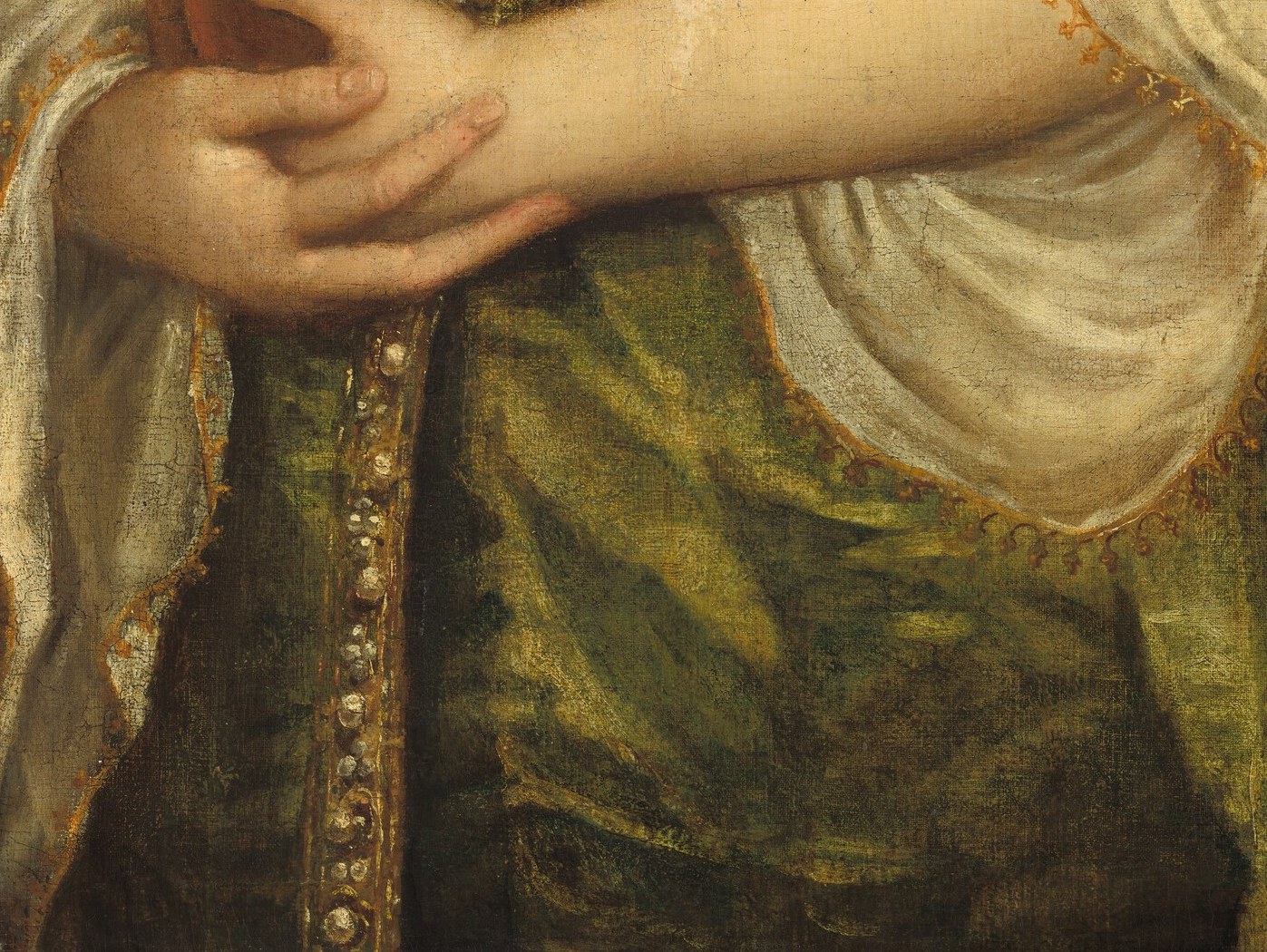
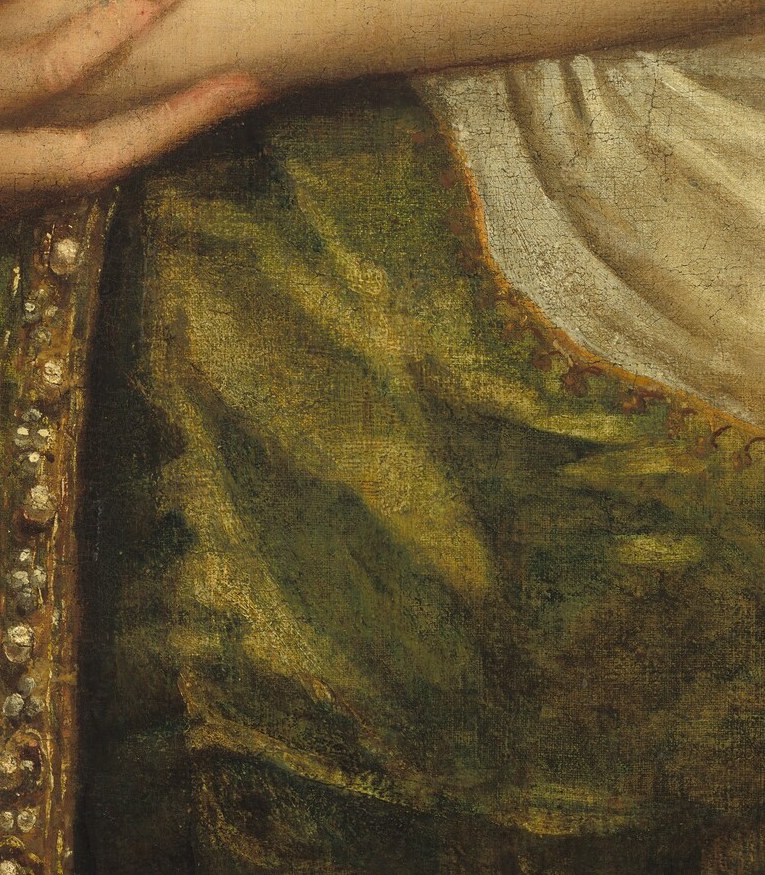
Titian painted this around age sixty, when he was the most sought-after portraitist in Europe. His brushwork here is almost invisible: the skin glows, the white chemise is painted with a crinkled translucency that feels like real linen, and the green silk holds its sheen without a single hard line. That disappearing technique is the hallmark of his late manner, where he built form out of atmosphere rather than drawing.
The sitter remains unknown. No coat of arms, no inscription. Her identity may be deliberately withheld, so the apple does its work on every viewer the same way. Is she a bride, a goddess, or a warning? Titian gives you all three and lets the fruit sit in her hands, quiet and gold.
Details

Transcript
A woman in green silk, painted in Venice around 1550. Titian gives her calm, averted eyes and a face built from soft light. Her gold hairnet and embroidered trim are pure aristocratic display. But the whole portrait turns on what she holds. A single golden apple. The apple means she is Venus, winner of the golden prize. It also means she is Eve, holding what temptation looks like. And it means she may be a bride, offering a gift that is also a test.