The Fable of the Miller, His Son, and the Donkey by Elihu Vedder
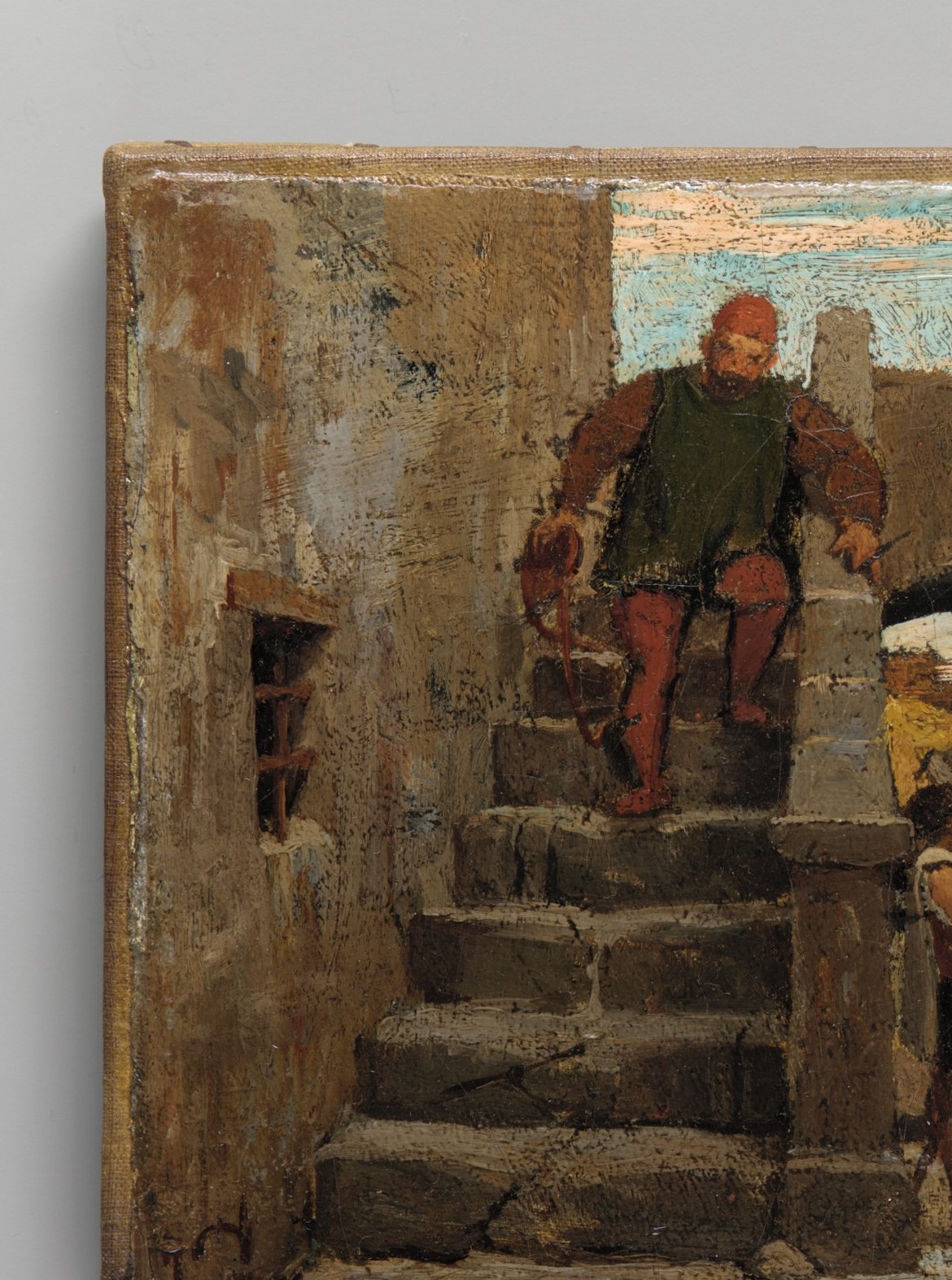
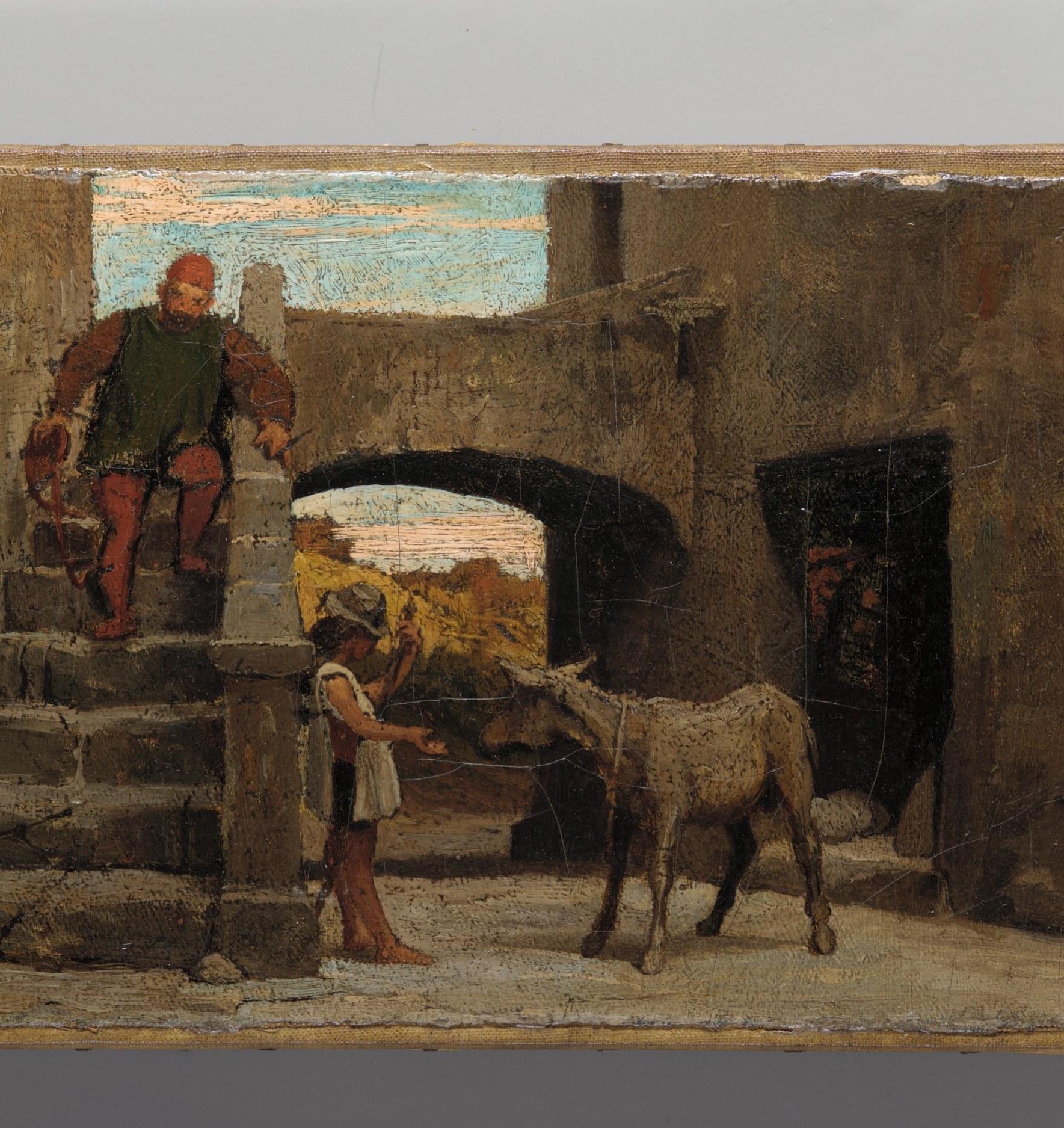
Elihu Vedder's 'The Fable of the Miller, His Son, and the Donkey' (1867) hangs in the Metropolitan Museum of Art, but its true subject sits in the distant background. Vedder, the American symbolist best known for illustrating the Rubaiyat of Omar Khayyam, made a deliberate spatial choice here that changes the whole painting.
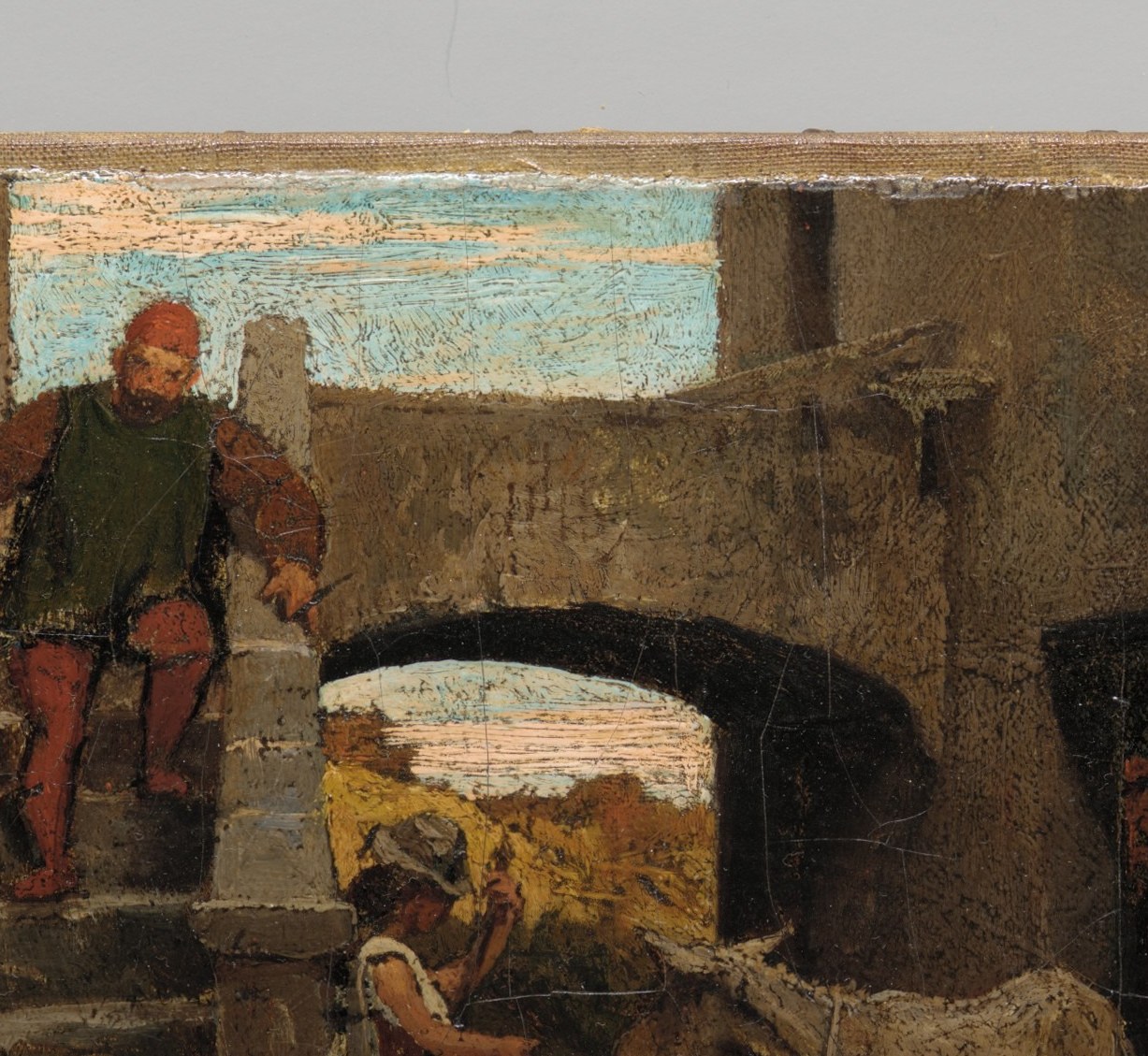
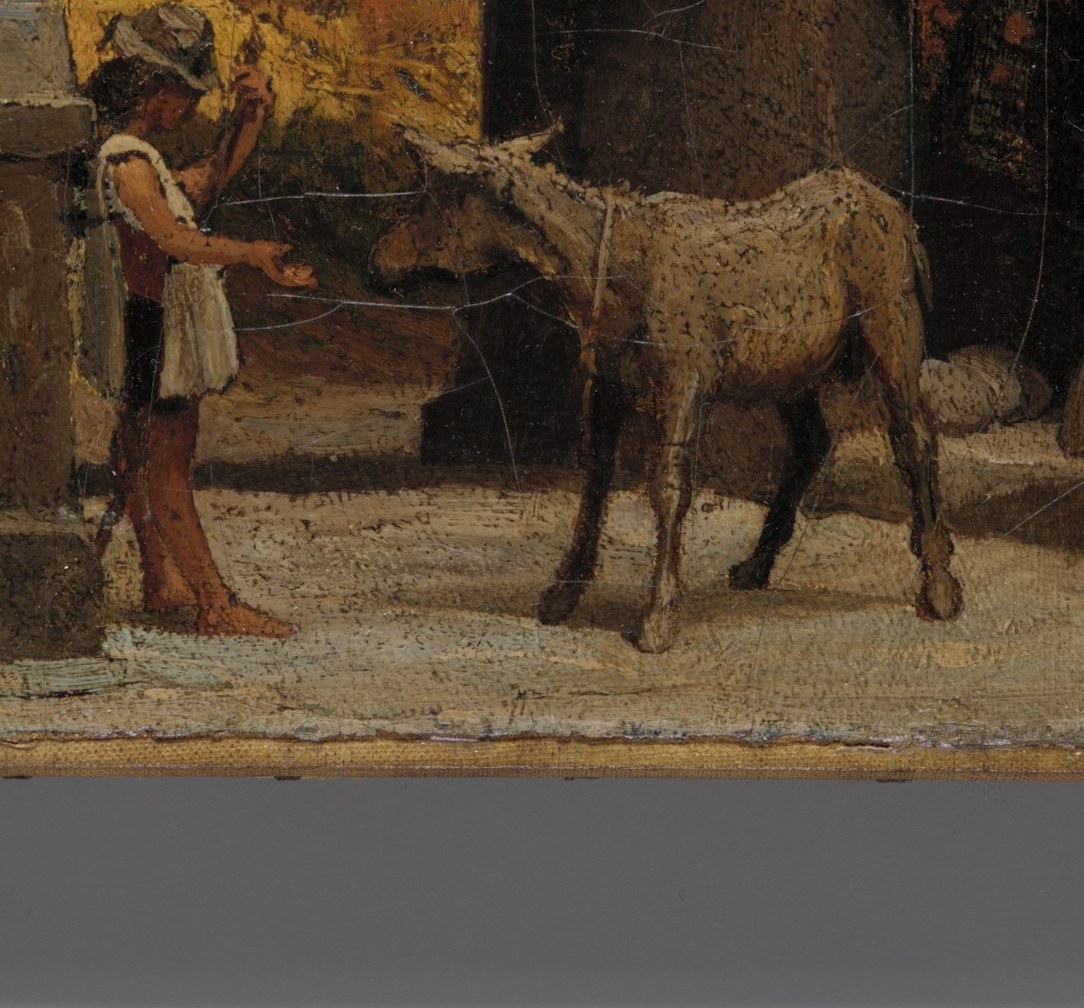
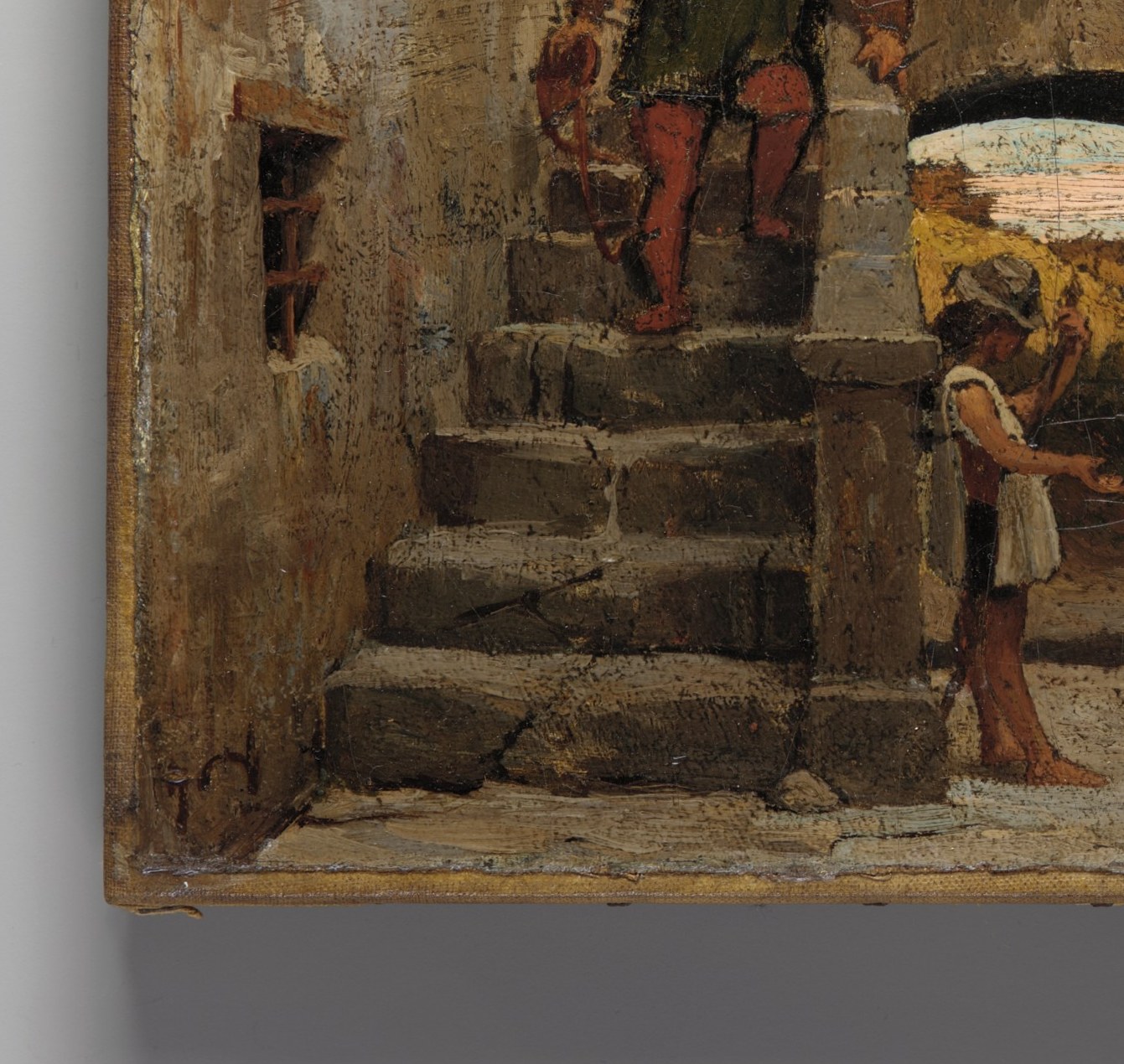
You see the miller, his son, and their donkey, caught in the fable's endless loop of trying to please passersby. But where are the critics? They're not in the foreground, shouting. Instead, look through the stone archway. A village with a church spire, fields, and a winding road fills the aperture. Vedder tucked the entire judging world into that bright opening.
It's a smart bit of staging. By putting the critics at a distance, he turns the arch into a threshold between private decision and public judgment. The family argues in shadow; the world of opinion waits in warm light. Even the donkey seems unaware of the drama ahead.
Next time you face unsolicited advice, remember: the whole town is farther away than it seems.
Details
Transcript
A father, a boy, and a donkey. You probably know the fable. They're trying to please everyone. It never works. Elihu Vedder painted this in 1867, and he made a curious choice. Look through the arch. Past the stone, past the argument. A distant village. Fields. A road winding away. The critics are absent from the foreground, but the whole town is watching.