Interior of the Oude Kerk, Delft by Hendrick Cornelisz. van Vliet
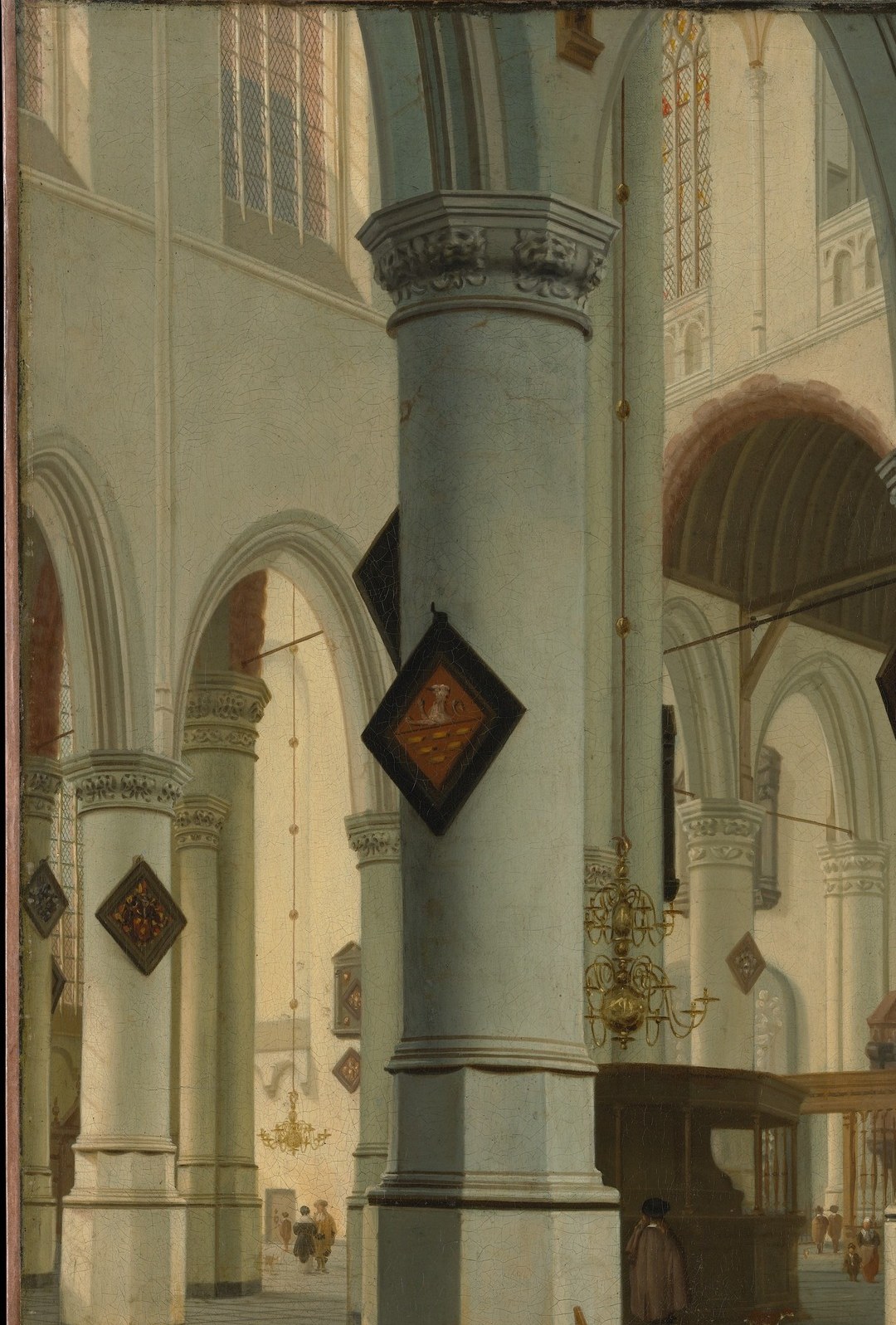
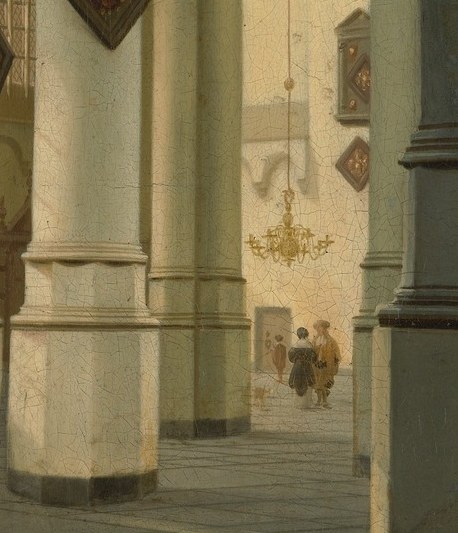
This is Hendrick Cornelisz. van Vliet's Interior of the Oude Kerk, Delft, painted in 1660 and now at The Metropolitan Museum of Art. Van Vliet spent his entire career in Delft and became known almost exclusively for church interiors like this one. His singular obsession was capturing the cool, quiet vastness of whitewashed Protestant spaces, stripped of their Catholic ornament after the Reformation.
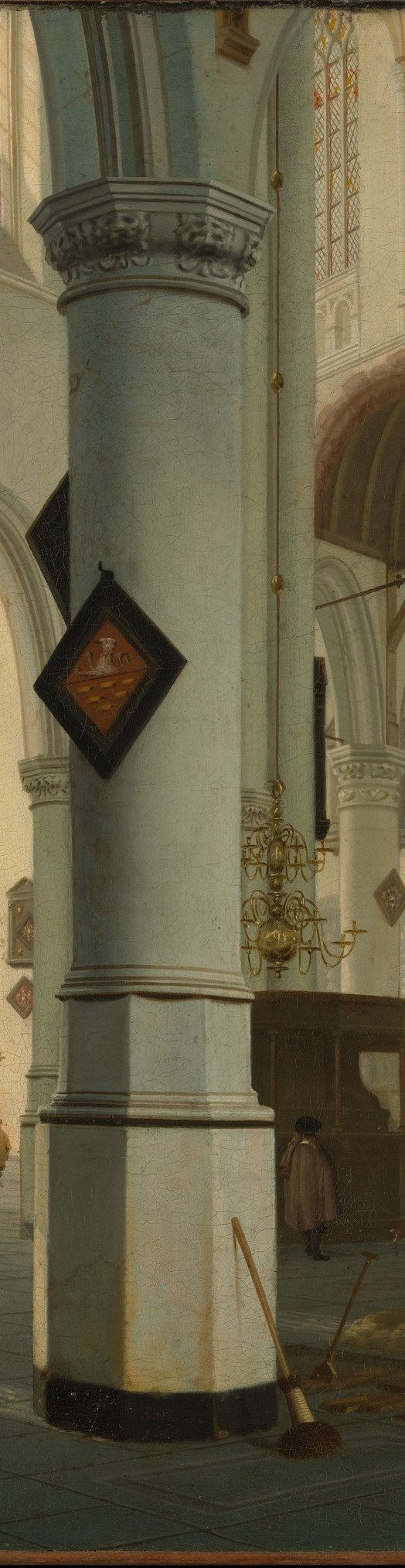
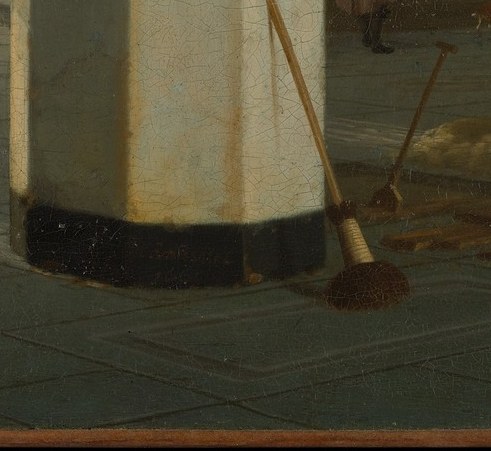
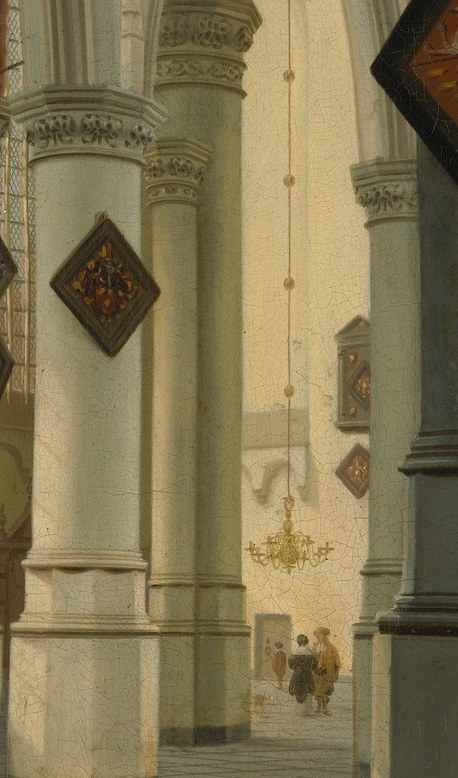
Look at the massive foreground column and then follow the receding arches. Van Vliet exaggerated the perspective, steepening the convergence so the nave feels far deeper than it truly is. He understood that a white plaster surface does not just reflect light, it seems to hold it. The subtle shadows wrapping around the column base are doing all the structural work, convincing you of weight and roundness with almost no detail.
The Oude Kerk had a particular social gravity. Buried under those checkered stone floor slabs were prominent Delft citizens. The two small black diamond-shaped hatchments hanging on the pillars are funeral coats of arms, reminders that this brilliant architectural light show is also a house of the dead. The painter gives us both: the earthly silence and the cheerful northern light pouring in from unseen clerestory windows.
Next time you see a white wall in a painting, notice how the artist chose to dirty it. Van Vliet's grime and shadow are the true subject here.
Details
Transcript
You are standing in a Dutch church, 1660. But nothing here is as big as it looks. This column is the key to the whole illusion. Van Vliet forced the perspective. Every arch recedes faster than reality. He knew the whitewashed walls would catch the light and pull you in. Those tiny figures near the choir make the space feel monumental. A trick of scale. A trick of light. On a modest piece of canvas.