The Siesta by Paul Gauguin
View the artwork: The Siesta →
Paul Gauguin's "The Siesta" (1892-94) hangs in the Metropolitan Museum of Art as a vision of unspoiled Tahitian leisure, but the painting is one of art history's quietest acts of trickery. The French artist arrived in Tahiti promising his Parisian dealer exotic, original scenes of island life. What the dealer received was a copy.
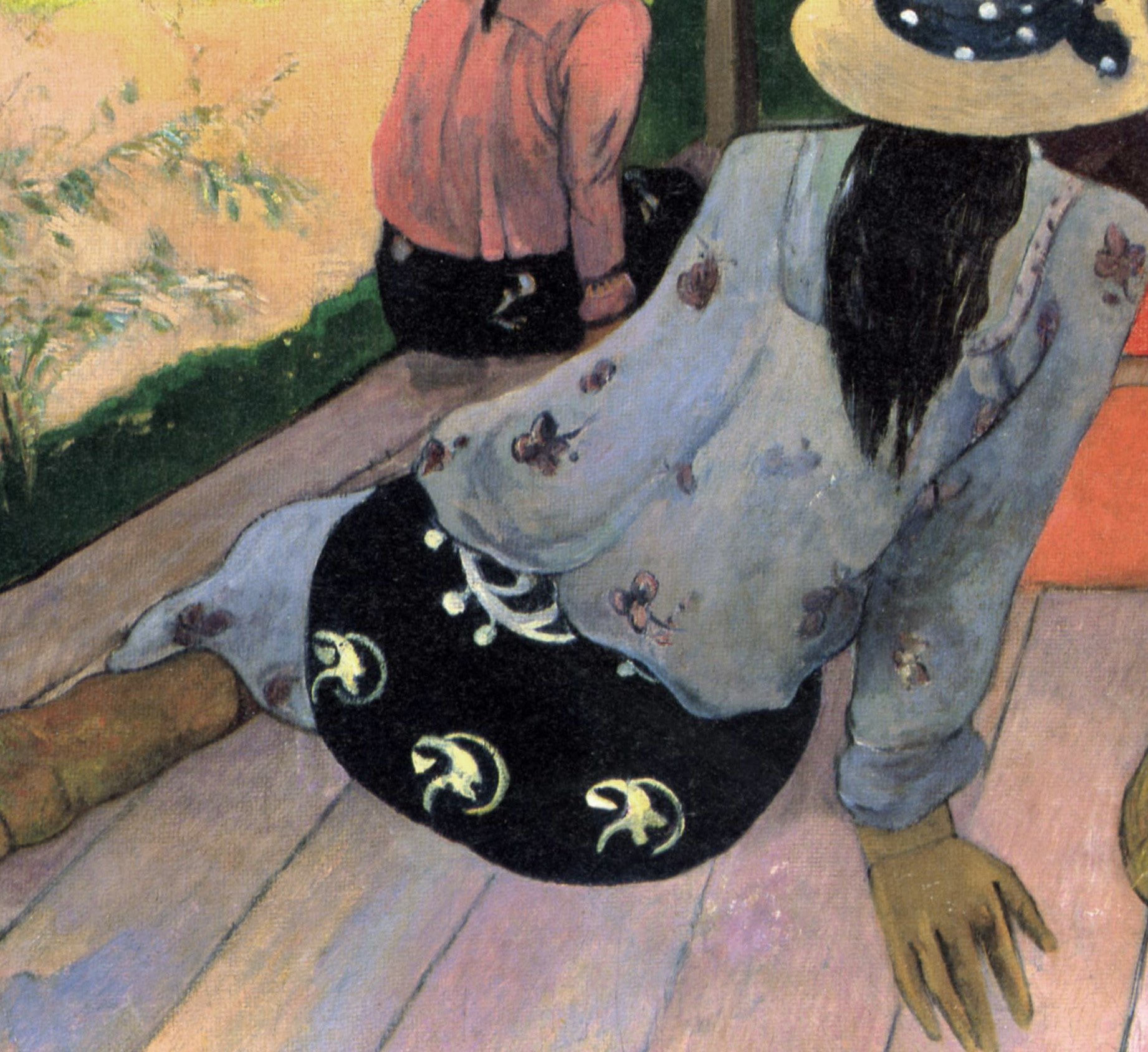
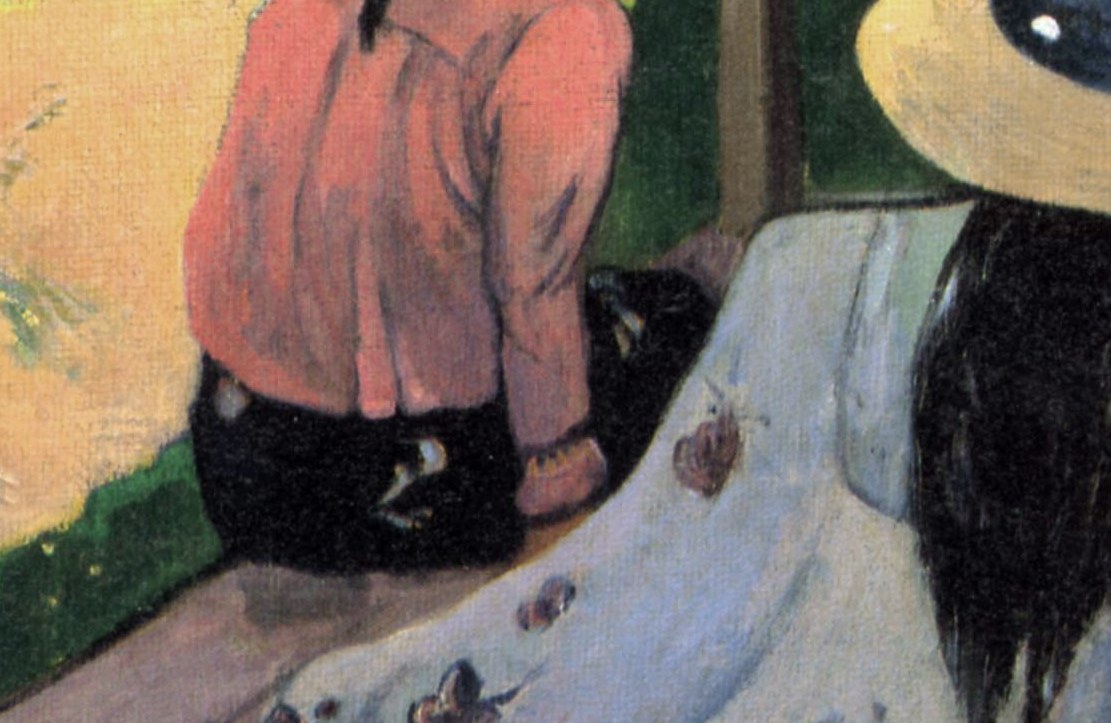
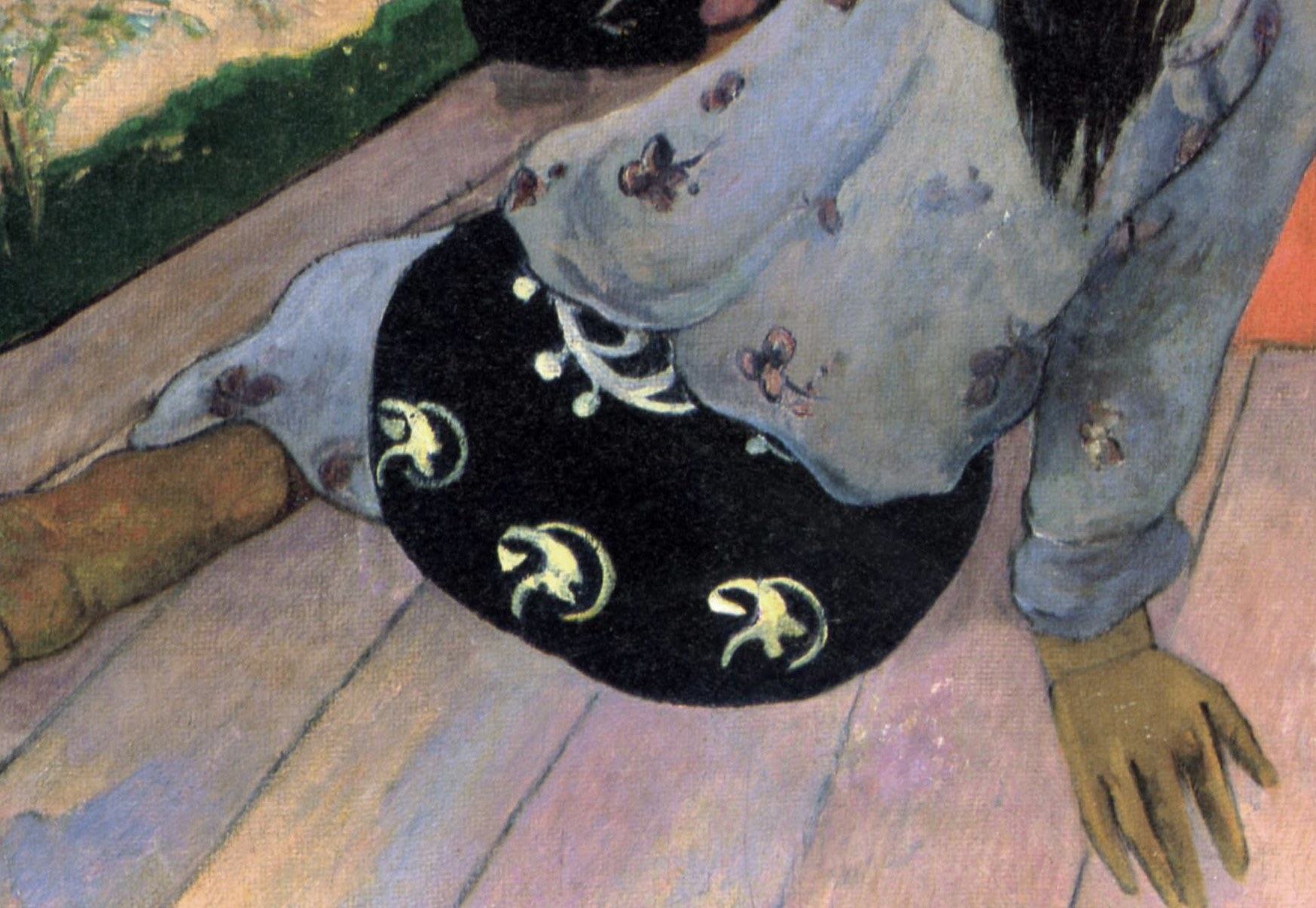
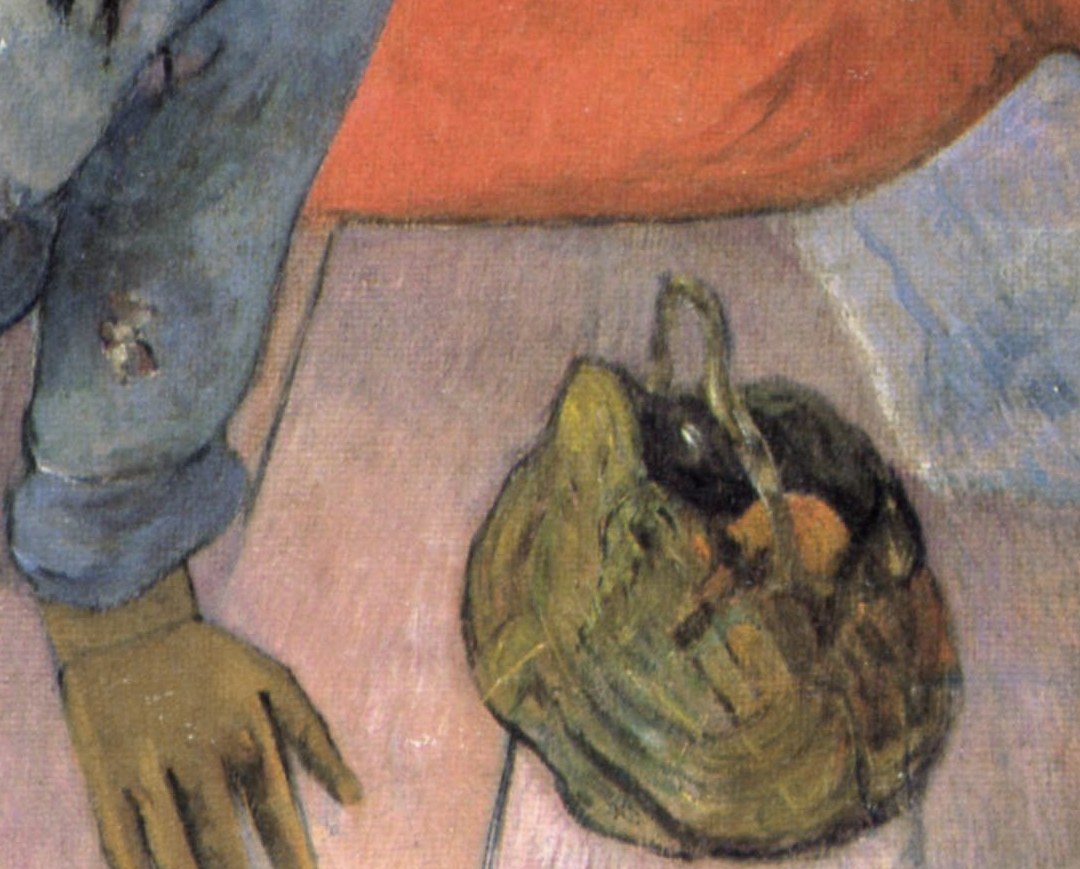
Look at the poses. The reclining women, the figure ironing in the background. They were lifted directly from a photograph of an earlier painting, Édouard Manet's "Le Déjeuner sur l'herbe," which Gauguin owned a print of. He traced the composition from a French masterpiece, transported the figures to a colonial verandah, and sold it as an authentic Tahitian subject. The dog from the Manet print arrived too, but Gauguin later painted it over. That woven bag in the foreground is the ghost of a traced animal nobody was supposed to know about.
The Met acquired the work as a genuine document of Gauguin's Tahitian period. For decades, visitors stood before it believing they were looking at unmediated Pacific life. Art historians eventually identified the source photograph, but the museum's label still emphasizes the island subject over the Parisian source. The lie is in plain sight.
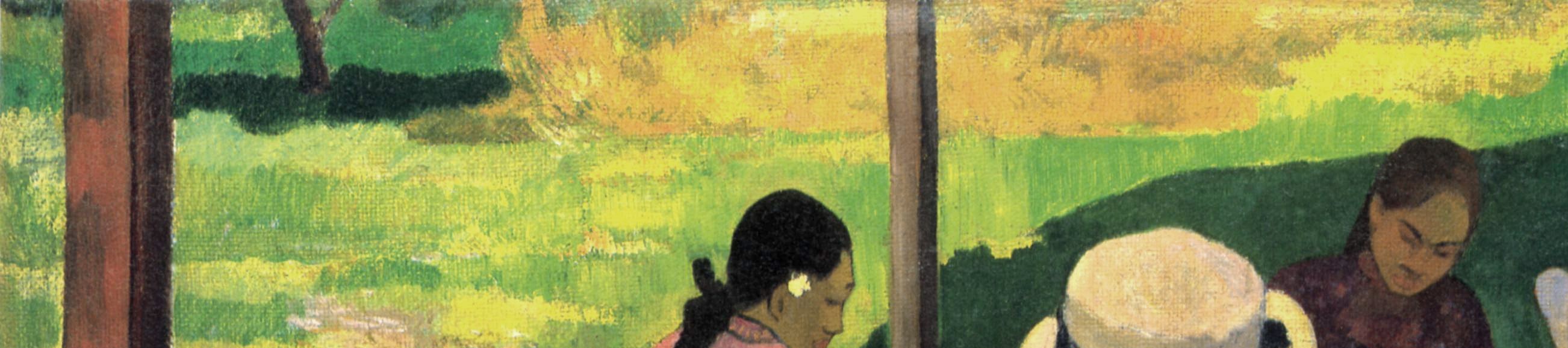
The women wear European dresses because Gauguin was not painting what Tahiti looked like. He was painting what he had already seen in a gallery in France, dressed in borrowed fabrications of his own supposed escape. Look again at the quiet verandah. You are looking at a forgery the Met decided to keep.
#arthistory #gauguin #metmuseum
Details
Transcript
Tahiti, 1892. Gauguin promised his dealer a masterpiece. He sent back this quiet verandah. Women resting in the shade. But the serene scene was a lie. He had brought a photograph. A photo of a Manet painting. He copied the poses figure for figure. Even the dog was traced. Then painted over with a shopping bag. The dealer never knew. The Met hung it as a Tahitian original.