Artwork
The Siesta
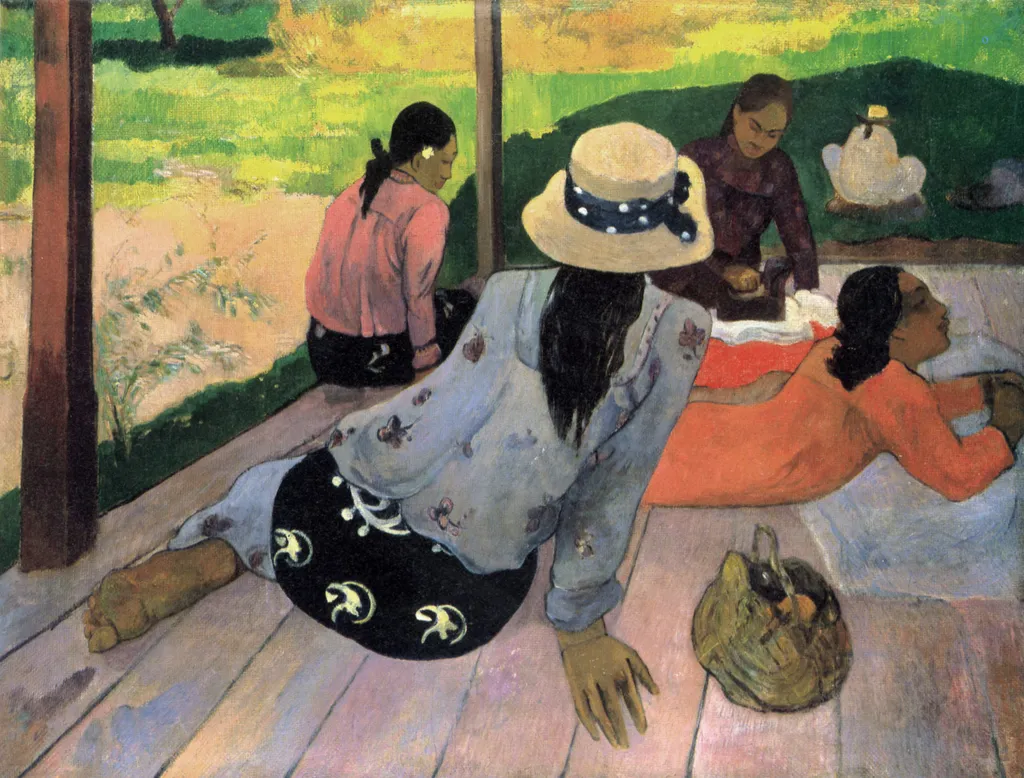
The Siesta is an oil painting by the Post-Impressionist artist Paul Gauguin. It dates from 1896 and is held in the collection of the Metropolitan Museum of Art.
About this work
Beneath a roofed veranda on Tahiti, several women in loose European mission dresses wait out the afternoon heat. One presses clothes with an iron while others lounge, a woven shopping bag in the foreground. Paul Gauguin reworked the scene across roughly 1892 to 1894, repainting until a dog he first placed near the lower edge became the bag we now see.
Subject & Meaning
The painting depicts a group of Tahitian women resting in the shade of a verandah during the hot afternoon, an unpretentious genre scene of everyday life.
The painting depicts a group of Tahitian women resting in the shade of a verandah during the hot afternoon, an unpretentious genre scene of everyday life. One woman irons while others chat, and the foreground includes a shopping bag, which originally was a dog in earlier versions. The women wear westernized clothing, highlighting cultural change in colonial Tahiti.
Gauguin worked on the composition over an extended period, refining the scene. Although the subject is mundane, the work reflects Gauguin’s idealized vision of Tahitian tranquility during his first extended visit to the island.
Technique & Style
Executed in oil on canvas (88.9 x 116.2 cm), 'The Siesta' was painted during Gauguin's first extended stay in Tahiti, with a date range of 1892–1894. The support is canvas, and the medium is oil paint. Gauguin revised the composition over time, as evidenced by pentimenti such as the foreground shopping bag that originally was a dog.
The painting presents an unpretentious genre scene of Tahitian women wearing westernized clothing, gathered on a verandah in the afternoon shade; one figure irons clothes. The handling suggests a deliberate, slow process, and the composition balances relaxed poses with the vivid patterns of dresses and hats, capturing a moment of everyday life under the hot sun. The formal qualities emphasize a documentary yet idealized view of Tahitian domesticity.
Context
Painted during Paul Gauguin's first extended sojourn in Tahiti (1891–1894), The Siesta depicts a seemingly everyday scene of Tahitian women in Westernized clothing resting and ironing on a verandah. Art-historical scholarship has noted that despite the unpretentious subject, Gauguin reworked the canvas over a long period, making compositional changes, for instance, a dog in the foreground was later painted over and replaced with a shopping bag. This revision highlights the deliberate nature of Gauguin's process and his effort to balance naturalism with formal arrangement.
The painting is now housed at the Metropolitan Museum of Art, where it remains a key example of Gauguin's early Tahitian output.
Overview
Paul Gauguin created The Siesta between 1892 and 1894, during his initial stay on the island of Tahiti. This oil on canvas depicts a moment of daily life, capturing the atmosphere of the South Pacific. The work is now part of the collection at the Metropolitan Museum of Art in New York.
History & Provenance
Measuring 88.9 by 116.2 centimeters, this oil painting is housed in the Metropolitan Museum of Art. Its acquisition by the museum was facilitated through the significant Annenberg bequest. This placement ensures the work's public accessibility and its continued study within the context of Gauguin's Tahitian period.
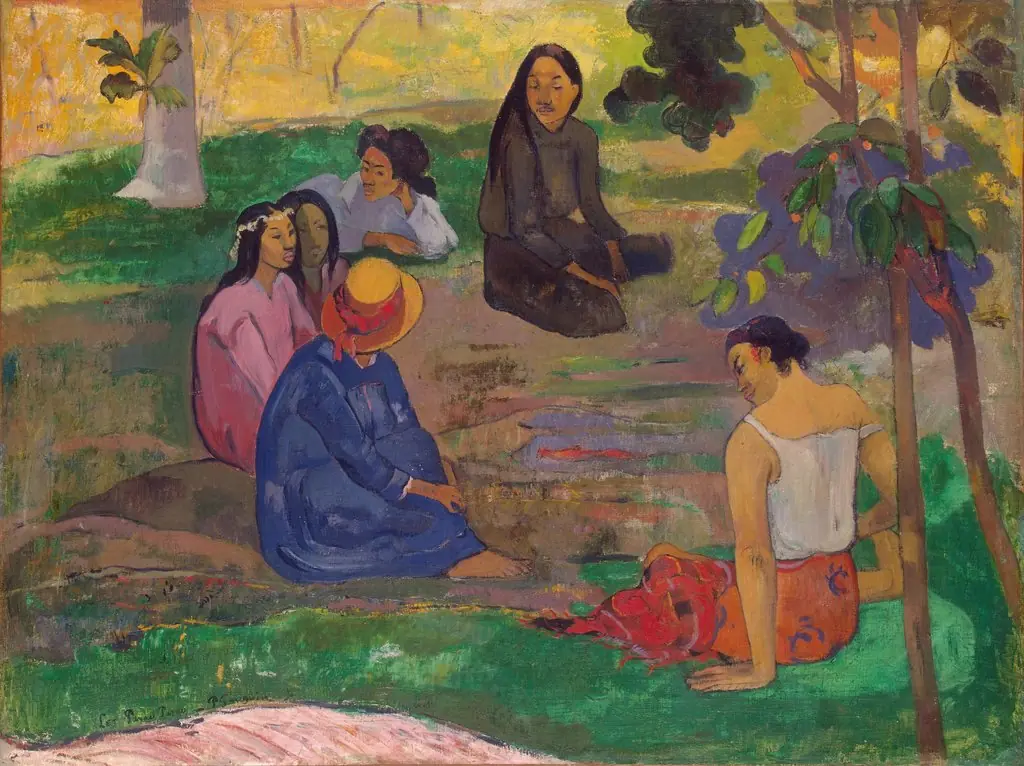
Own this work as a print
Artist & collection
Artist
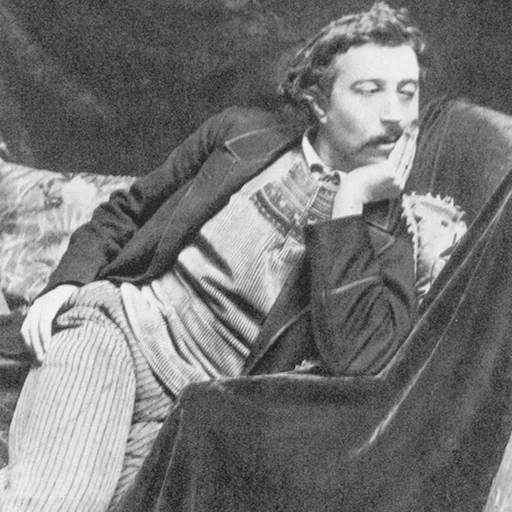
Eugène Henri Paul Gauguin (; French:; 7 June 1848 – 8 May 1903) was a French painter, sculptor, printmaker, ceramist, and writer, whose work has been primarily associated with the Post-Impressionist and Symbolist movements.

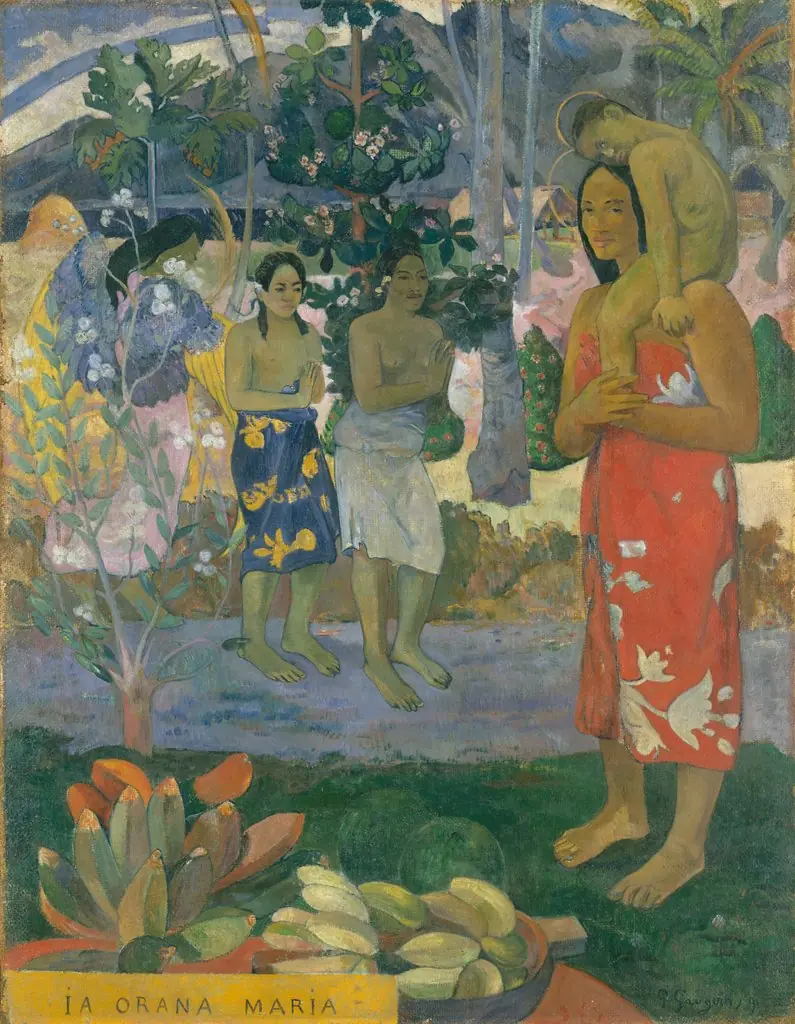
- Conversation (Les Parau Parau)
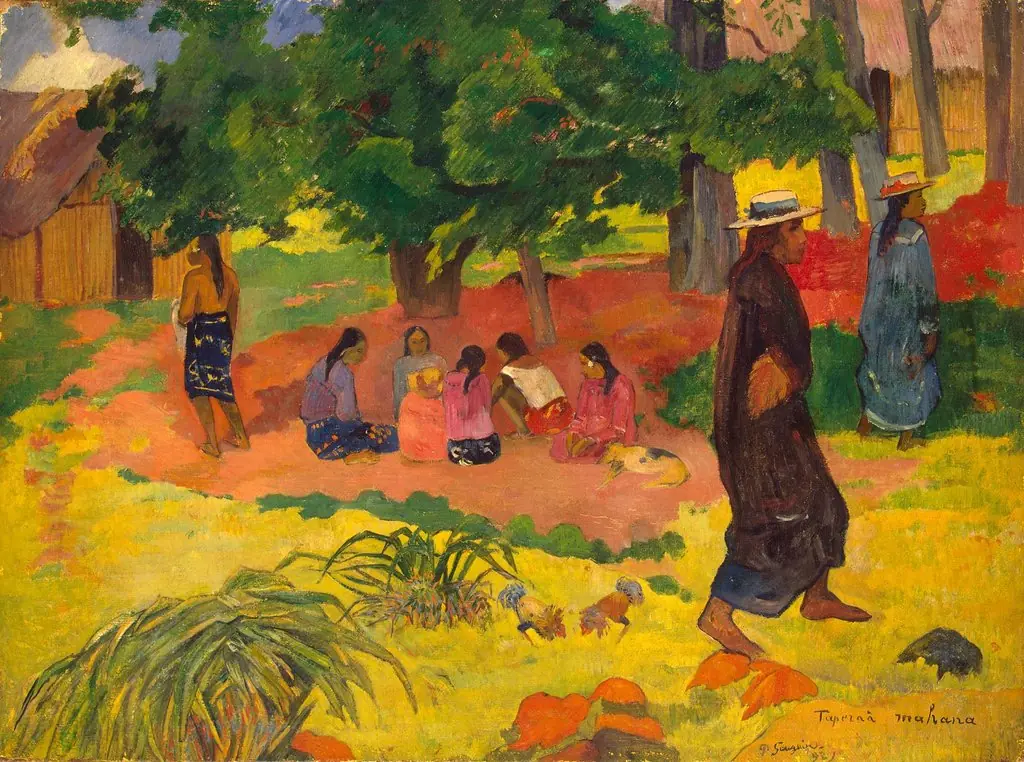 Taperaa Mahana
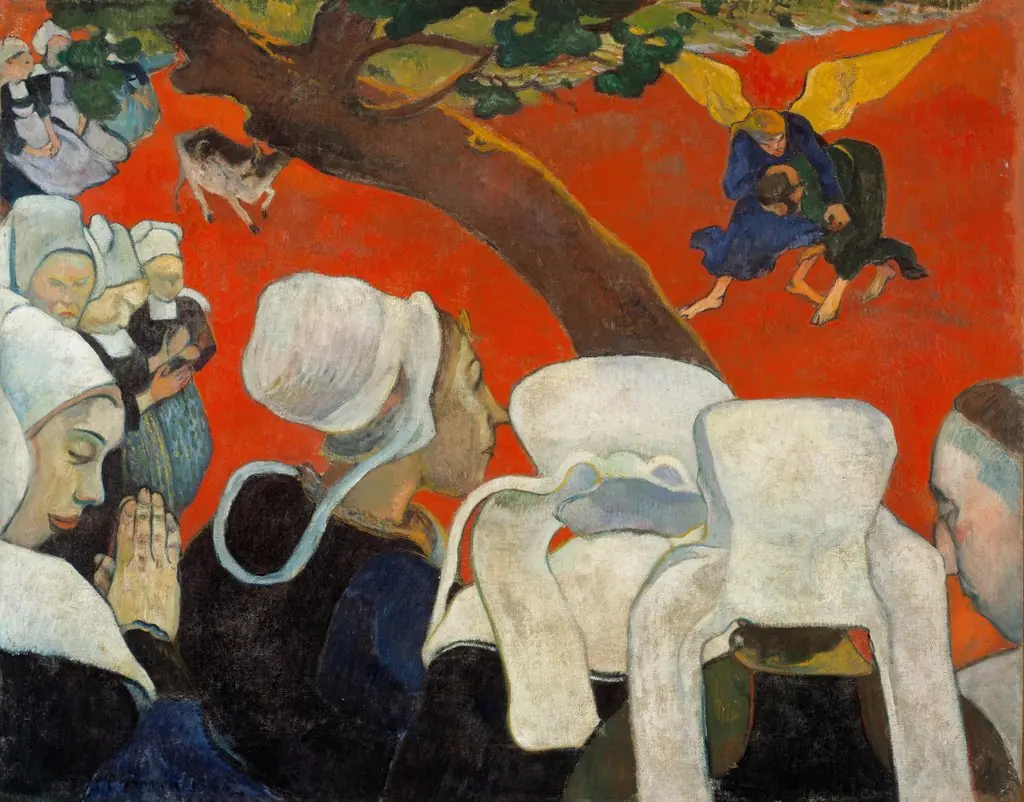 Vision After the Sermon
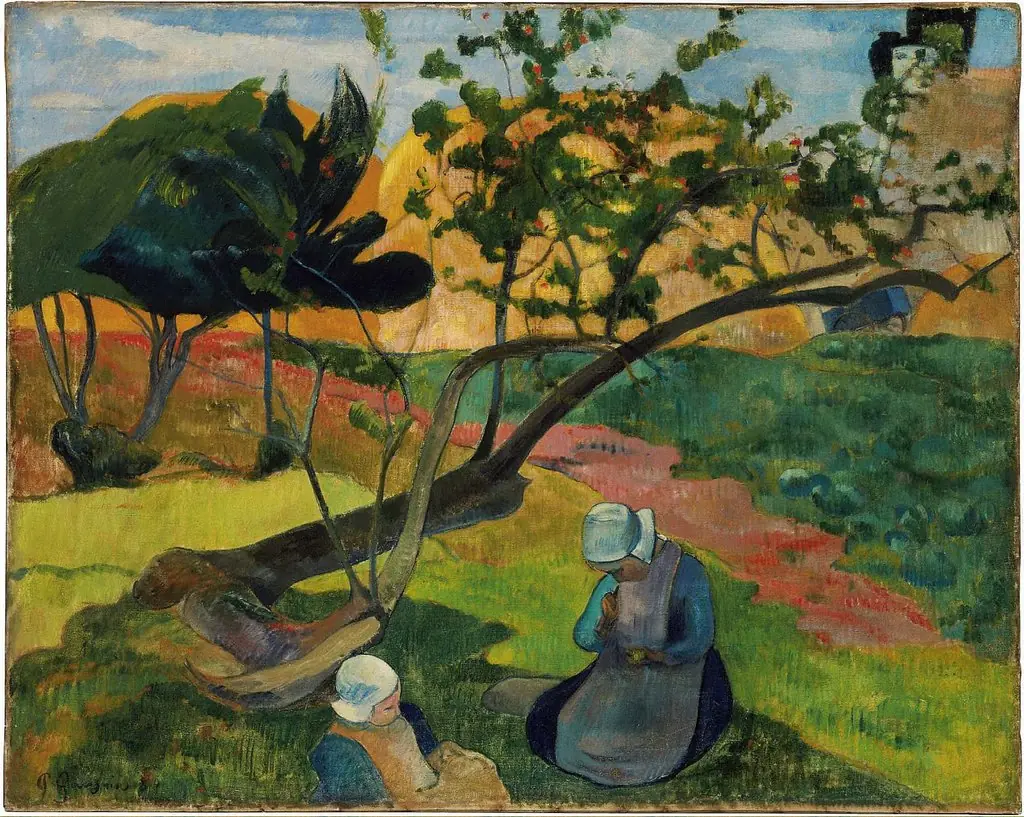 Landscape with Two Breton Women
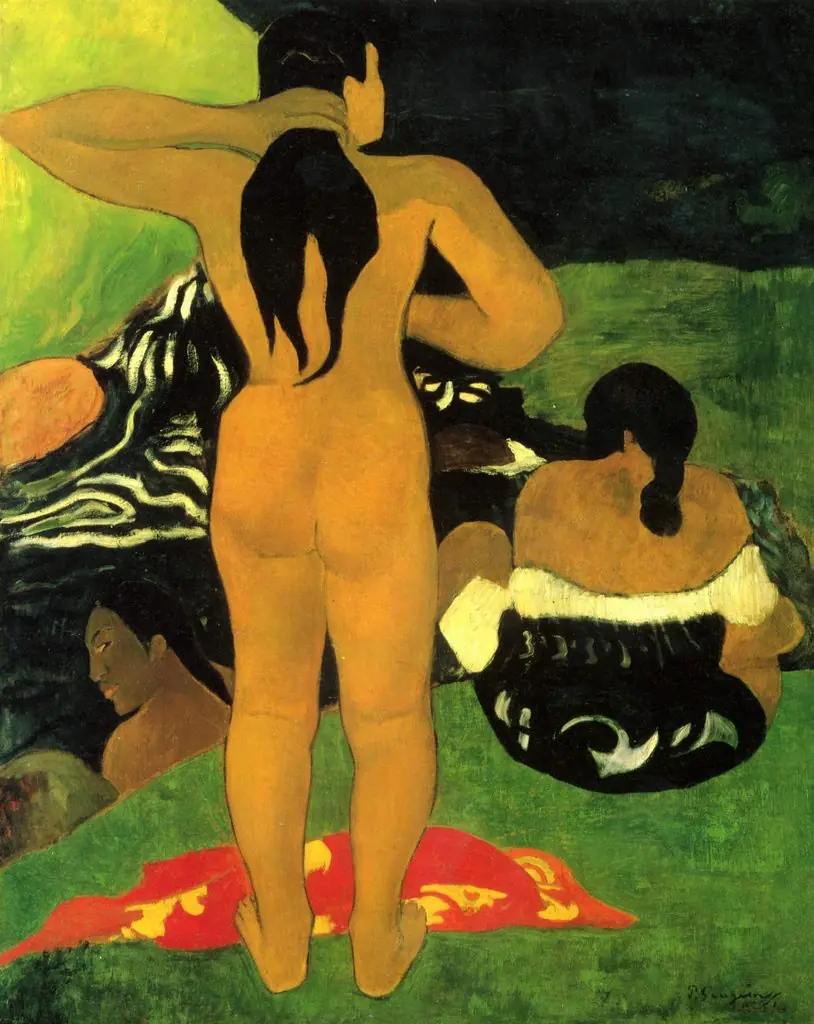 Tahitian Women Bathing
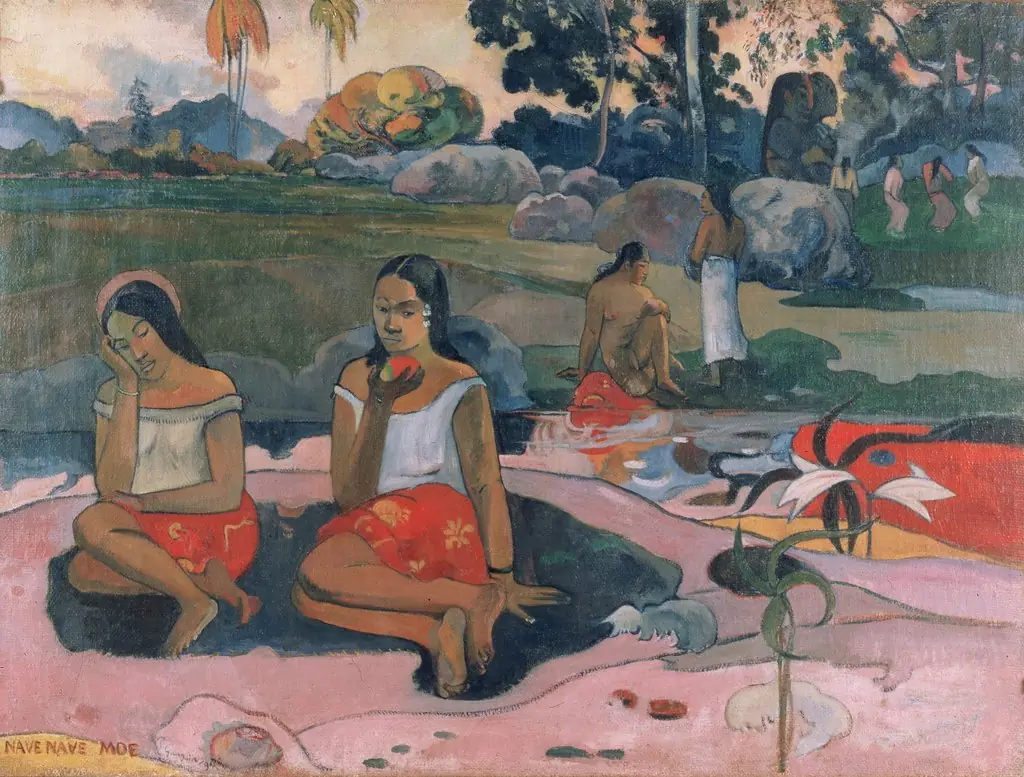 Sacred Spring: Sweet Dreams (Nave nave moe)
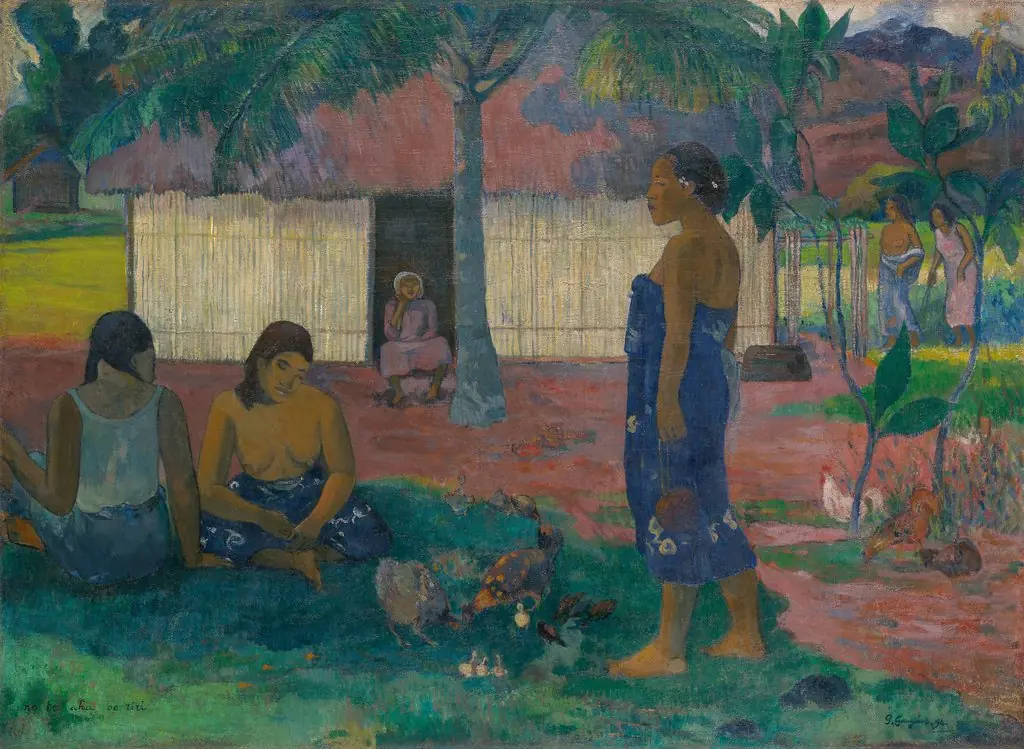 Why Are You Angry? (No Te Aha Oe Riri)
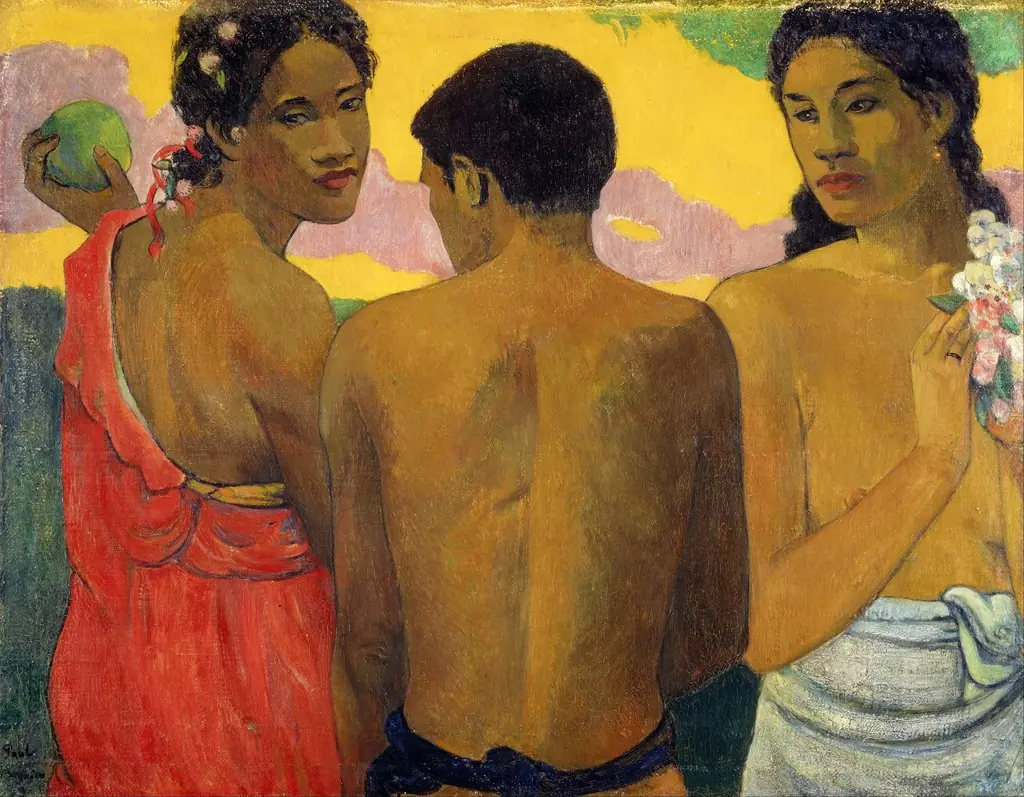 Three Tahitians
 No te aha oe riri (Why Are You Angry?)
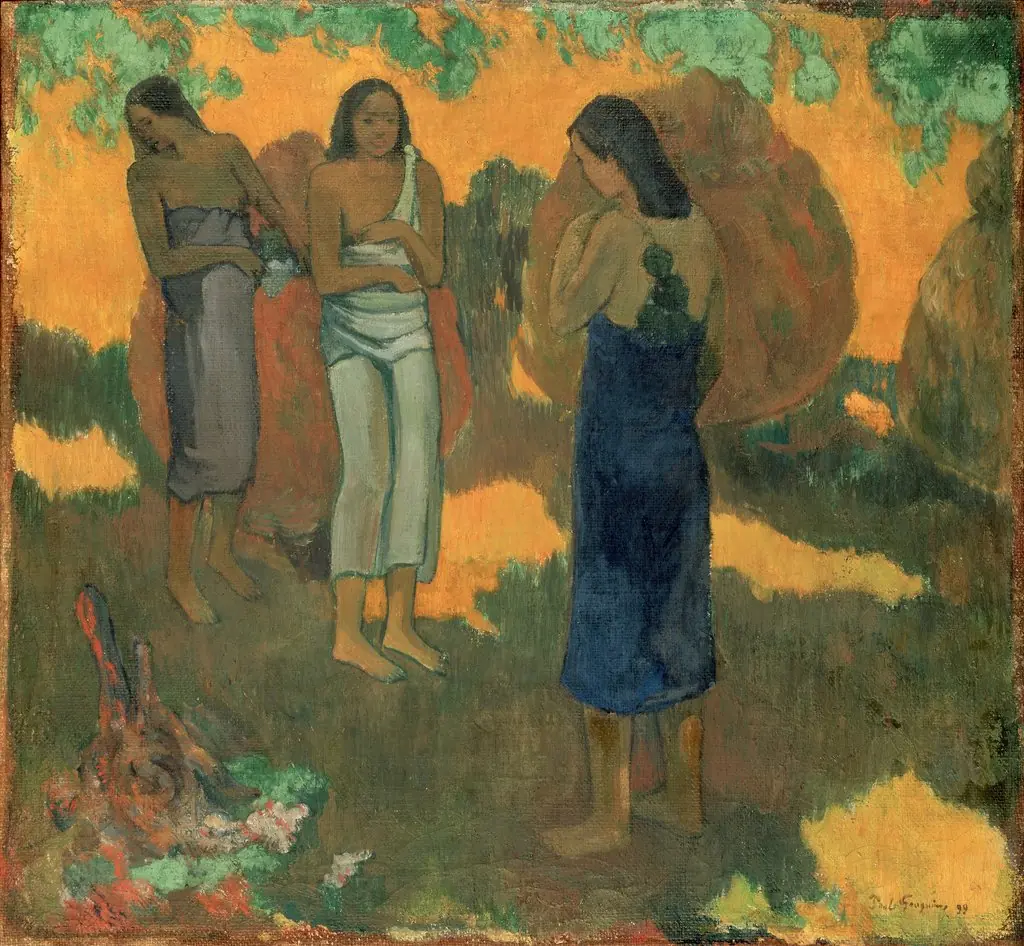 Three Tahitian Women Against a Yellow Background
 The Call
 Te raau rahi (The Big Tree)