Lady with a Dog by Toulouse-Lautrec, Henri de
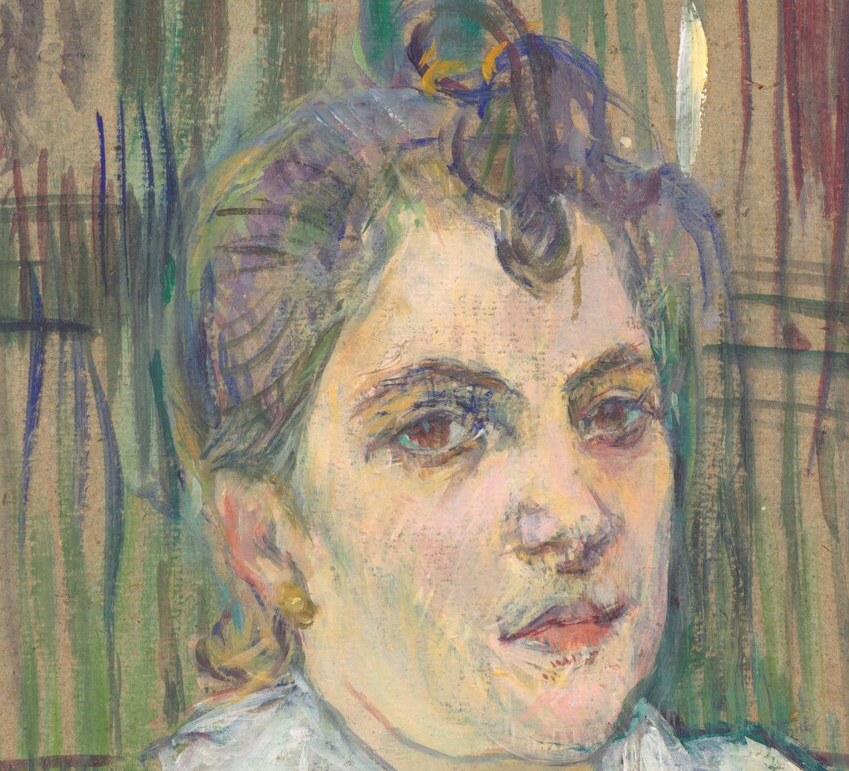
Henri de Toulouse-Lautrec's 'Lady with a Dog,' painted in 1891, is an oil on cardboard portrait that offers a glimpse into Parisian social life. While Toulouse-Lautrec often depicted figures from the city's more unconventional scenes, this work presents a quieter, intimate moment.
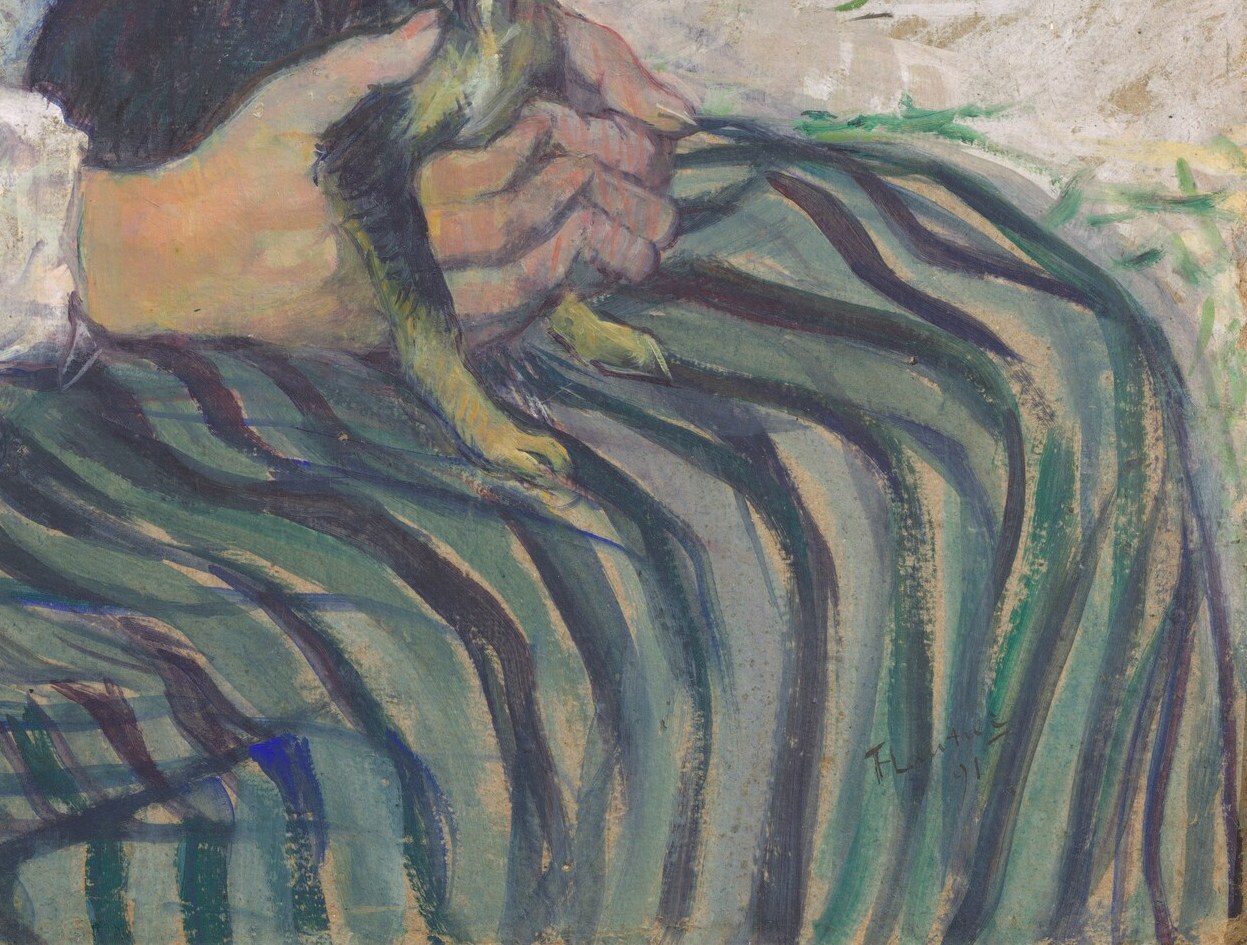
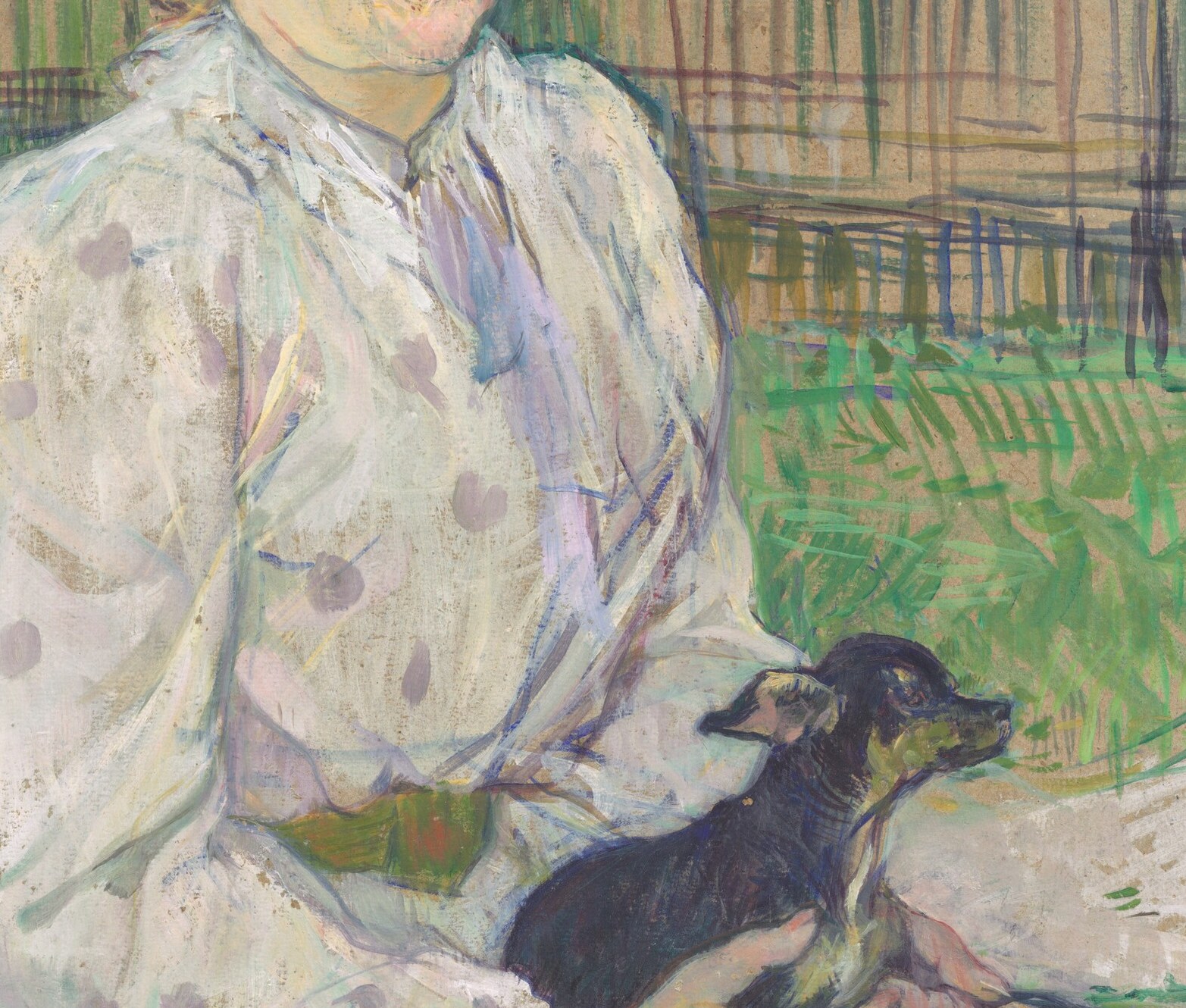
Notice the distinctive brushwork, especially in the woman's striped skirt and the subtle highlights on her blouse. These expressive forms are characteristic of Toulouse-Lautrec's Post-Impressionist style.
Born into aristocracy, Toulouse-Lautrec became deeply immersed in late 19th-century Parisian culture, which profoundly influenced his art. This painting is a testament to his versatility, capturing a serene connection between a woman and her pet.
What details do you notice first when you look at this painting?
Details
Transcript
This woman with her dog was painted in 1891. It's an oil painting, but on cardboard, not canvas. Look at the bold stripes of her skirt. The painter used thick, visible brushstrokes here. And the light catching the fabric of her blouse. It's a quiet moment from a famous Parisian life. Henri de Toulouse-Lautrec often painted the city's hidden worlds.