A Scene on the Ice by Avercamp, Hendrick
View the artwork: A Scene on the Ice →
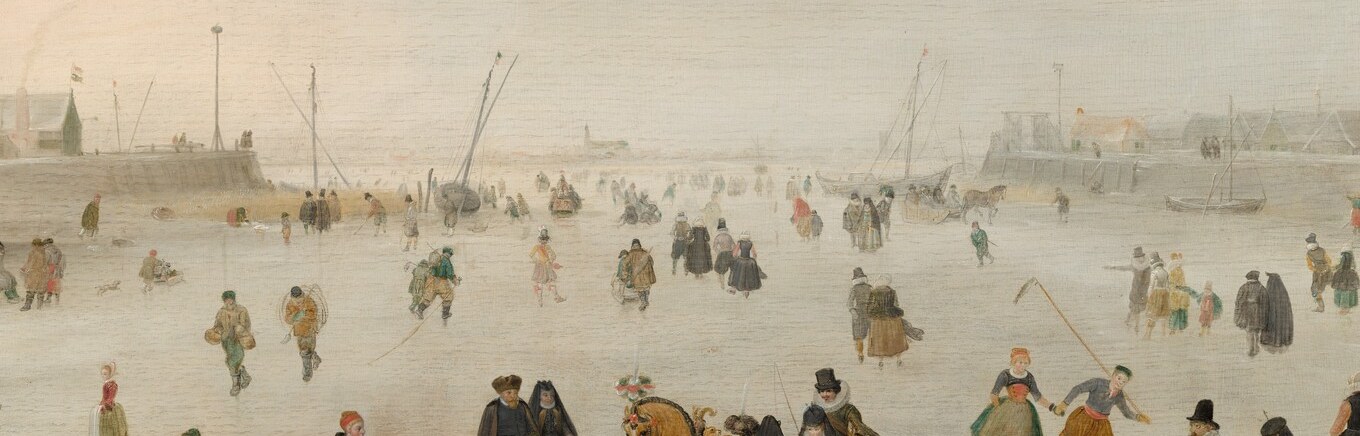
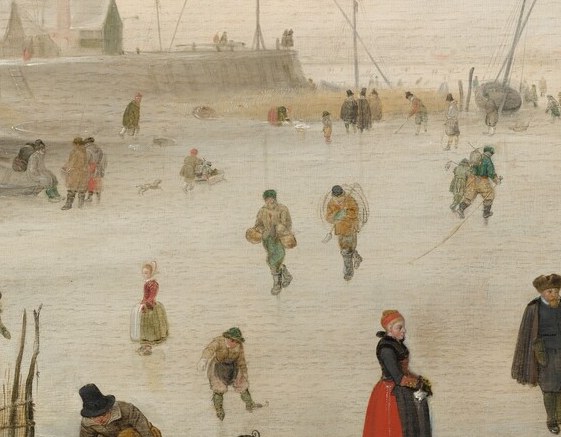
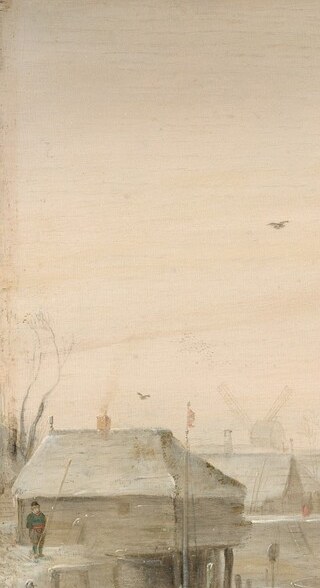
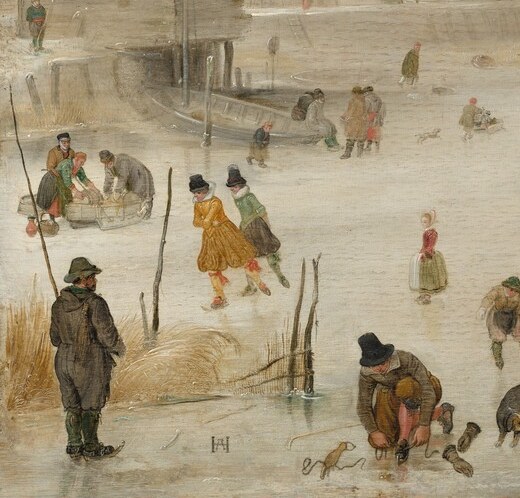
Hendrick Avercamp’s "A Scene on the Ice," painted around 1625, captures a frozen Dutch waterway during the Little Ice Age. It is held at the National Gallery in London. The first thing everyone sees is a vast, cheerful crowd, but the painting’s true weight is carried by a detail so small most visitors walk right past it. Avercamp was deaf and mute, a man who watched the world with extraordinary intensity, and his paintings reward the same kind of attention.
Look at the far distance, just left of the church spire on the horizon. Amid the tiny specks that read as a crowd, two figures are locked in a crisis. One has fallen through the ice. Another leans forward with a pole, trying to pull him out. Avercamp painted this miniature life-and-death scene no larger than a fingernail, burying it quietly among hundreds of cheerful skaters.
The winter of 1625 was brutally cold in the Dutch Republic. Canals froze for weeks, transforming them into public thoroughfares and communal gathering spaces where every level of society mixed on the ice. Avercamp specialized in these panoramic winter scenes, painting them with a documentary eye that captured not just the leisure of the wealthy in their sleds, but the labor, accidents, and quiet dangers of a world made of ice.
What does it do to a painting when a hidden tragedy lives at the very edge of the frame, out of sight of nearly everyone in it?
#arthistory #dutchgoldenage #avercamp
Details

Transcript
At first glance: a cheerful winter fair on the ice. Holland, 1625. The canals froze solid for weeks. Hendrick Avercamp built his career on these frozen scenes. His real genius hides at the edges. Near the horizon. Keep going. Past the tents, past the windmill. One tiny figure has plunged through the ice. Another tries to pull him out with a pole. You can barely see it. A life-or-death drama, painted smaller than a thumbnail.