Artwork
A Scene on the Ice
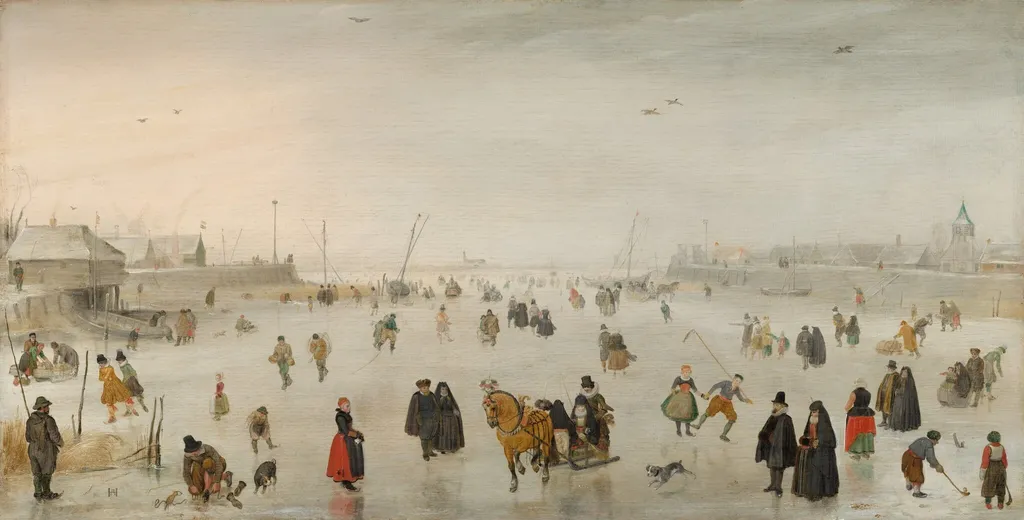
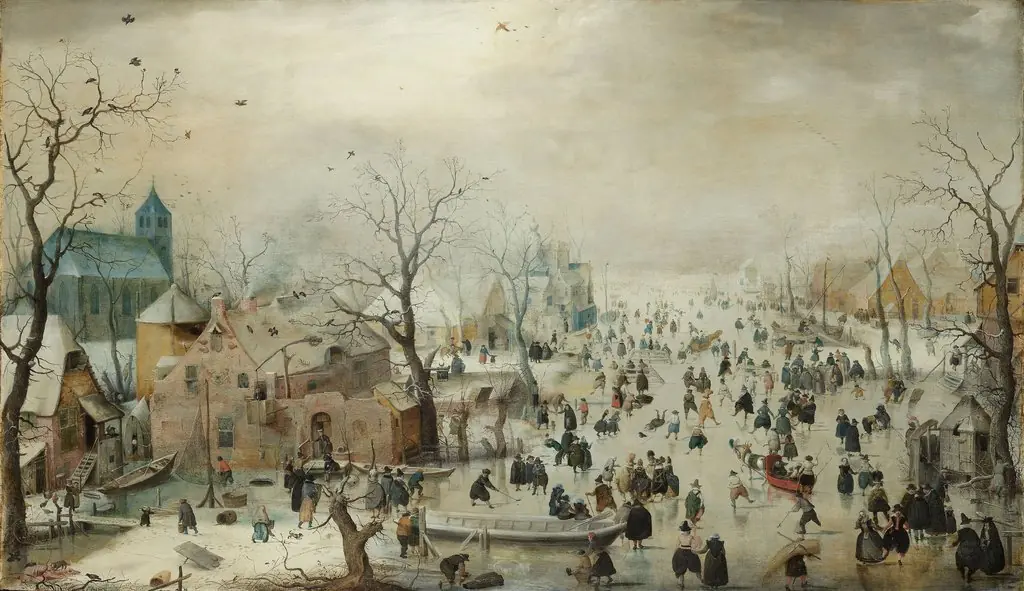
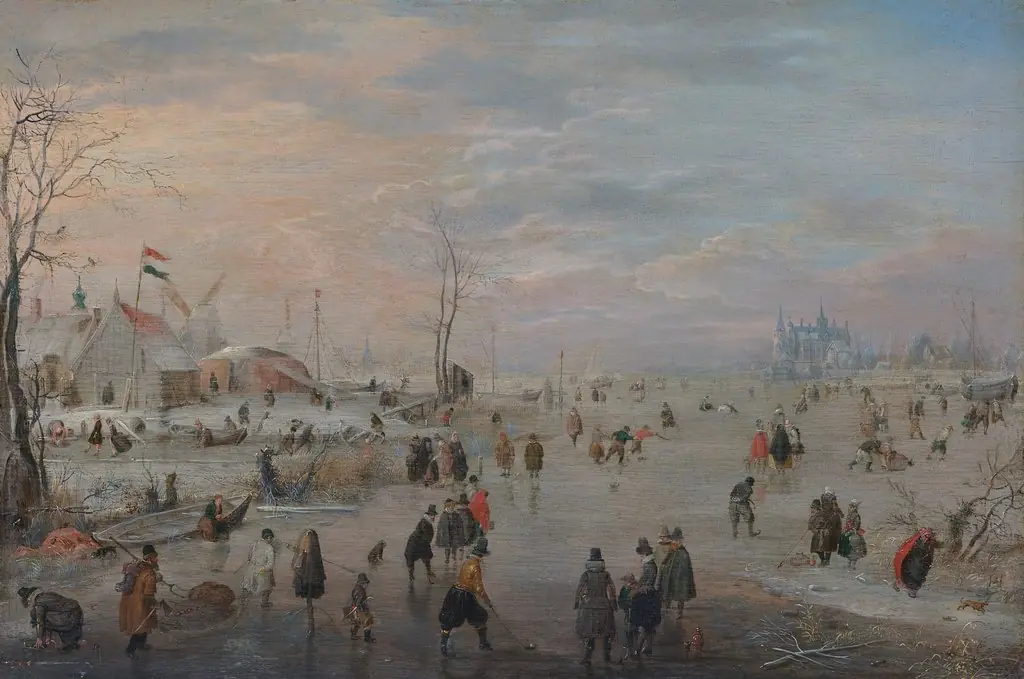
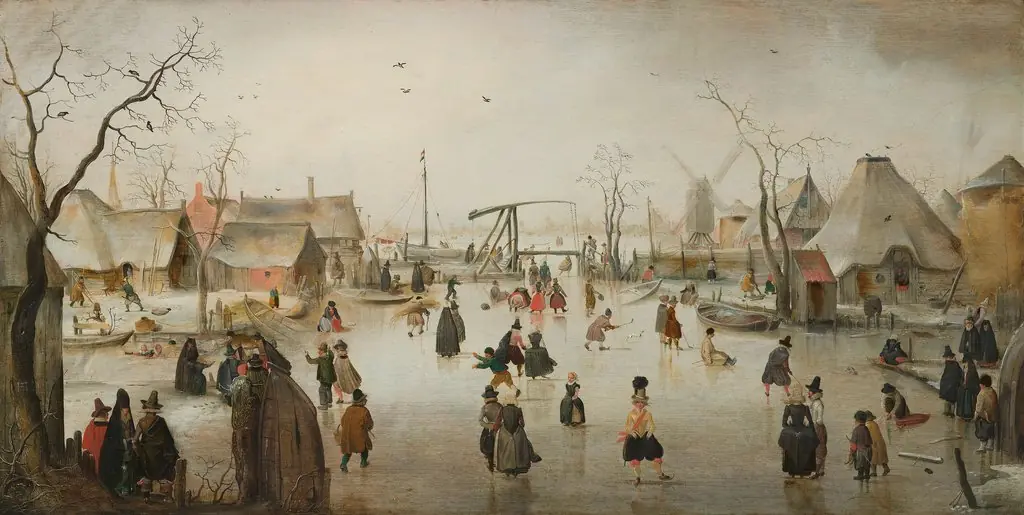
A Scene on the Ice is an oil painting by the Baroque artist Hendrick Avercamp. It dates from 1625 and is held in the collection of the National Gallery of Art.
- Inscription
- Inscribed:lower left, in ligature: HA
About this work
A frozen river packed with skaters and sleds. Hendrick Avercamp filled it with small stories: kids falling, dogs chasing hats, lovers laughing by a fire. When Dutch canals froze solid in 1625, whole towns skated for weeks. Look to the left edge for the woman in red.
Subject & Meaning
The painting’s provenance traces from the Imperial Hermitage to private collectors before its acquisition by the National Gallery of Art.
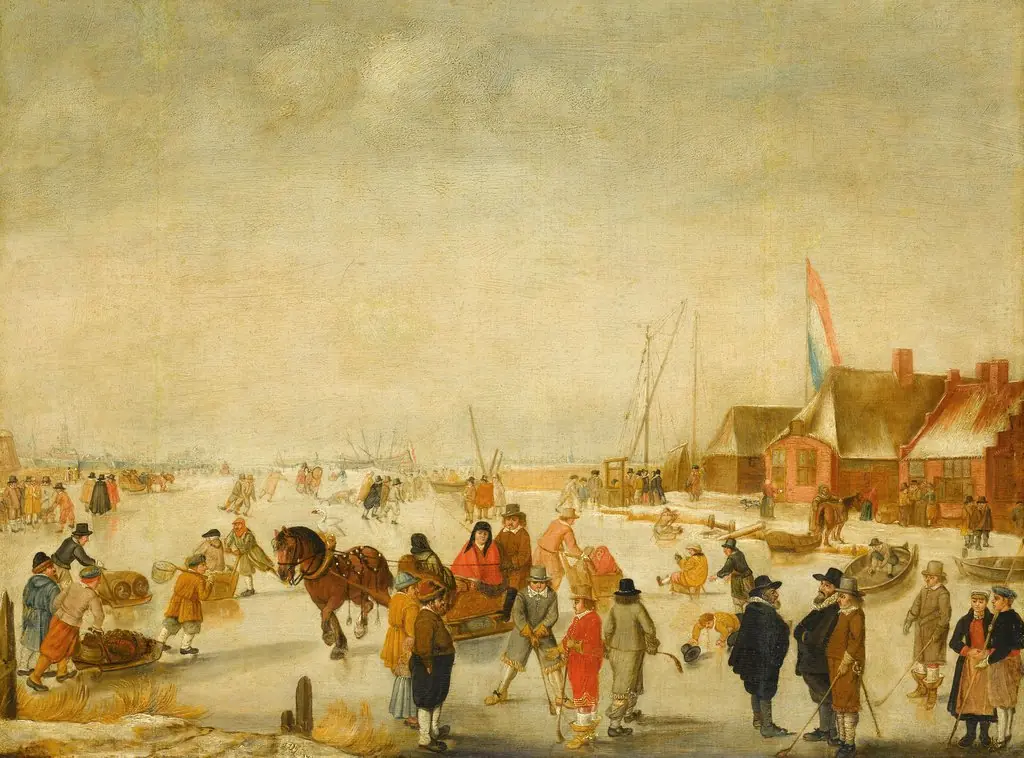
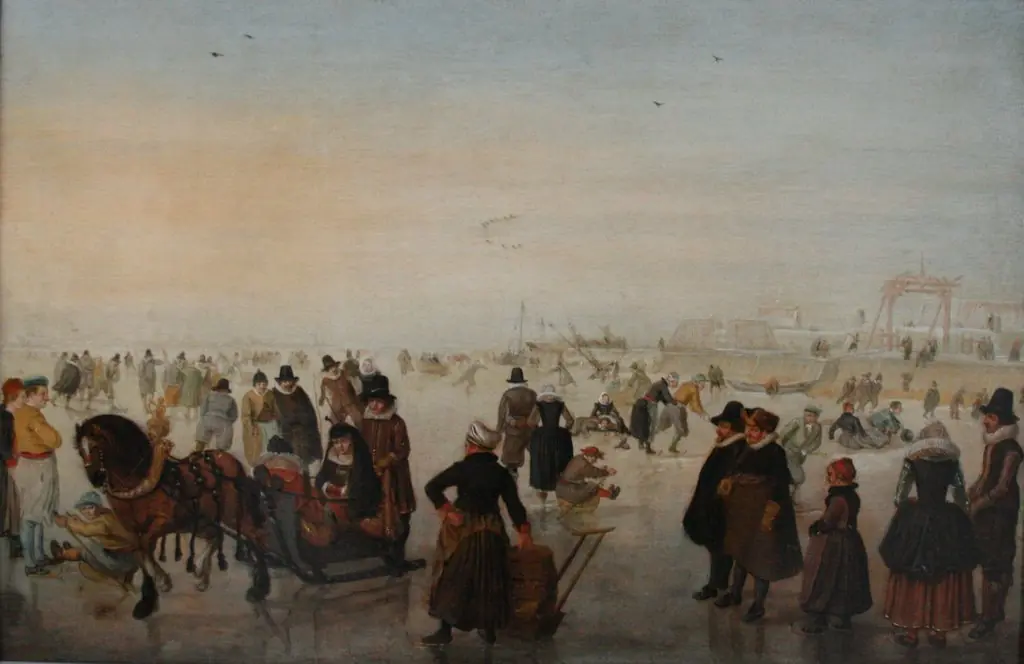
The work portrays a bustling winter tableau on a frozen river, showing a horse pulling a sled, a man and a woman engaged in ice skating, and other figures observing the scene. Created in 1625 as an oil painting on panel, the composition functions as a genre view of 17th‑century Dutch leisure, emphasizing communal recreation and the seasonal celebration of ice. The inclusion of a horse, sled and skaters conveys both the physical activity and the social hierarchy among participants, while the crisp, luminous atmosphere reflects the everyday festivity of the period.
The painting’s provenance traces from the Imperial Hermitage to private collectors before its acquisition by the National Gallery of Art.
Technique & Style
The painting is executed in oil on a wooden panel, as recorded in the documentation. Its dimensions, approximately 39.2 cm in height and 77 cm in width, are noted in the catalogue. The work belongs to the landscape genre and depicts a winter scene with figures ice‑skating, a horse, a sled and a woman.
The oil medium enables subtle modeling of the figures and a luminous rendering of the icy surface, while the panel support offers a smooth ground for the fine brushwork characteristic of the composition.
History & Provenance
The work titled A Scene on the Ice was painted by Hendrick Avercamp in 1625, as documented in its creation records [2]. Executed in oil on panel, the painting entered the Imperial Hermitage Gallery in Saint Petersburg before appearing in the 1933–1934 exhibition circuit, where it was attributed to the dealer D. Katz [1]. By 1934 the work had passed to J.M.B. Beuker of Heelsum, who retained it until inheritance by his widow; it was subsequently sold on 5 April 1967 through A. Martin de Wild to the National Gallery of Art, Washington, D.C. [1]
A Scene on the Ice is currently held in the collection of the National Gallery of Art in Washington, D.C., where it carries the accession number 1967.3.1. The museum acquired the panel on April 5, 1967, purchasing it from A. Martin de Wild in The Hague; the work had previously belonged to J.M.B. Beuker of Heelsum and his widow. Although exhibition labels from 1934 and 1938 describe the painting as formerly belonging to the Imperial Hermitage Gallery in Saint Petersburg, the work does not appear in that institution's official collection catalogues.
Prior to its acquisition by the National Gallery, the painting was exhibited through the firm D. Katz in Dieren by 1933 and was listed under Beuker's ownership by 1934.
Legacy
The painting A Scene on the Ice has been recognized as a key example of early Dutch winter genre scenes, its inclusion in the 1934 and 1938 exhibition catalogues and subsequent acquisition by the National Gallery of Art cemented its scholarly reputation; provenance research reveals a contested Hermitage connection that has prompted further study, while its presence in the NGA collection and documentation in authoritative sources such as Wikidata underscore its lasting significance in art-historical narratives.
Overview
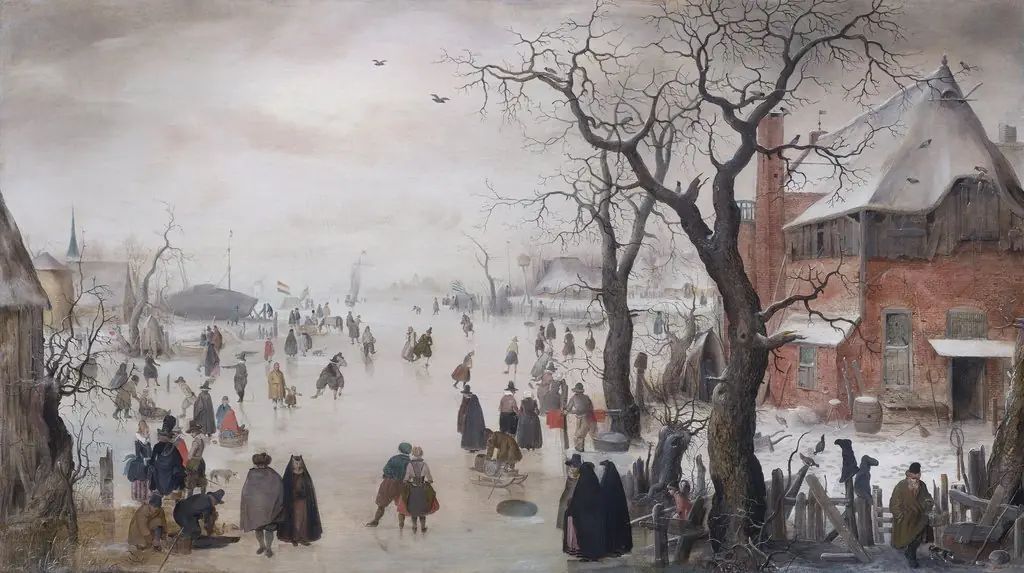
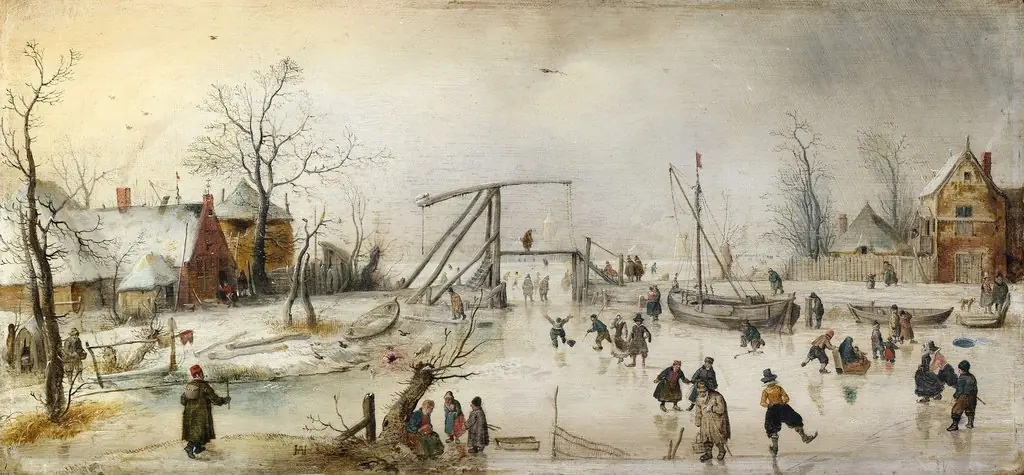
A Scene on the Ice is an oil on panel painting by Hendrick Avercamp, created in the winter of 1625. The composition captures a wide expanse of a frozen waterway, teeming with a multitude of small figures. Skaters and sleds animate the surface, presenting a lively tableau of daily life and leisure during a severe Dutch winter.
The artist's meticulous attention to detail invites close observation of the many individual narratives unfolding across the ice.
Context
The artwork reflects the reality of 17th-century Dutch winters, particularly the severe conditions of 1625 when canals froze extensively. These periods transformed waterways into public arenas for recreation and transport, where entire communities participated in weeks-long skating festivals. Avercamp's depictions resonated strongly with his contemporaries, offering a visual record of their shared experiences and daily routines on the ice, much like popular prints of later eras.
Artist & collection

Artist
Hendrick Avercamp (January 27, 1585 (bapt.) – May 15, 1634 (buried)) was a Dutch painter during the Dutch Golden Age of painting.