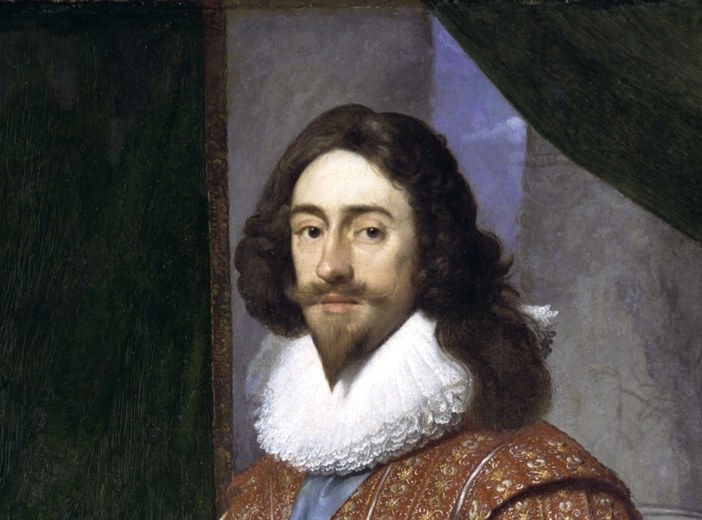
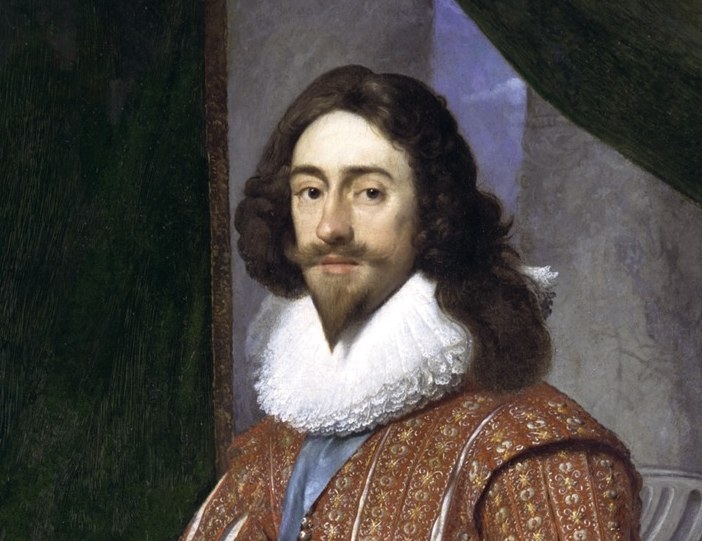
Portrait of Charles I of England by Daniël Mijtens
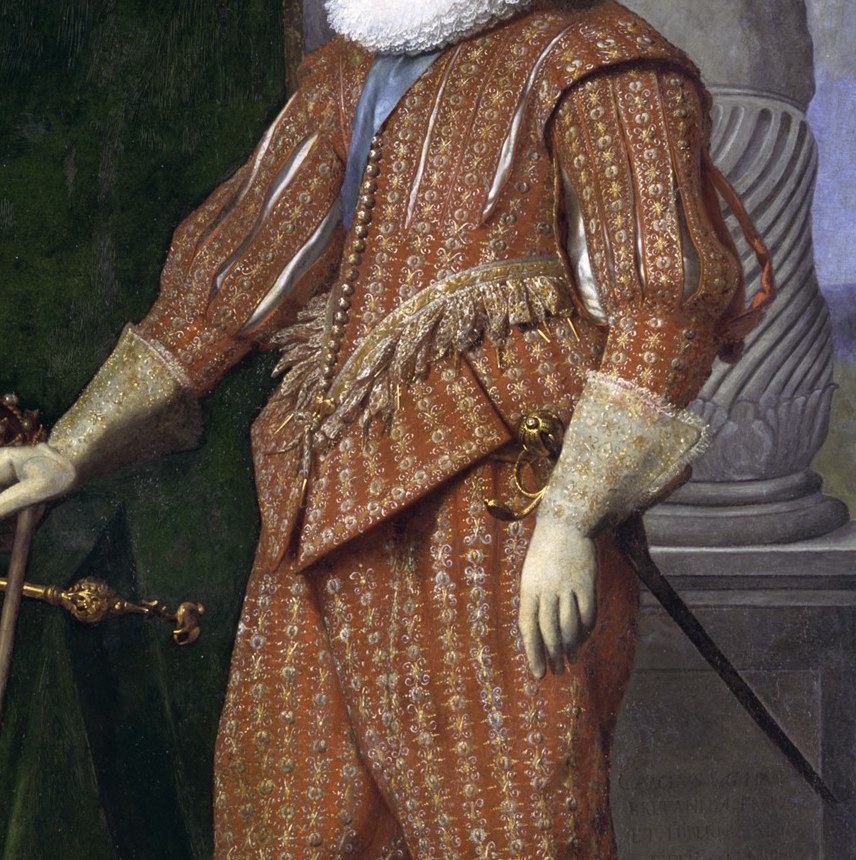
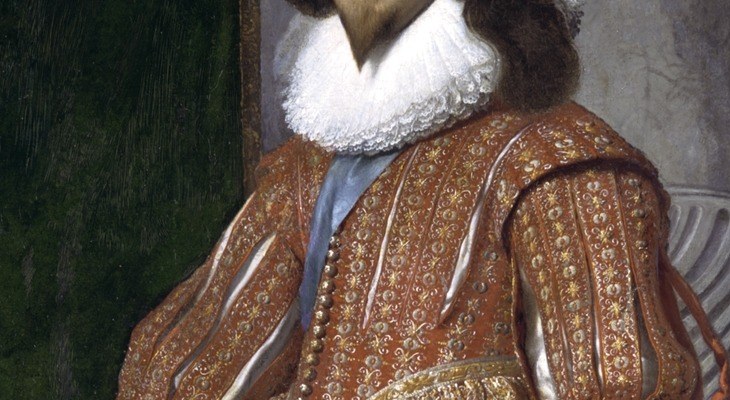
Daniel Mijtens painted this portrait of Charles I in 1629, and it lives at The Metropolitan Museum of Art. What stops you is the doublet, a red field covered in a repeating gold diamond brocade. It is not a printed pattern. Each diamond is an individual dab of paint, adjusted in tone so the fabric reads as a cylinder wrapping around a living torso. Photography can capture a brocade. It cannot paint one.
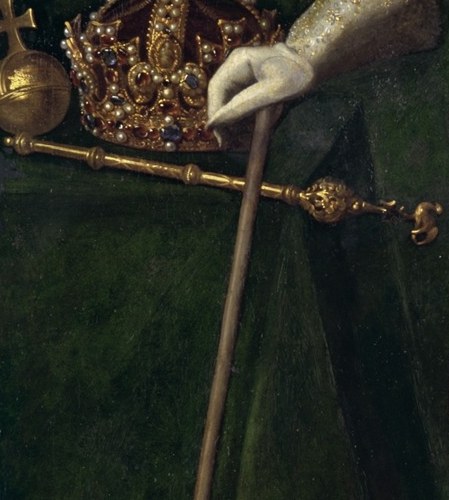
Look at the crown on the table. Charles does not wear it. His right hand simply rests on it, as if it were a book he just set down. The gold is built from a narrow range of ochre, umber, and white lead, Mijtens makes cold, heavy metal with almost no yellows. The lace collar is the other technical dare: white on white, holding its shape, translucent at the edges where the ruff dissolves into the dark background.
Mijtens was a Dutchman from The Hague who became the principal portraitist at the English court before Van Dyck arrived and eclipsed him. This painting shows why he held the job. He could render silk, steel, lace, and gold with a precision that made courtiers feel seen. The Metropolitan Museum holds it as a key record of Stuart royal image-making, painted when Charles was still secure on his throne, twenty years before the axe.
Next time a fast-fashion ad claims a fabric is 'rich,' remember this doublet. It took weeks to dry between glazes.
Details
Transcript
You are looking at a painter showing off. Start with the crown. Gold. Heavy. It sits on the table, not on his head. Daniel Mijtens had to make painted metal feel dense and cold. Now look at the doublet. Every diamond in that brocade is a separate brushstroke. Each one follows the curve of his body, so the fabric bends around him. This is 1629. No camera. A human hand painted every thread of gold.