The Olive Orchard by Gogh, Vincent van
View the artwork: The Olive Orchard →
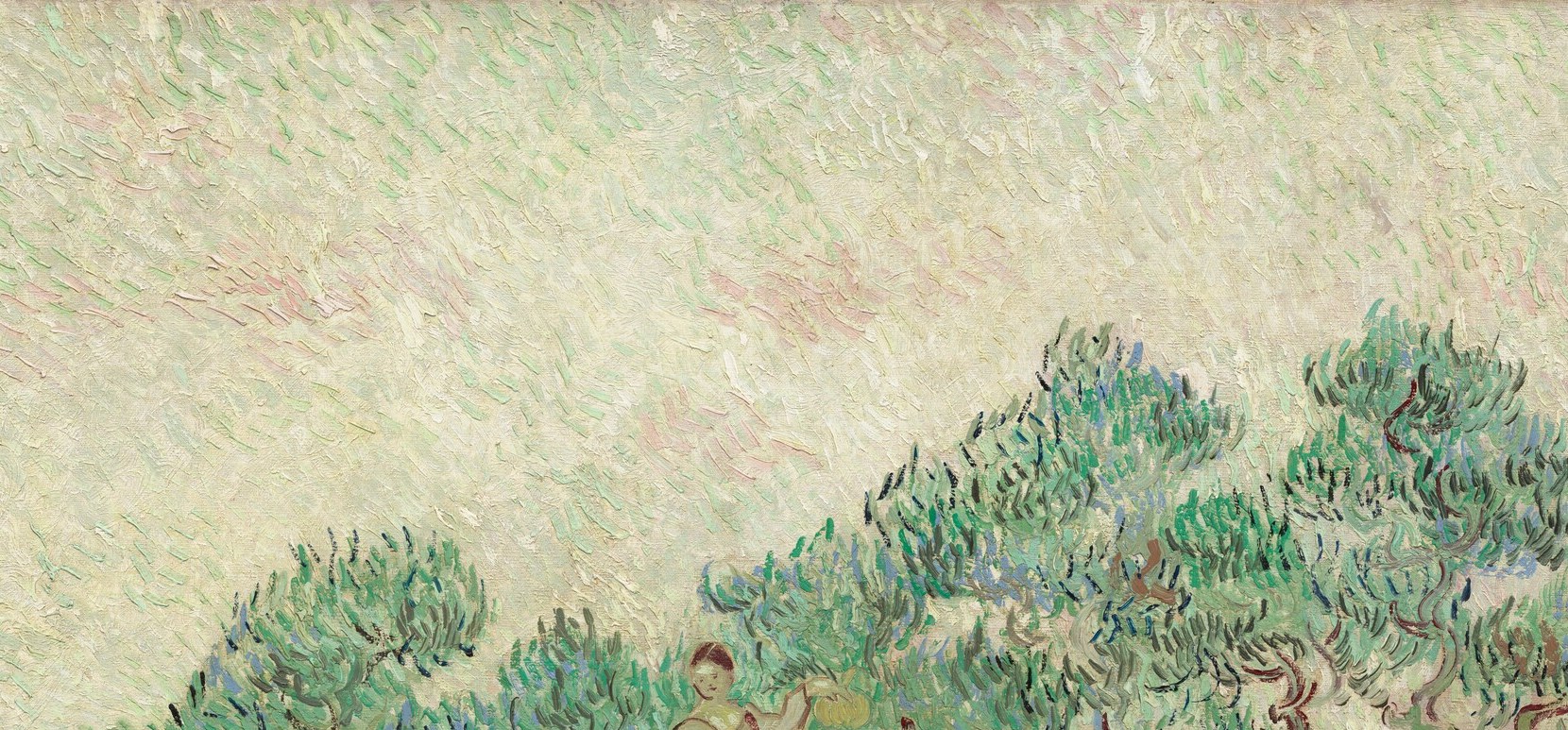
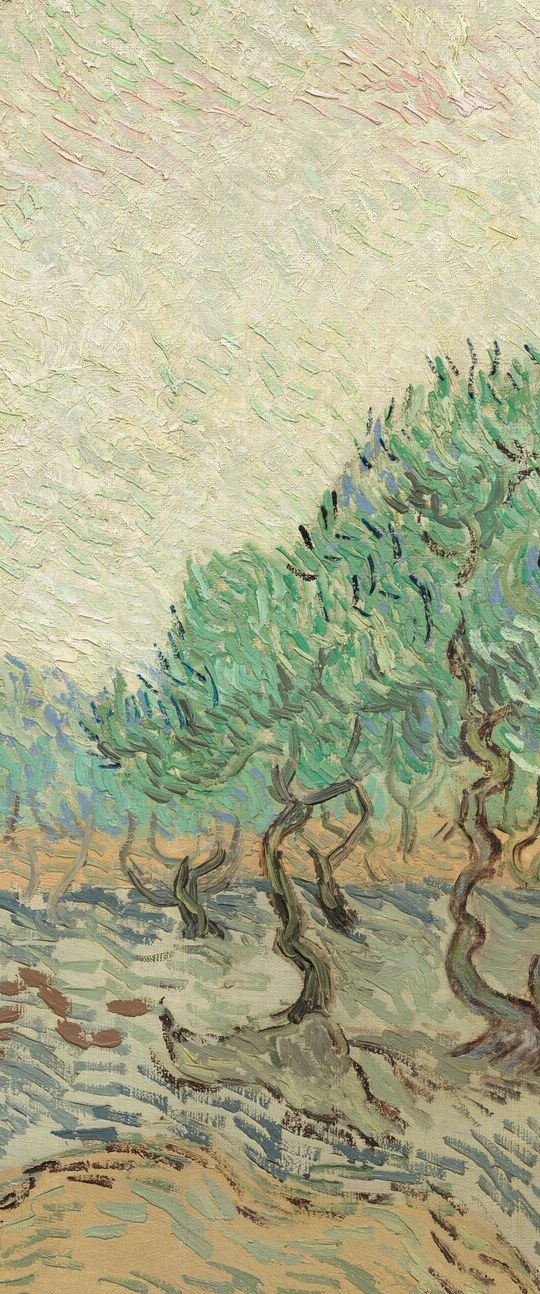
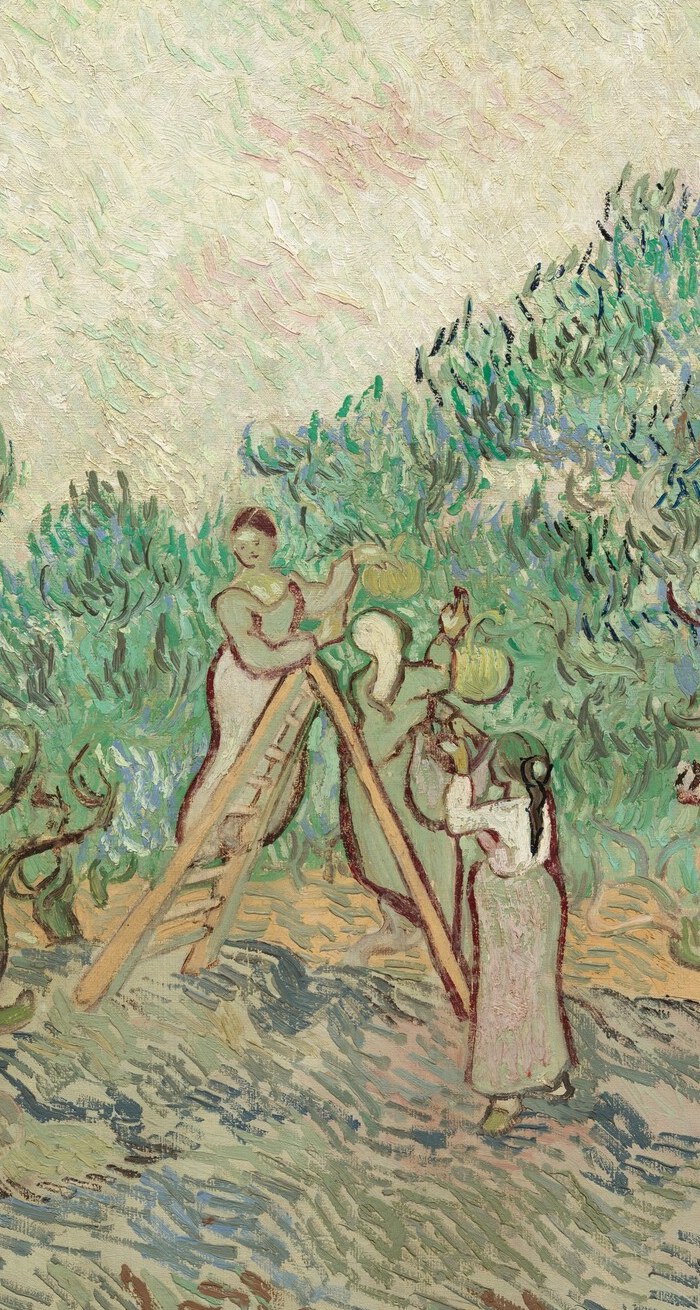
This is The Olive Orchard, painted by Vincent van Gogh in the autumn of 1889. It shows a solitary woman standing among the silvery olive trees of Saint-Rémy-de-Provence. The quiet in it is not empty. It is the quiet of a man watching life continue from a distance he could not cross.
Van Gogh painted this scene from the window of the asylum at Saint-Paul-de-Mausole, where he had committed himself in May 1889. The window became his world. Through it he watched the seasons change the orchard, the harvesters come and go, the ladder lean against the trunk. The woman here is not a portrait. She is a presence: a person moving freely through a landscape the painter could see but could not enter. He made at least fifteen paintings of olive groves that autumn, and in nearly all of them the trees feel more animated than the stillness of the human figures passing through.
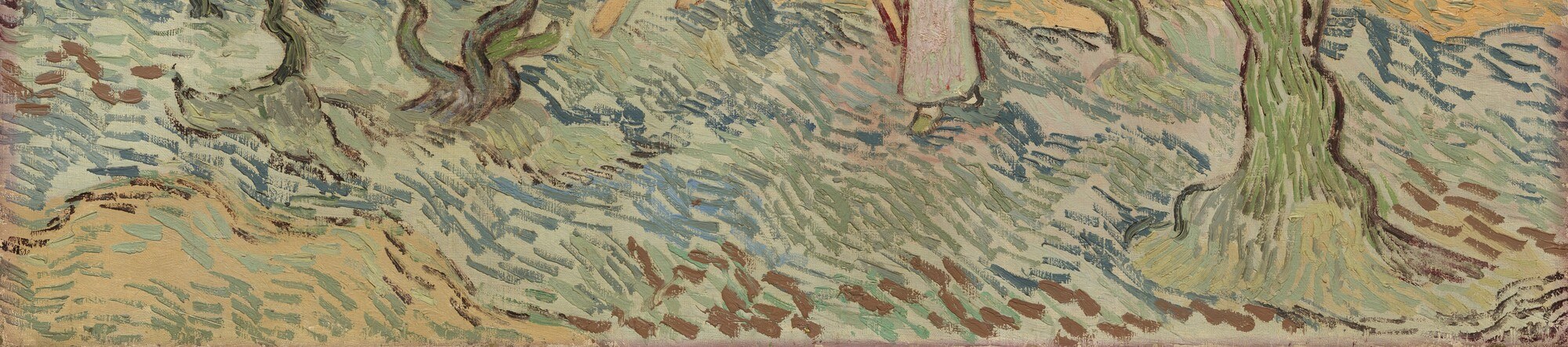
Look at how the canopy moves. The brushwork is not drawn; it is loaded and pushed, thick strokes of silver-green and blue-grey that make the leaves shimmer. That trembling was deliberate. Van Gogh wrote to his brother Theo that he wanted to capture the “whisper” of the olive leaves, the way they caught the light. Against that motion, the woman is held in place, anchored by the heavy impasto of the earth under her feet. The ladder behind her leans on nothing she is using. Someone else will pick the fruit.
Vincent van Gogh died the following summer, in July 1890, at the age of thirty-seven. He sold one painting during his lifetime. This one remained unseen by the public, a private record of a view from a window and the fragile hope of watching someone else live. If you look at the ground where she stands, can you feel the thickness of the paint holding her there?
#arthistory #vangogh #postimpressionism
Details

Transcript
He saw this woman from his window. She is close enough to almost touch. But the painter could not leave the grounds. So he watched the olives tremble. He watched the painted earth carry her weight. And he painted the distance between them.