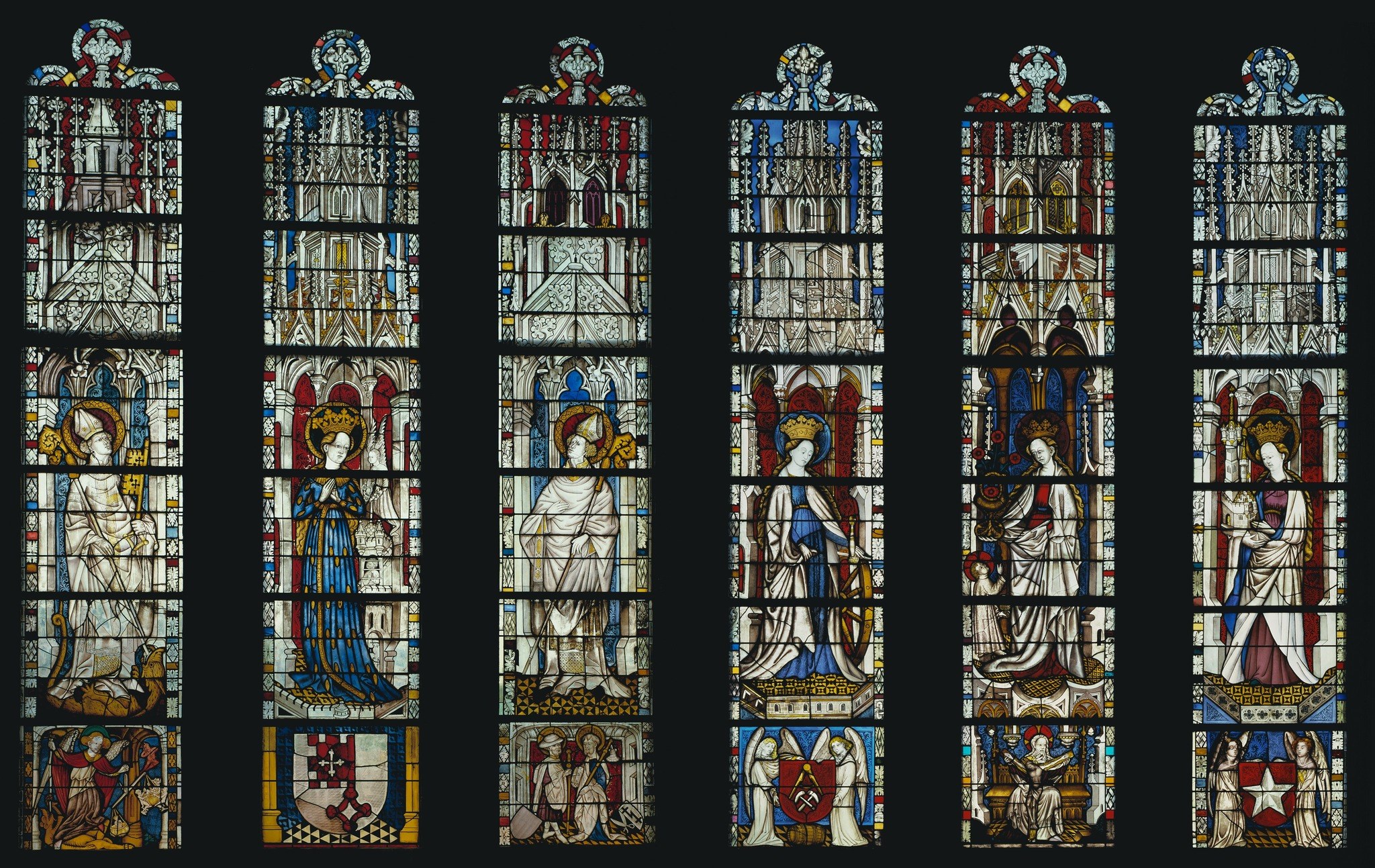
The Virgin Mary and Five Standing Saints above Predella Panels by http://www.wikidata.org/.well-known/genid/1d8a263b28e2a1306dc147cbbf060b6d
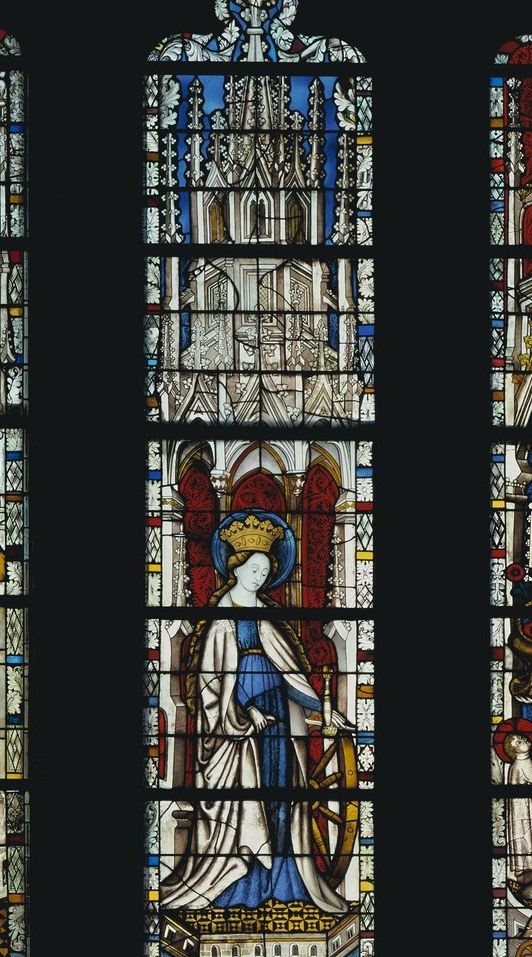
A family's silent signature, hidden at the bottom of a 15th-century stained-glass window. This is "The Virgin Mary and Five Standing Saints above Predella Panels," made around 1443, likely for a private chapel somewhere in the Holy Roman Empire. The artist is unknown, but the window itself tells a precise story about who paid for it.
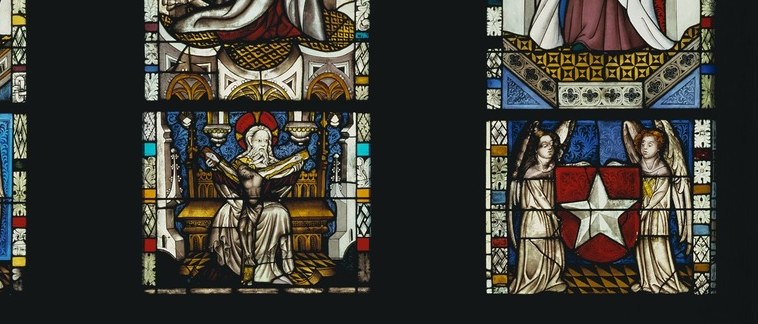
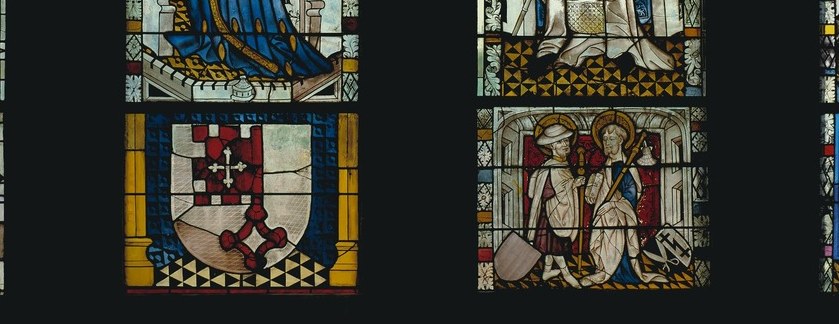
Look at the predella, the narrow horizontal band at the base. That's where you'll find the only secular faces in the entire composition: the donors, painted at reduced scale, kneeling in permanent devotion. Beside them sits a heraldic shield bearing a red cross and stars. That coat of arms was a family's legal and spiritual receipt, visible proof that they funded this luminous wall of saints.
In the medieval church, stained glass was colossally expensive. A single window could cost as much as a house. A family that commissioned one didn't just want beauty, they wanted their name, and their presence, woven into the sacred architecture forever. The saints above are majestic, remote, celestial. The real humans in the story are tiny, humble, down at knee level.
The window's location today is not firmly recorded in public data, but the heraldry may still be identifiable to a specific lineage. Next time you stand before a medieval window, look down first. That's where the money, and the remarkably personal hope, is. What would you ask to be remembered by in a window?
Details
Transcript
Look up. The saints stand in brilliant blue and gold. The Virgin Mary in white, crowned Queen of Heaven. But a stained-glass window this size was never free. A family paid for it. And they left proof. Down here: a red cross and stars on a shield. A coat of arms. The signature of the donors. And beside it: the donors themselves, kneeling. These are the only secular faces in the entire window.