The Crucifixion by Matteo di Giovanni
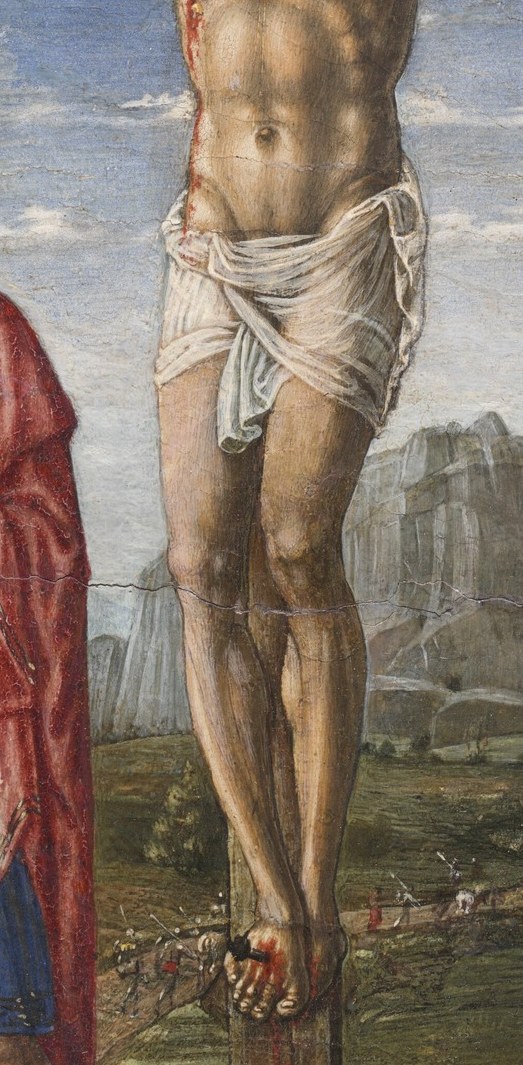
Matteo di Giovanni’s The Crucifixion, painted in 1474, is a powerful Sienese panel painting held at The Cleveland Museum of Art. It draws viewers into the dramatic scene through carefully chosen symbols and emotional intensity.
Notice the inscription “INRI” above Christ’s head. This detail, written in three languages, declares Jesus as “King of the Jews,” a key part of the crucifixion narrative. The crown of thorns is another poignant symbol, representing both suffering and the mocking of his kingship.
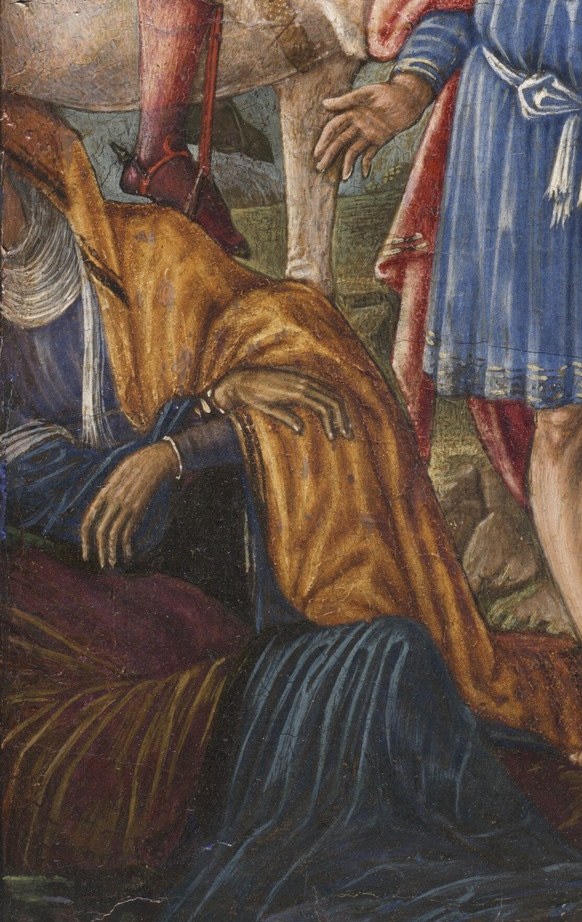
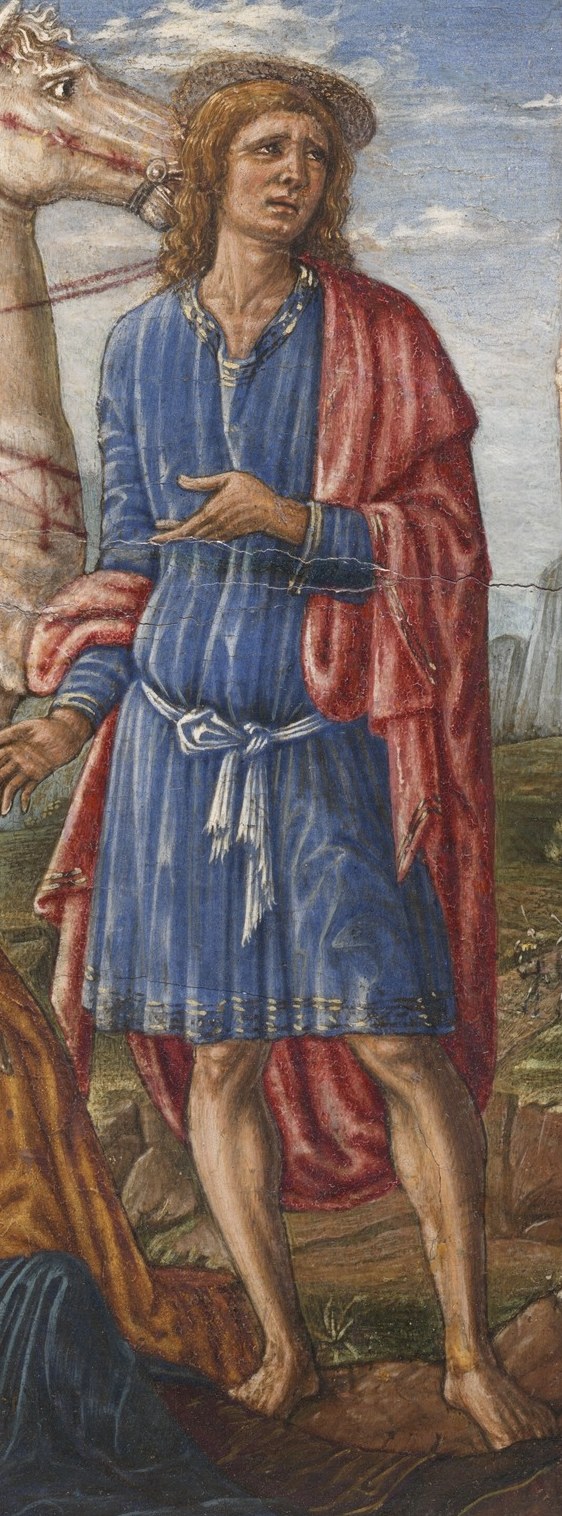
The painting’s composition, with figures like the mourning woman in yellow, heightens the emotional depth. Di Giovanni skillfully uses color and the arrangement of figures to create a theatrical and moving depiction of the Passion. It stands as a testament to 15th-century religious art.
What other details do you notice that add to the painting's powerful message?
Details
Transcript
This 1474 painting depicts the Crucifixion of Christ. Look closely at the inscription above his head. INRI, written in three languages, proclaims Jesus as King of the Jews. His crown of thorns is a painful symbol of sacrifice and mockery. The mourning woman in yellow embodies the universal grief of loss. Each element adds to the dramatic, theatrical staging of the Passion.