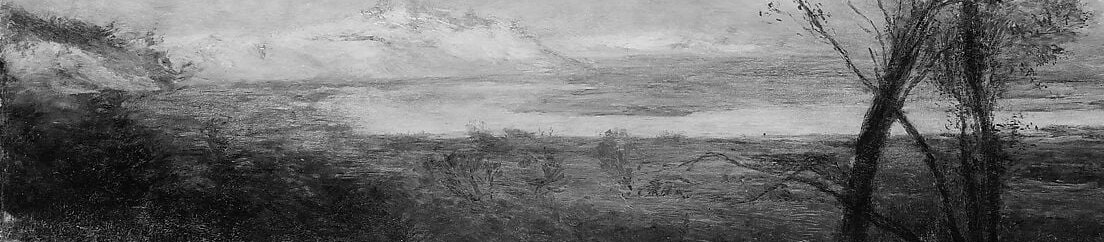
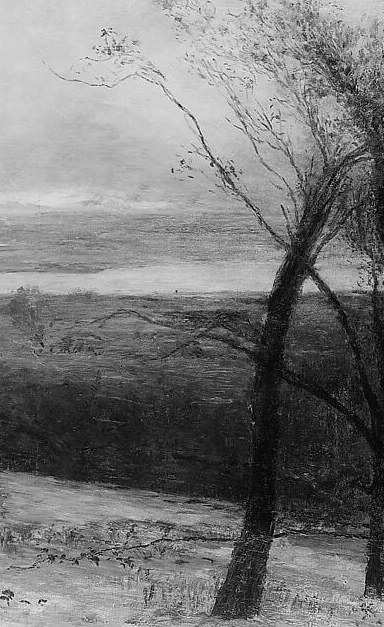
Behind Dunes, Lake Ontario by Homer Dodge Martin
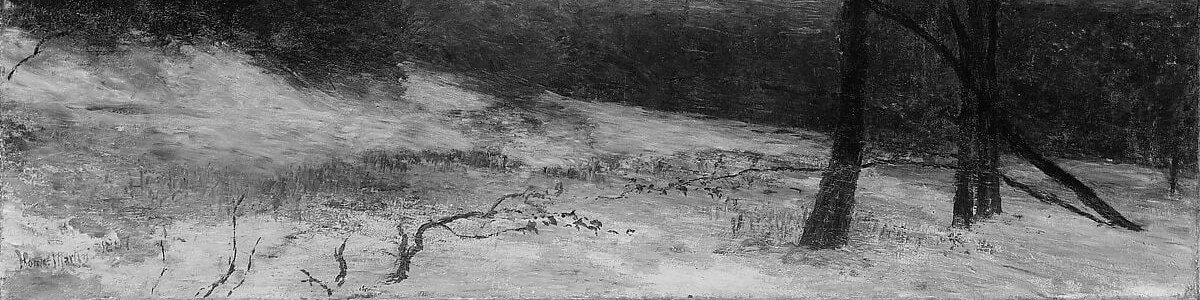
This painting, Behind Dunes, Lake Ontario, cost Homer Dodge Martin his reputation. Completed in 1885, it hangs in the American Wing of the Metropolitan Museum of Art, a quiet testament to a radical break.
Martin was nearly sixty and nearly blind when he painted this. He had been a successful Hudson River School painter, but a trip to Paris rewired him. He met Monet, absorbed the shock of Impressionism, and returned home to dissolve the clear American landscape into soft, pearlescent light. The shift was not welcomed.
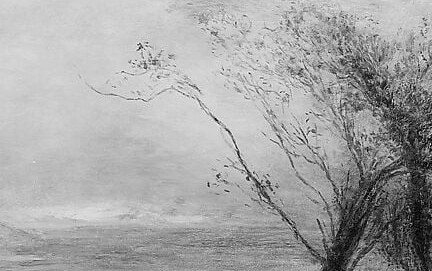
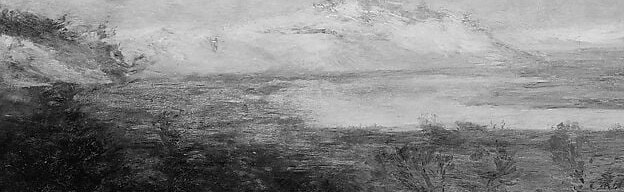
His dealers and many critics saw it as a betrayal of American scenery, a hazy failure by a man who had lost his touch. Sales dried up, and his last years were spent in deep poverty. What they dismissed is what we can see today: a vast inland sea rendered as pure atmosphere, with a barely-there strip of the Canadian shore on the horizon, rewarding anyone who truly looks.
Sometimes a 'failure' in its own time is just an artist reaching a place the market hadn't arrived at yet. Was he ahead of his time, or had his failing sight simply given him a new way to see?
Details
Transcript
This landscape cost a painter his reputation. The man behind it was Homer Dodge Martin. For decades he painted crisp, popular Hudson River views. Then, in his fifties, he saw a Monet in Paris. He came home and dissolved the world into light. His dealers called it an insult to American scenery. Now look at what he actually painted. A thin strip of land on the far side. Canada.