Narragansett Bay by Haseltine, William Stanley
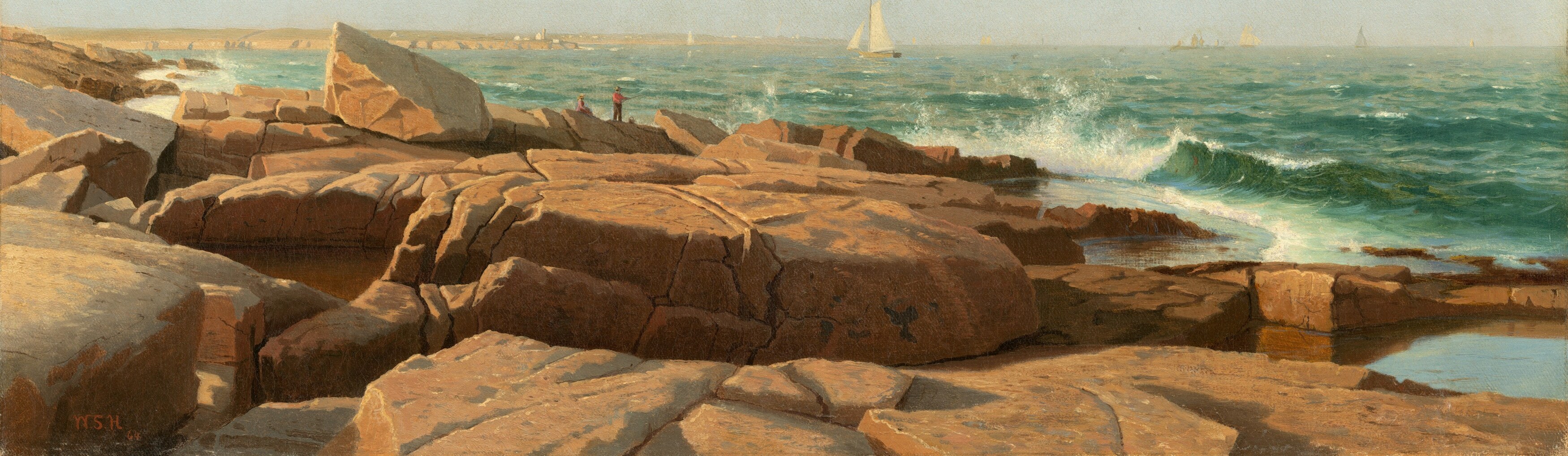
William Stanley Haseltine's "Narragansett Bay," painted in 1864, is a stunning example of American Luminism, capturing the rugged beauty of Rhode Island's coast. But look closer, and you might spot a very special detail.
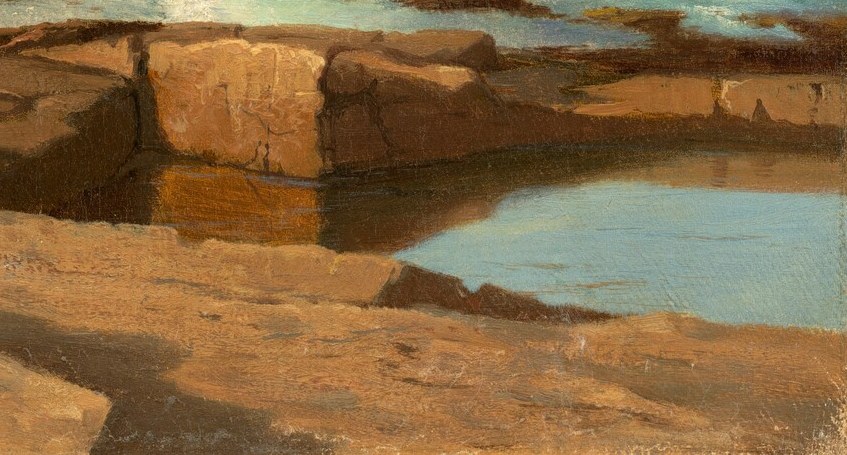
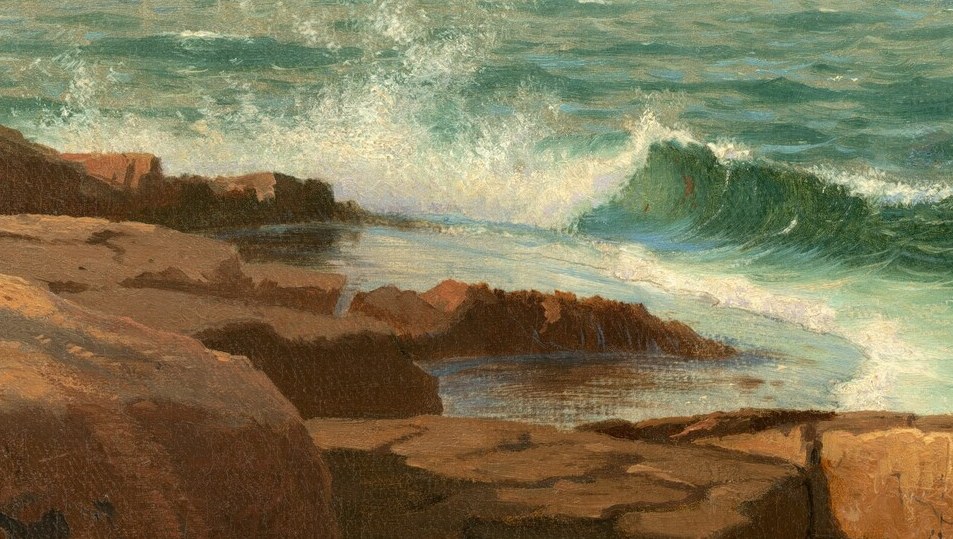
Haseltine meticulously renders the crashing waves and sunlit rocks, inviting the viewer into the scene. Hidden within a small tide pool in the foreground, a tiny reflection offers a surprising glimpse.
This isn't just a landscape; it's a self-portrait in miniature. Haseltine, celebrated for his precise technique and serene compositions, often studied the American coastline during the 1860s. This subtle inclusion adds a personal touch, placing the artist directly within the dramatic natural world he so expertly painted.
It's a reminder of the quiet dedication behind such vast and beautiful works. What details do you often find yourself searching for in paintings?
Details

Transcript
William Stanley Haseltine captured America's coast in 1864. He was known for capturing the precise beauty of natural light. Look closely at the rocks in the foreground. Among the tide pools, a small reflection appears. The artist himself, watching the sea, tiny but clear.