南宋 傳陳居中 胡騎春獵圖 團扇|Nomads hunting with falcons by Chen Juzhong
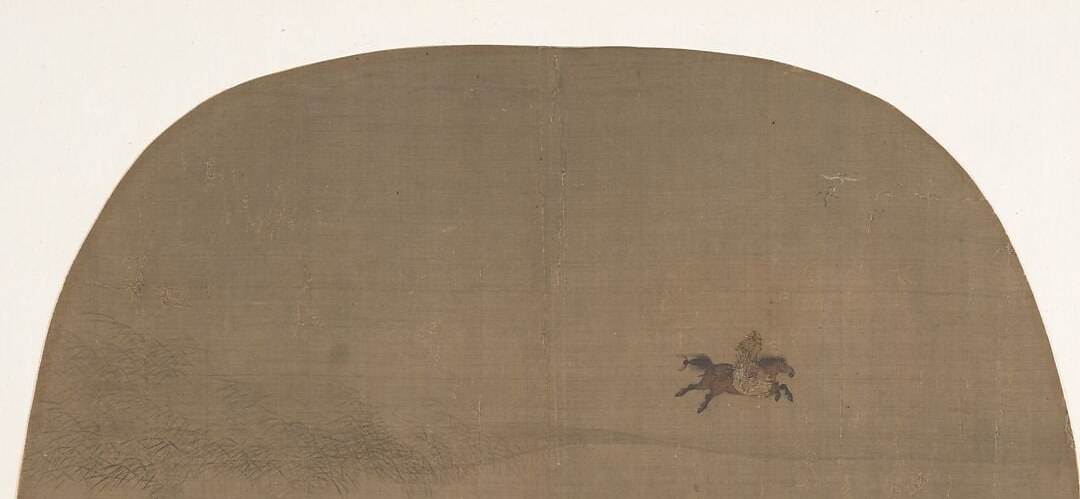
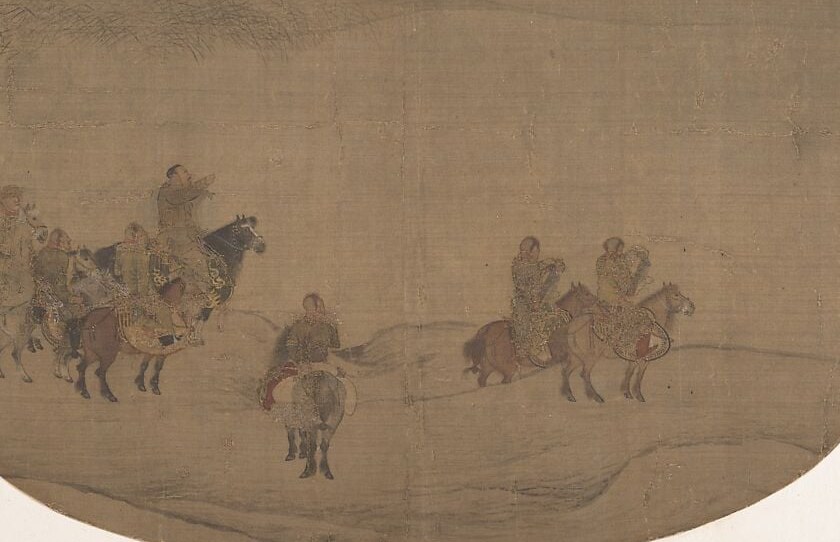
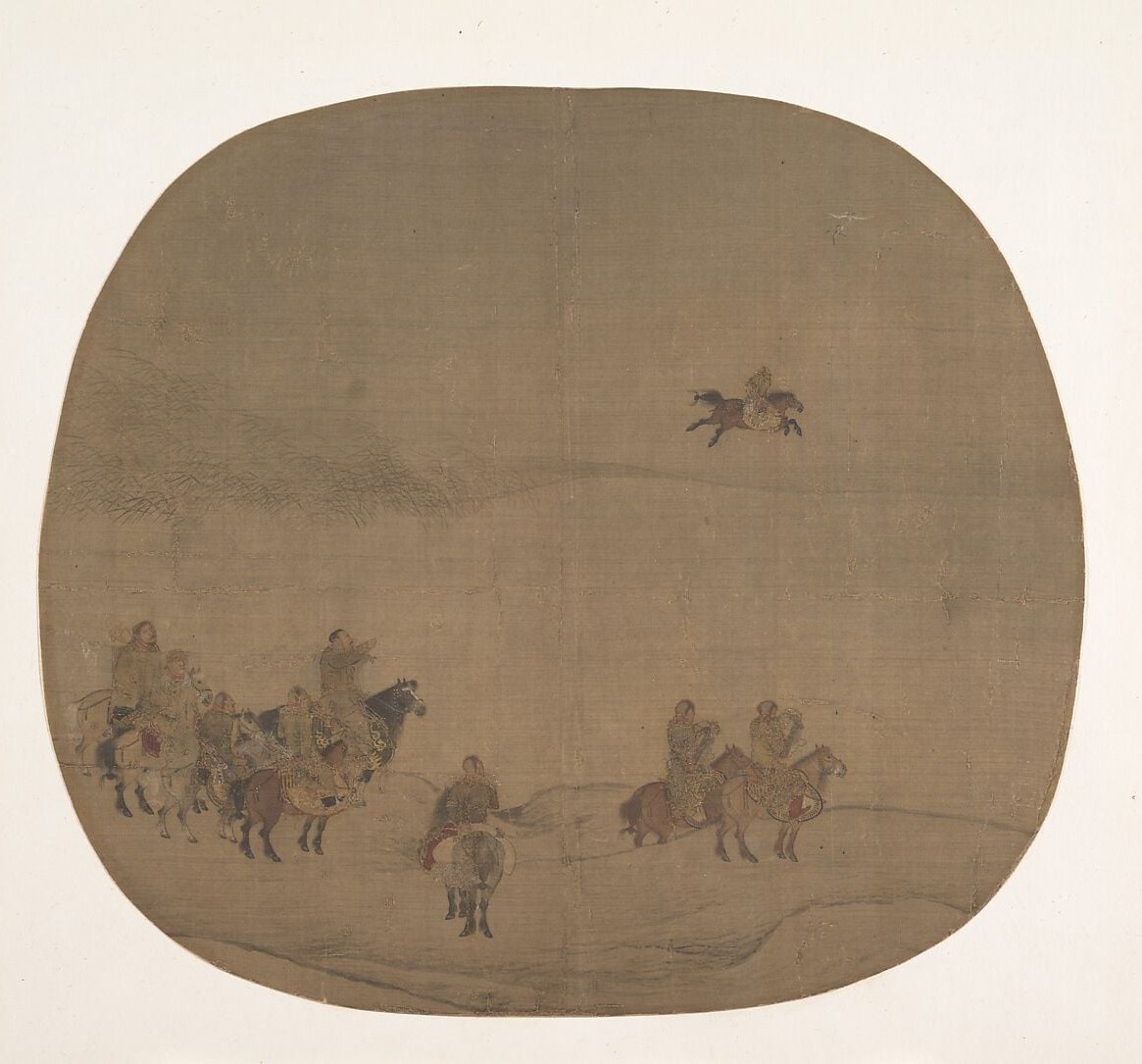
The painting is called Nomads hunting with falcons. It is a fan mounted as an album leaf, ink and color on silk, attributed to the Chinese painter Chen Juzhong and dated around 1216. It lives in an intimate, handheld format that was made to be examined up close, by a single person, in private.
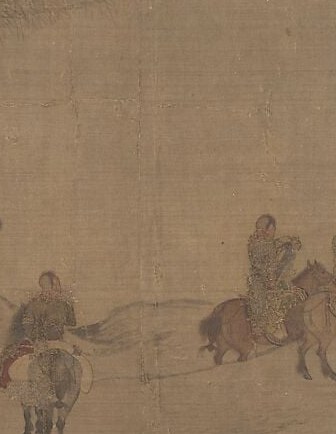
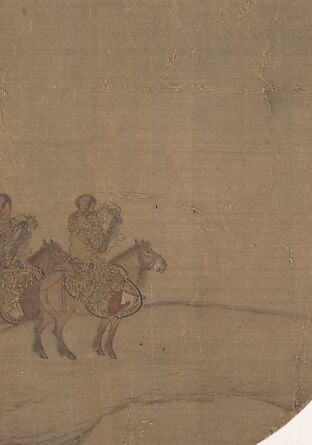
Look first at the riders. The costumes and tack are not Song Chinese. This is a party of steppe nomads, likely Khitan or Jurchen, hunting with trained falcons in a wide valley. The dark silhouettes of horses and men are painted with meticulous restraint. Then find the dog at the bottom edge, driving hidden prey from the grass, and the falcon alone in the empty upper right, already airborne over a hunt that is in full motion.
The Southern Song dynasty had lost northern China to the Jurchen Jin dynasty decades before this fan was painted. The court paid annual tribute to the very people depicted here, and yet a court lady or an official could hold this image in their hands and examine the martial culture that had displaced them, rendered in exquisite, almost elegiac detail. The soft boundary of the round silk fan turns a charged political subject into an object of private curiosity.
A painting is never only a picture. Sometimes it is the shape of a question a culture cannot answer out loud.
Details
Transcript
It looks like a souvenir of empire. But the empire had already lost the north. Five riders hunt with falcons across the silk. See the gear and the cap. They are not Song riders. These are Khitan or Jurchen. The nomads the Song paid tribute to. A court lady held this fan and looked at her enemy. And down here, a dog drives the quarry from the grass. The bird is already gone. The hunt will not stop.