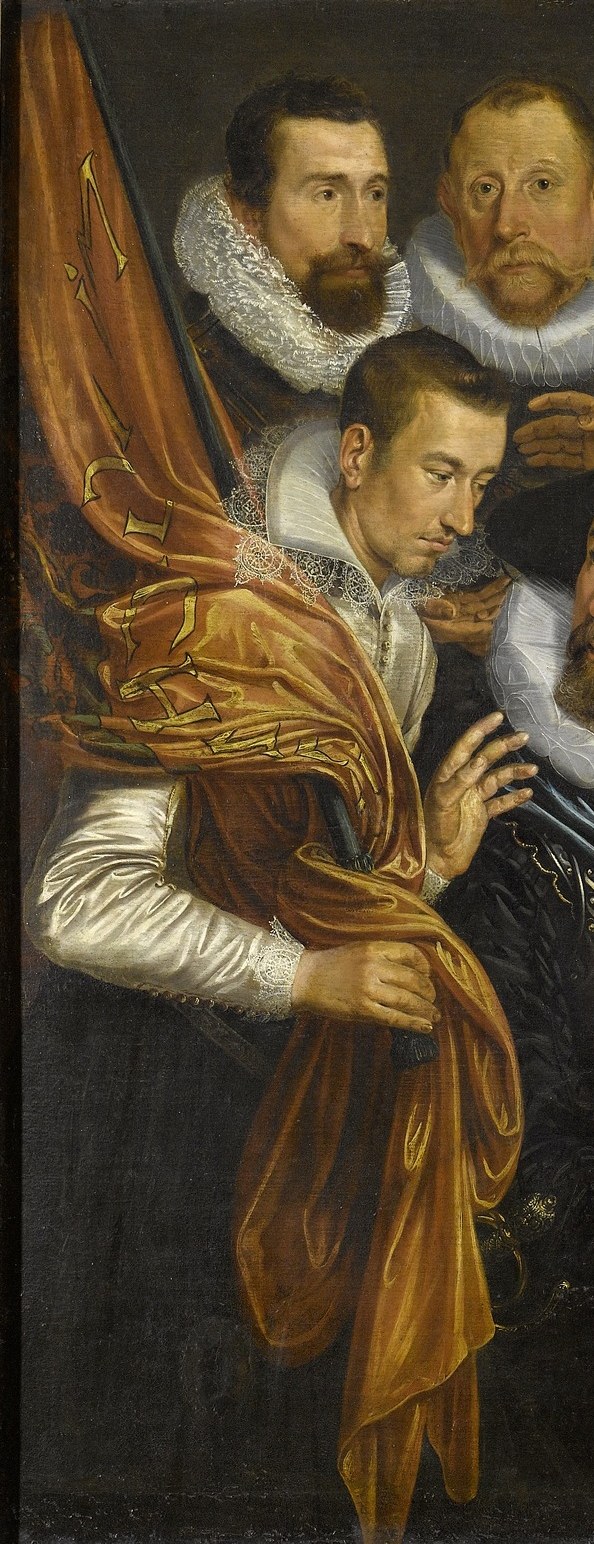
Officers and other civic guardsmen of the XIth District of Amsterdam, under the command of Captain Geurt Dircksz van Beuningen and Lieutenant Pieter Martensz Hoeffijser by Jan Tengnagel
Jan Tengnagel’s 1613 painting, "Officers and other civic guardsmen of the XIth District of Amsterdam," at the Rijksmuseum, is a rare civic portrait from an artist known for religious works. It offers a glimpse into the social life of Amsterdam's civic guard, the *Schutterij*, during the Dutch Golden Age.
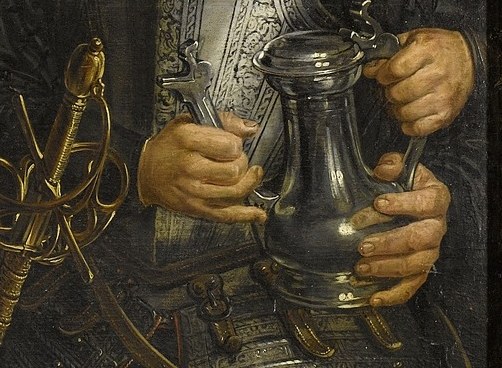
The painting focuses on the officers, including Captain Geurt Dircksz van Beuningen, gathered around a table. Look at the details on the table: a gleaming silver ewer, glasses of wine, and a small plate of olives. These elements bring the scene to life, showing not just military figures, but men sharing a convivial moment.
Tengnagel, who trained under Frans Badens and spent time in Rome, skillfully captures the individual expressions and interactions. Though his oeuvre is limited, this work stands as an important document of Dutch civic life and the art of the early 17th century.
What other small details do you notice that tell a story?
Details
Transcript
This large painting shows Amsterdam’s civic guards, gathered in 1613. The painter, Jan Tengnagel, often painted religious scenes. But here, he captures a lively moment among the officers. Look closely at the table and its scattered items. See the silver ewer and the plate of green olives? These small details ground the scene in shared camaraderie.