Head of One of the Three Kings: Melchior, The Assyrian King by Rubens, Peter Paul, Sir
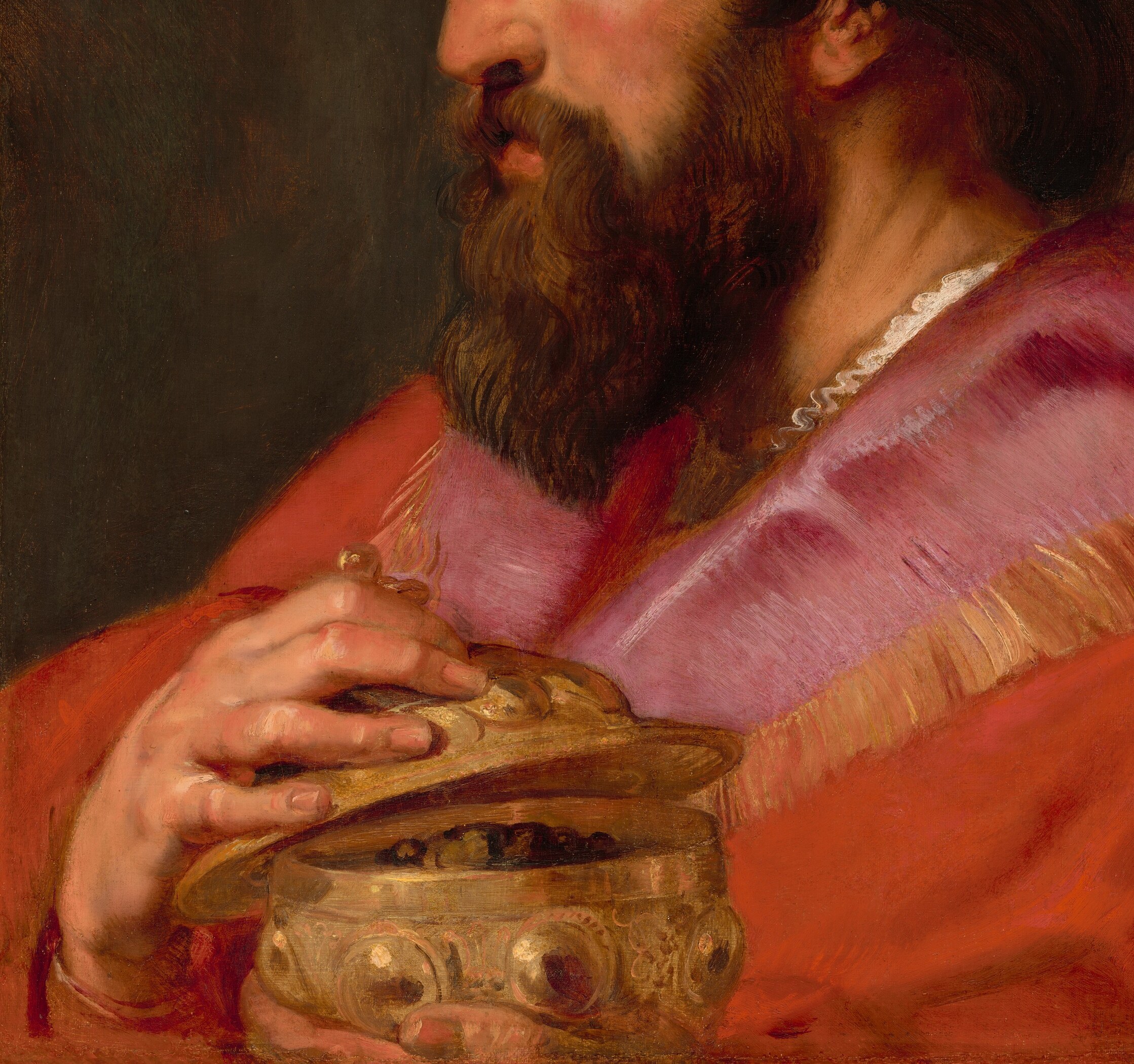
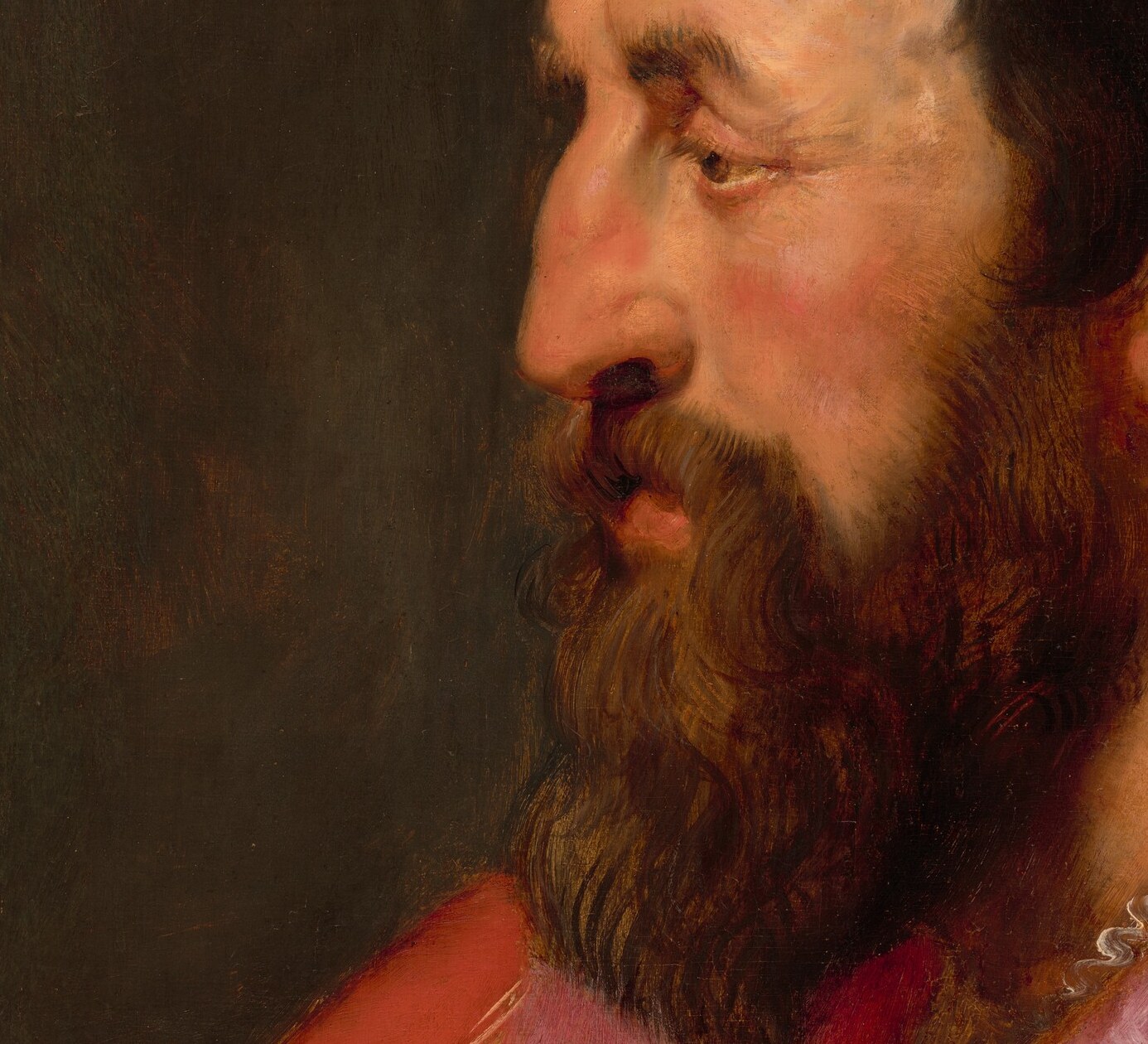
Peter Paul Rubens' "Head of One of the Three Kings: Melchior" (c. 1618), held at the Museum of Fine Arts, Boston, showcases the artist's masterful technique in rendering luxurious fabrics.
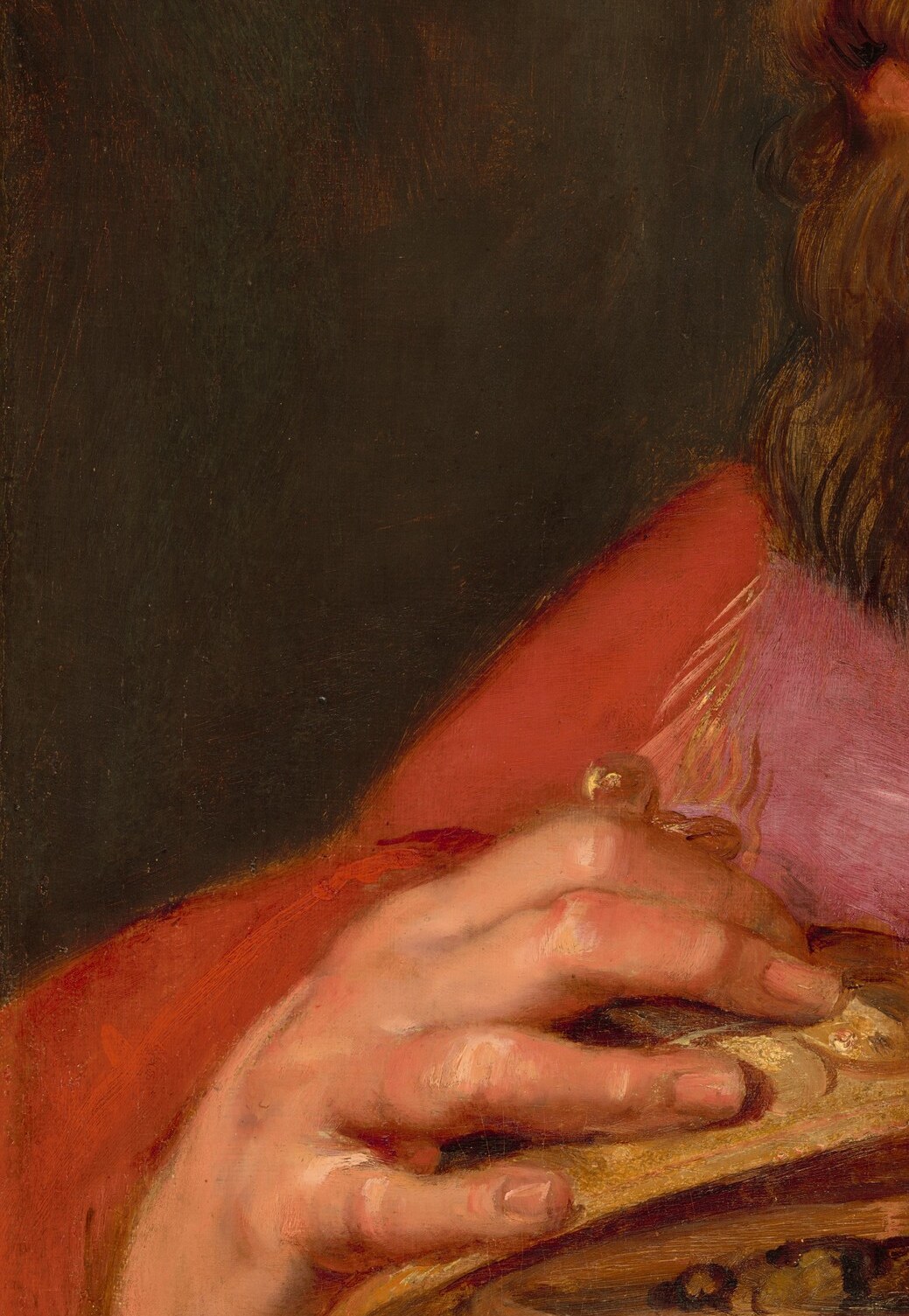
Observe the deep crimson robe worn by Melchior. Rubens employs a technique called impasto, where thick strokes of paint are applied to the surface. These ridges catch the light, creating the illusion of heavy, three-dimensional silk with remarkable realism.
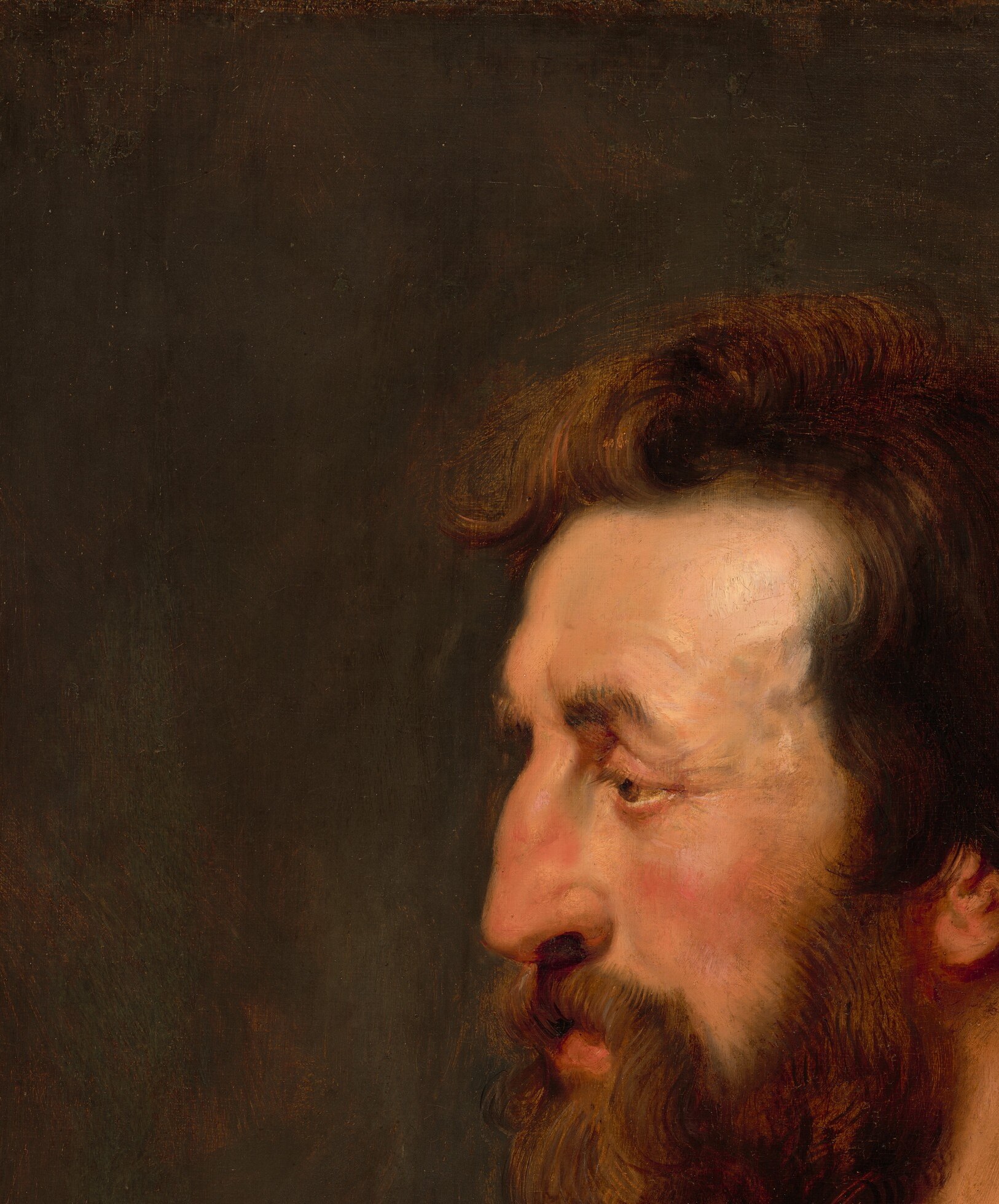
This work is a study, likely for a larger altarpiece or devotional image, allowing Rubens to focus intensely on character and texture. The economic yet impactful brushwork demonstrates his ability to imbue biblical figures with psychological depth and palpable presence.
It's a striking example of how a few confident applications of paint can conjure an entire world of tactile sensation. What other details here surprise you with their realism?
Details
Transcript
Rubens was a master of grand, dramatic painting. But look closely at this king's crimson robe. It feels heavy and three-dimensional, doesn't it? Rubens achieved that with thick paint ridges, called impasto. A few confident strokes catch the light, creating the illusion of silk. This is paint doing the impossible, right before your eyes.