The Martyrdom of Saint John the Baptist by Bernard Van Orley
This is 'The Martyrdom of Saint John the Baptist,' painted in 1514 by Bernard Van Orley, the court artist to the Habsburg rulers in Brussels. It now lives at the Metropolitan Museum of Art. Van Orley never visited Italy, but he was the leading Flemish Romanist of his day, blending the meticulous detail of the north with the monumentality of Raphael.
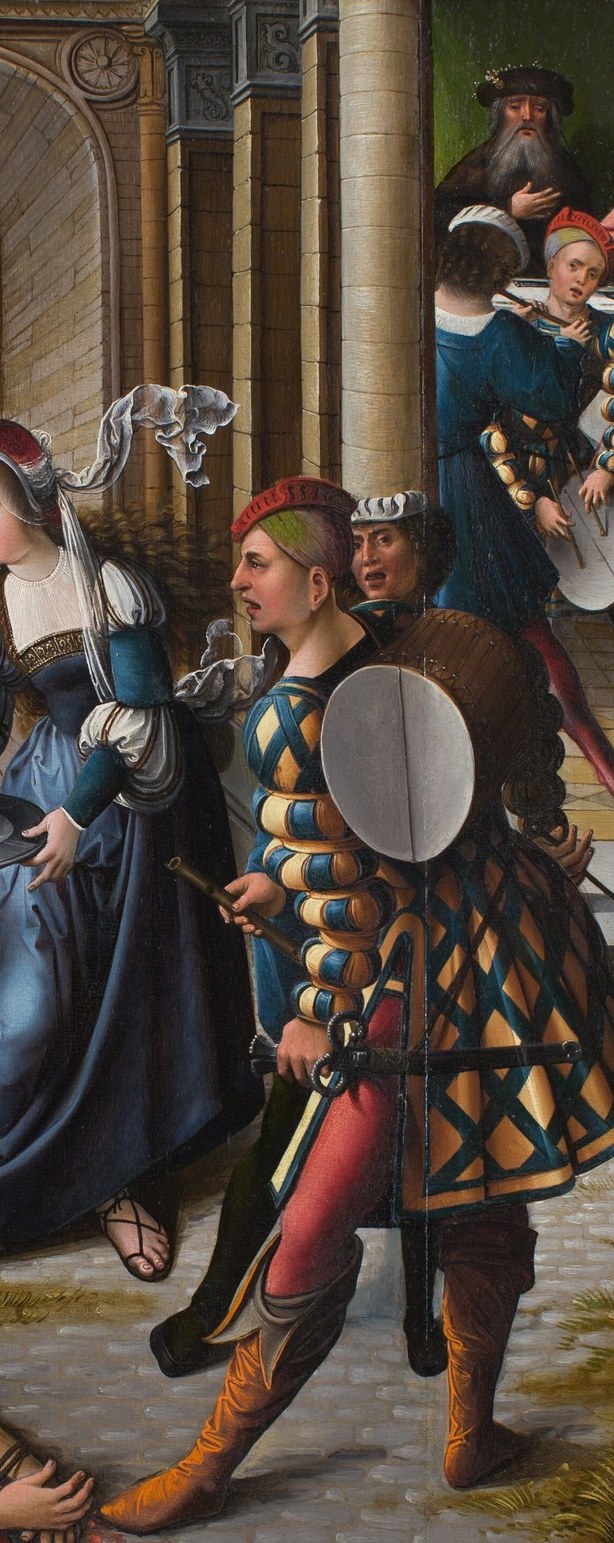
Look first at the clothes. The knight in the foreground wears a diamond-patterned harlequin doublet and parti-colored hose, a precise record of what a Brabant nobleman wore to court in 1514. Salome's ornate white-and-gold headdress is not a biblical costume; it is contemporary Brussels fashion, designed to collapse the distance between scripture and the courtly audience who would have seen this painting.
Then look at Salome's face. She is the narrative hinge of the whole tradition, yet her expression is ambiguous: neither proud nor distressed. She holds the platter with the severed head as if delivering a dish at a banquet. For centuries, viewers have projected guilt, innocence, or cold indifference onto her, and Van Orley gives no answer.
Van Orley was a versatile artist who ran a large workshop, concentrating on designs and leaving much of the execution to assistants. He also designed tapestries and, later in life, stained glass. His work varies in quality because of that reliance, but in this painting, the strangeness is deliberate: a sacred horror dressed in the silks of a court he knew intimately.
What do you read in Salome's face?
Details
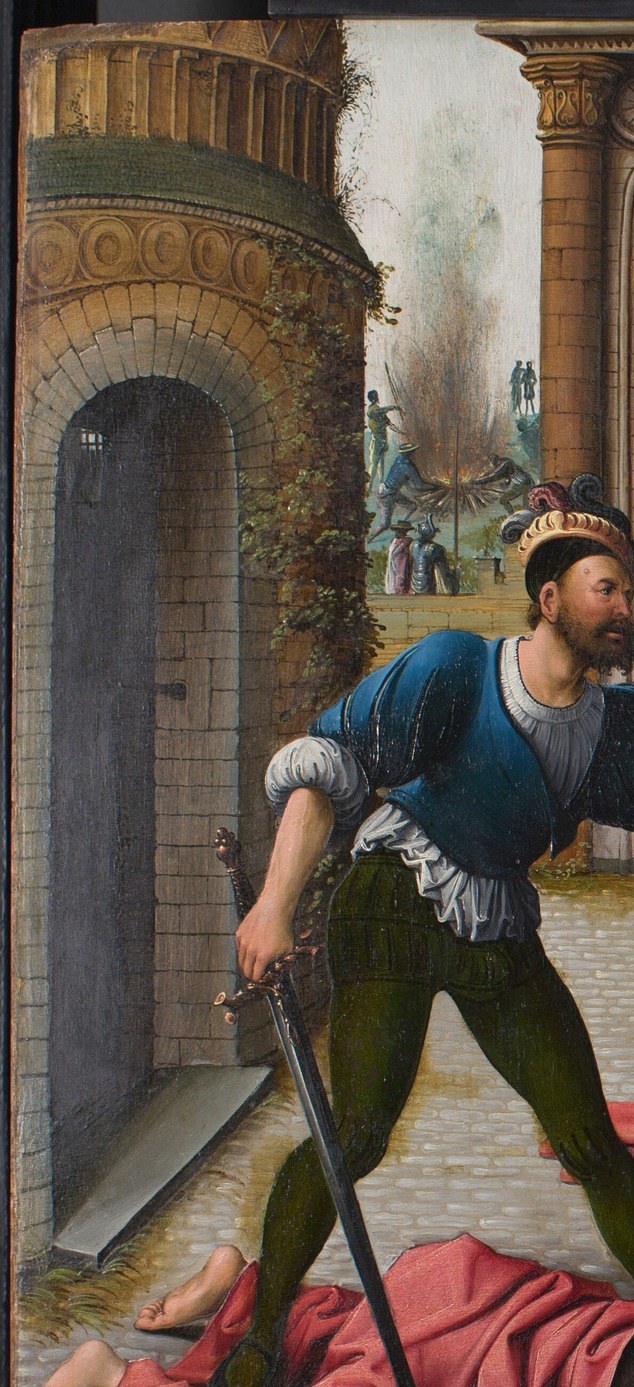
Transcript
Brussels, 1514. The city is at the height of its courtly power. The artist was the Habsburg court painter, a man who dressed emperors. So he dressed this biblical execution like a royal event. The knight wears harlequin armor, the height of 1514 fashion. Salome's headdress is a precise record of Brussels court style. Now look at her face. No guilt, no horror. She is completely unreadable.