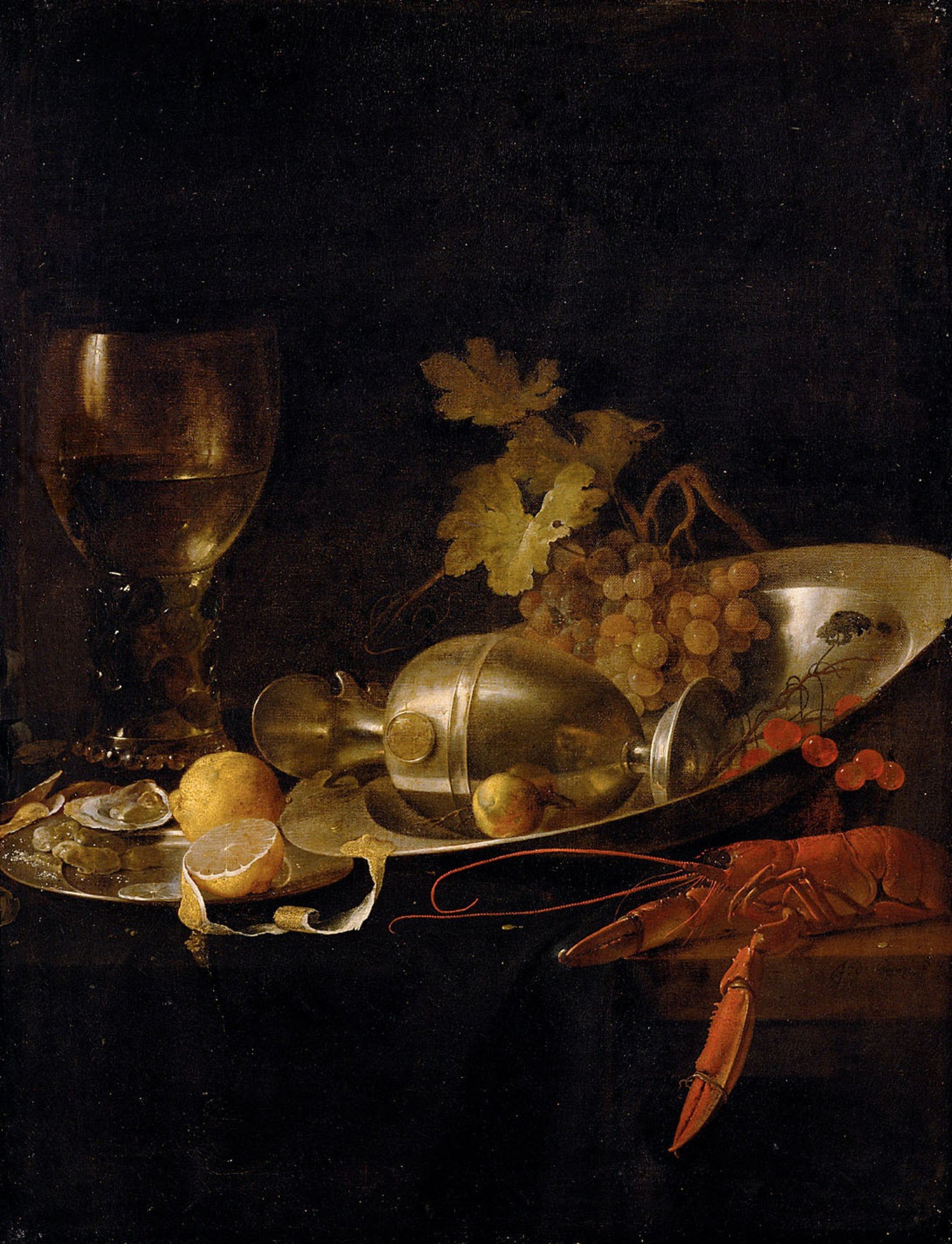
Still life with a "roemer", a fallen jug and a lobster by Jan Davidsz. de Heem
Jan Davidsz. de Heem's *Still life with a "roemer", a fallen jug and a lobster* (1635) is a prime example of the Dutch Golden Age's fascination with everyday objects rendered with extraordinary skill. This oil painting, held in the Kunsthistorisches Museum, showcases the artist's remarkable ability to create luminous and richly textured scenes.
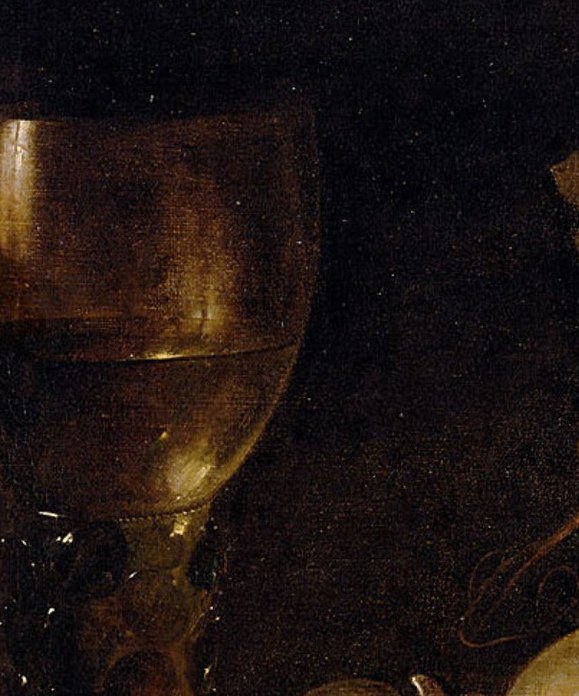
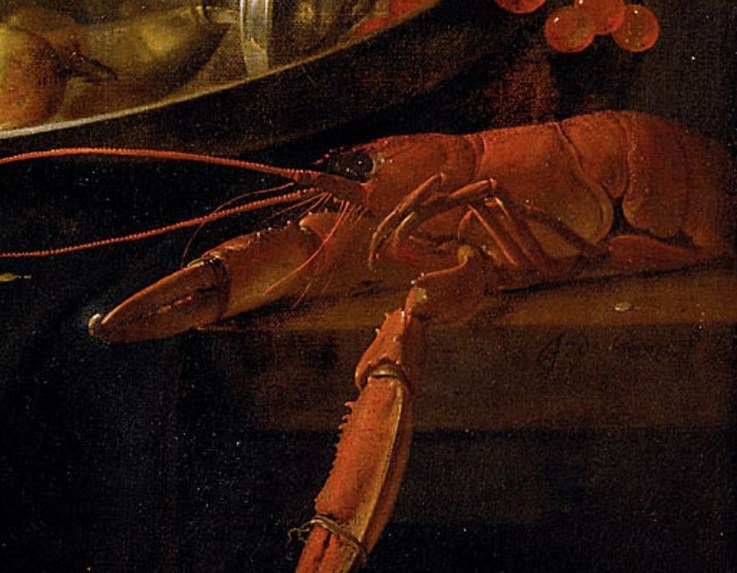
Look closely at the interplay of light and shadow, from the translucent roemer glass with its subtle reflections to the glistening surface of the peeled lemon and the intricate texture of the lobster. De Heem's precision brings each element to life, creating a sense of depth and realism.
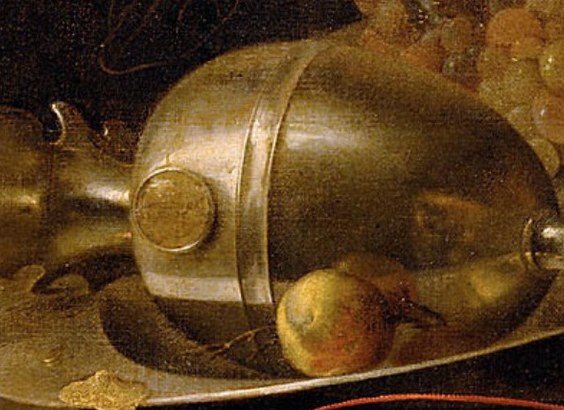
De Heem was a leading still-life painter of his time, celebrated for compositions that often combined luxury items with symbols of transience, like the tipped ewer and the perishable fruit. His meticulous technique and vivid contrasts made his works highly prized by collectors across Europe, cementing his reputation as a master of the genre.
This painting invites us to appreciate both the beauty of the visible world and the enduring artistry of its creator.
Details
Transcript
In the 1600s, Dutch artists perfected painting everyday objects. This painter was celebrated for his luminous still lifes. Notice how light catches the surface of this roemer glass. The spilled wine and tipped ewer add drama to the scene. His precise brushwork captures every texture, even the lobster's shell. See the delicate curl of the peeled lemon skin. Such detailed work made his paintings highly sought after.