Flowers in a Glass by Ambrosius Bosschaert
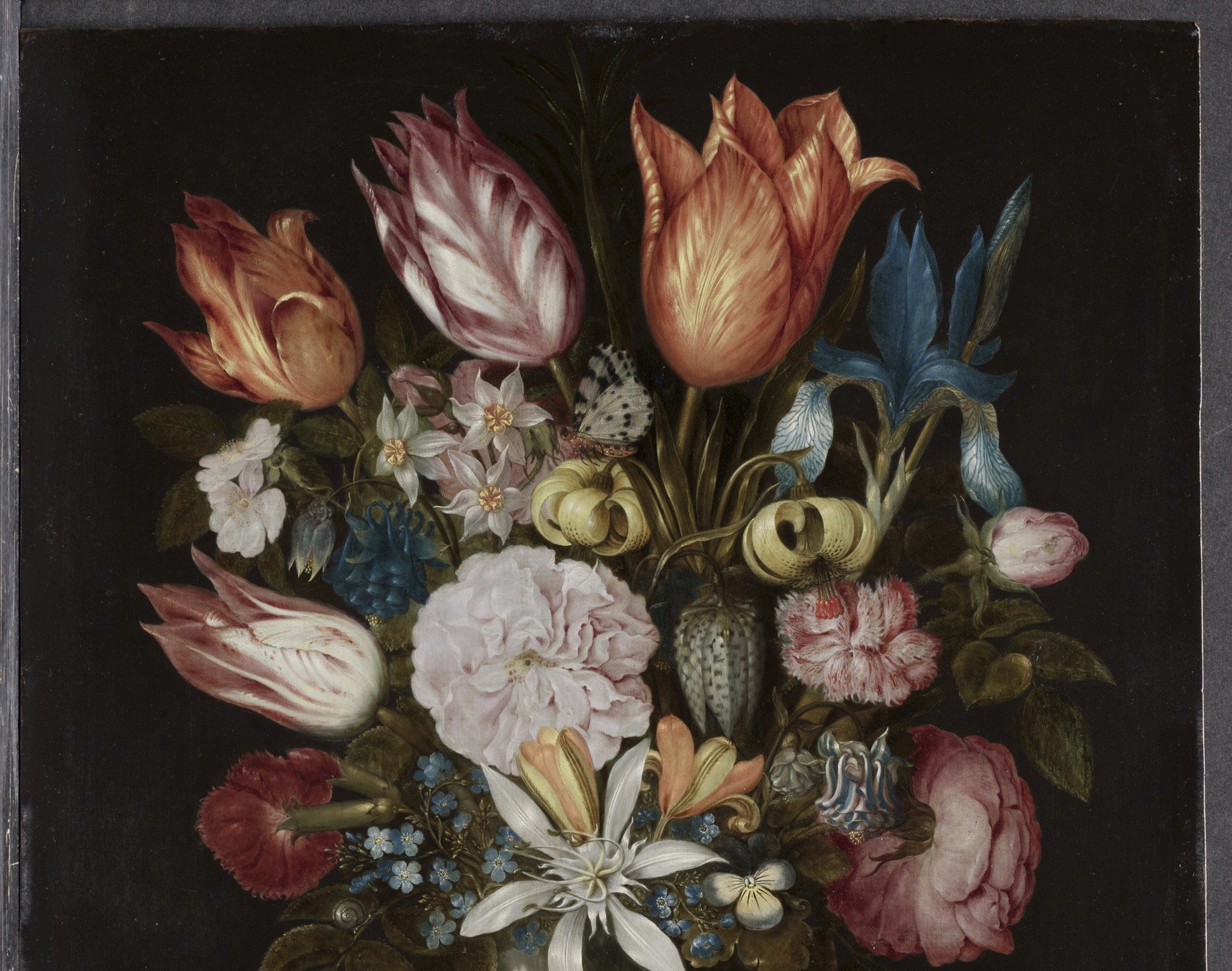
Ambrosius Bosschaert the Elder painted Flowers in a Glass in 1606 on a sheet of copper, and in 1988 someone rappelled through a gallery skylight to steal it. The thief took nothing else. Today it is held by the Cleveland Museum of Art.
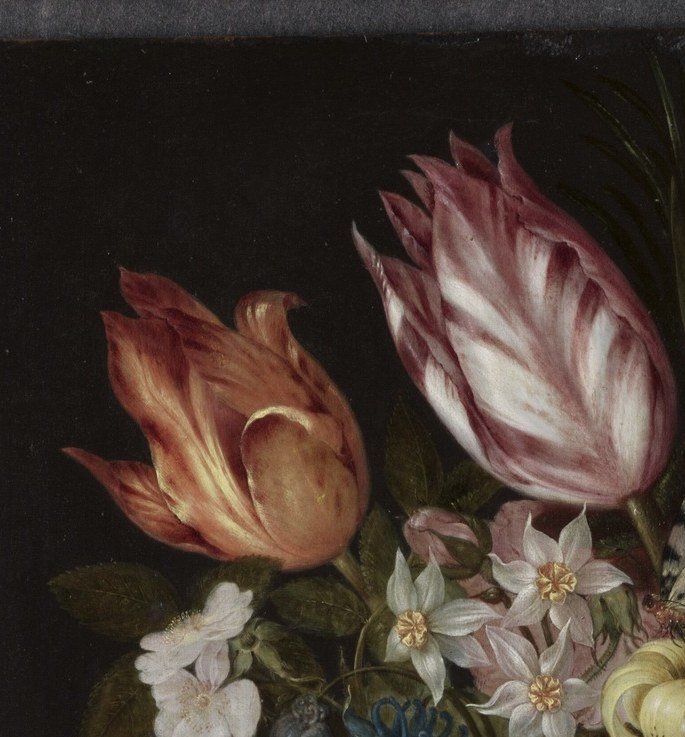
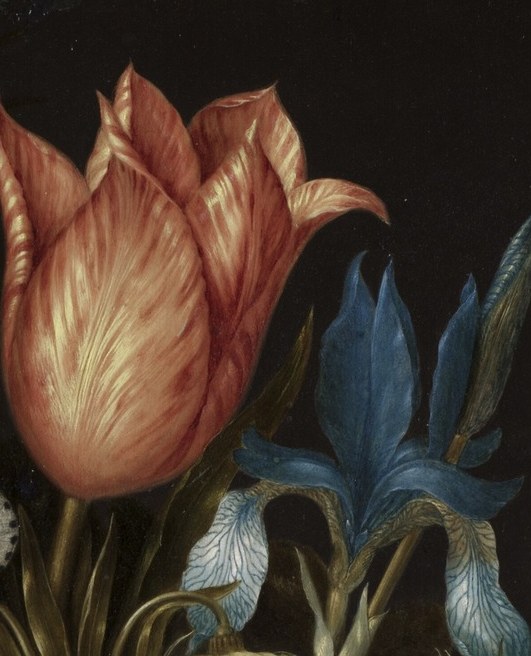
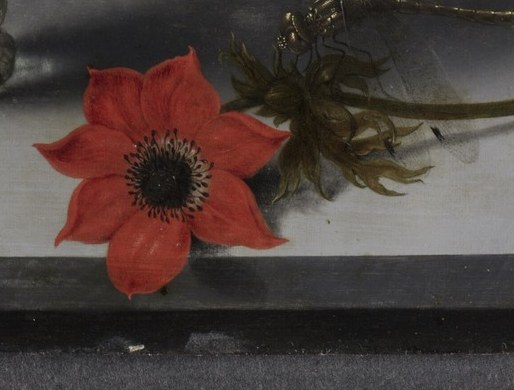
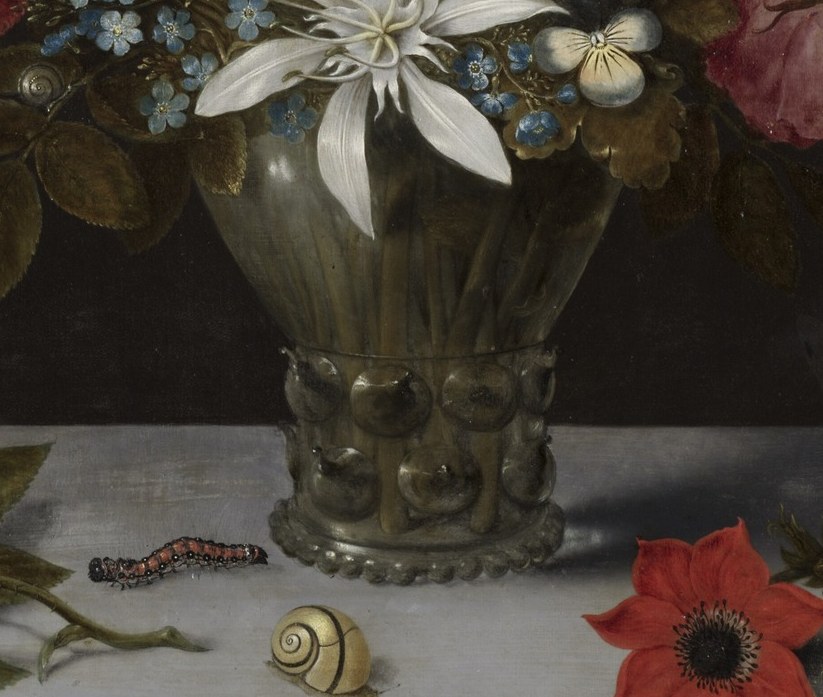
Bosschaert was one of the first painters to specialize in the independent floral still life, and this tiny panel is a forensic document of tulip mania. The striped pink-and-white tulip on the left is a 'broken' tulip, the most coveted and ruinously expensive variety in early 1600s Holland. A single bulb could cost more than an Amsterdam canal house. The pale pink tulip on the right is already nodding past its peak, and a red flower lies severed on the stone ledge; both are vanitas signals built into the bouquet.
The stolen panel was recovered and returned. Bosschaert died in 1621, having founded a dynasty of flower painters and turned Middelburg into the epicenter of a genre that had barely existed before him. His work trades in an exquisite tension: the most permanent medium he could find (copper) yoked to the most transient subject there is.
Every petal here is an argument about time. What do you think the thief saw in it?
Details
Transcript
Amsterdam, 1988. The gallery is closed. Someone unbolts a skylight and enters on a rope. They leave with only this. A 380-year-old painting on copper. Look at the tulips. Striped, 'broken,' impossibly expensive. A single bulb of this could cost more than a house. The year is 1606. The pink one is already past its peak. It is already falling. A fallen anemone rots on the ledge. A bee crawls near the stems. The painting was recovered. Bosschaert made an industry out of beautiful things that die.