Seashore, Morning by William Hart
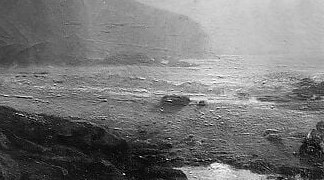
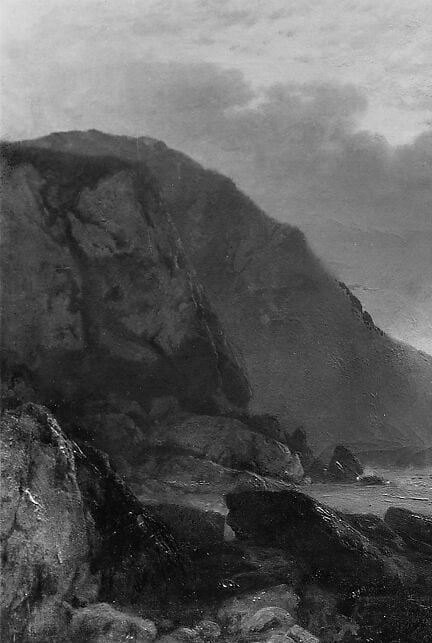
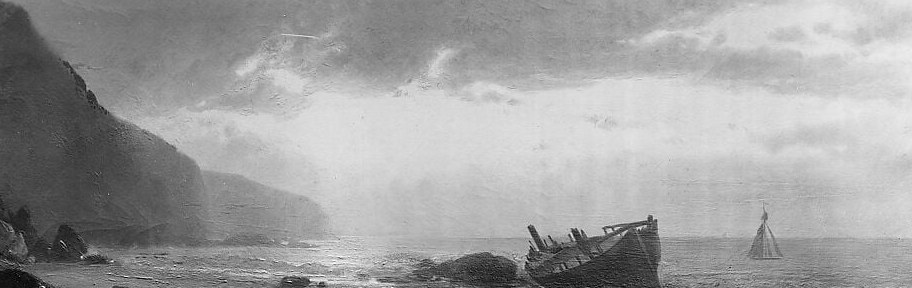
William Hart painted "Seashore, Morning" in 1866, and he made an unusual choice: dawn instead of dusk. In an era when Hudson River School painters often reached for fiery sunsets and dramatic storms, Hart painted a beach at the earliest hour, when the light has no heat yet and the water barely moves. The painting is in the American Wing of the Metropolitan Museum of Art.
Let your eye find the two figures first. They stand near the water in long skirts, doing nothing in particular. Then look lower, at the foreground, a small rowboat rests on wet sand, pulled well up from the tide line. It is the detail that makes the painting work. A boat on shore means someone arrived, and the day hasn't begun enough to launch it again. The figures are waiting. The boat is waiting. The sea is waiting. Everything is suspended.
Hart was Scottish-born and came to America as a child. He studied in Edinburgh and later in Paris under Jules-Joseph Lefebvre, but his real subject was the landscape of New York and New England. His younger brother James McDougal Hart and his sister Julie Hart Beers were also painters, the Harts were a genuine artistic family, three siblings all working in the Hudson River School tradition. William Hart was known for combining landscape with cattle painting, but here he left the animals out entirely. This is a pure seascape, and a quiet one.
Most visitors walk past this painting on the way to something bigger. But the longer you sit with it, the more the light does. The sky is a soft, sourceless glow. The water is a mirror. The boat is still dry. Nothing has happened yet, and that is exactly what Hart wanted you to feel.
Details

Transcript
Morning light. A quiet bay. Almost no one here. But look closer, two figures stand at the water's edge. They are not walking. They are simply standing still. And here, on the wet sand, a small boat, pulled up. This is not a sunset. The painter, William Hart, chose dawn. In 1866, other painters wanted drama. Hart wanted this. The boat is dry. The day hasn't started. But they are already here.