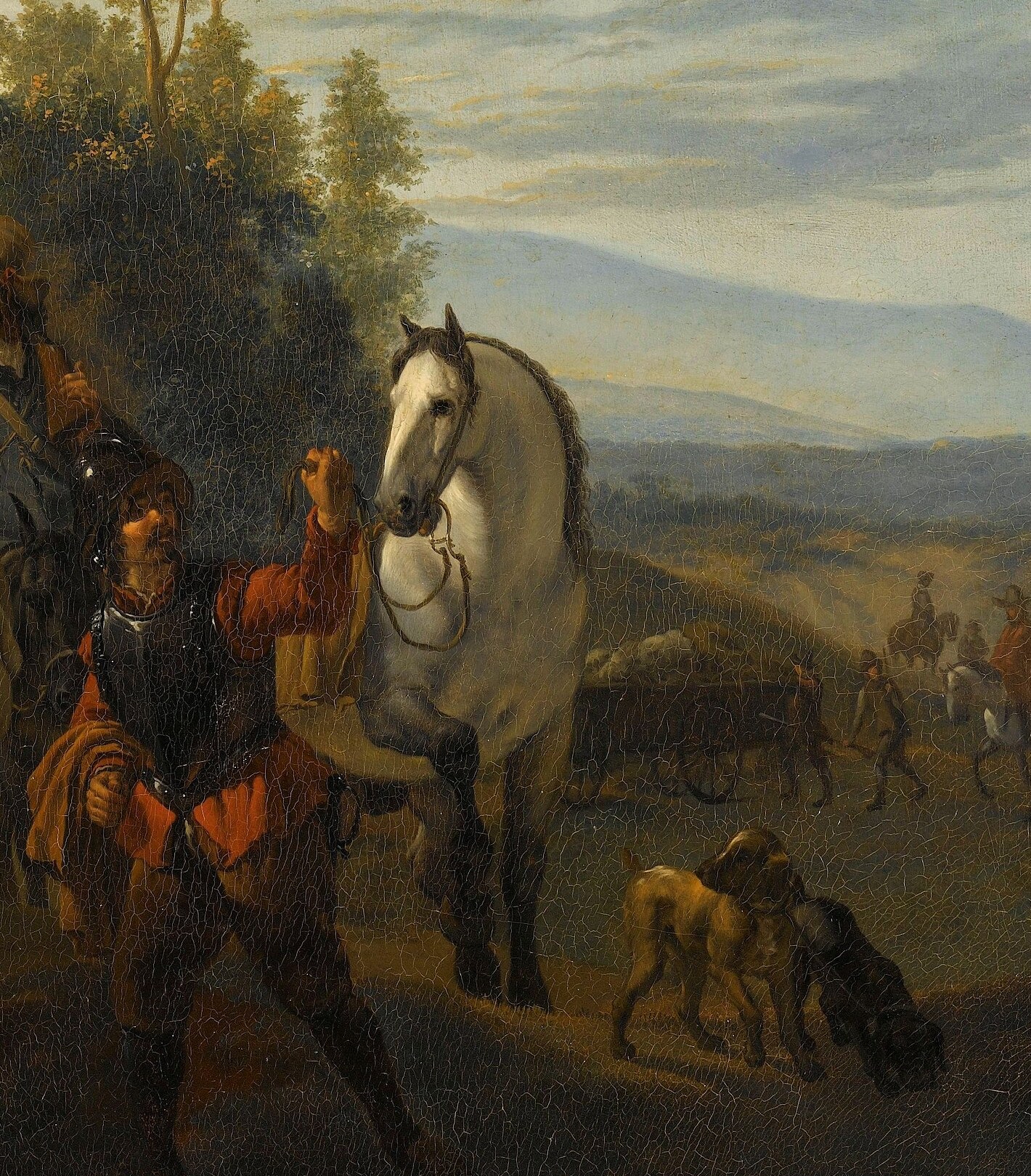
Italian landscape with soldiers by Karel Dujardin
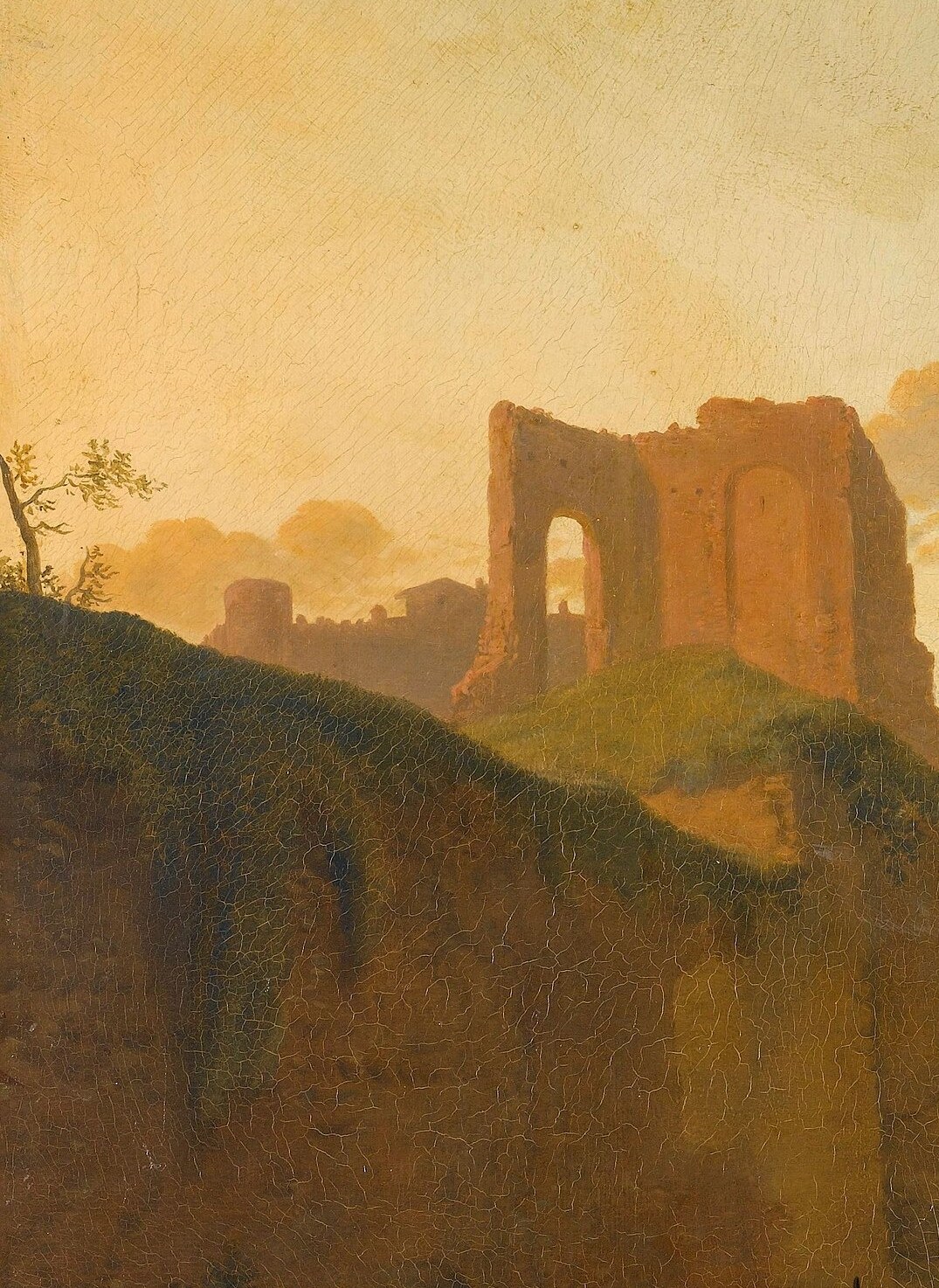
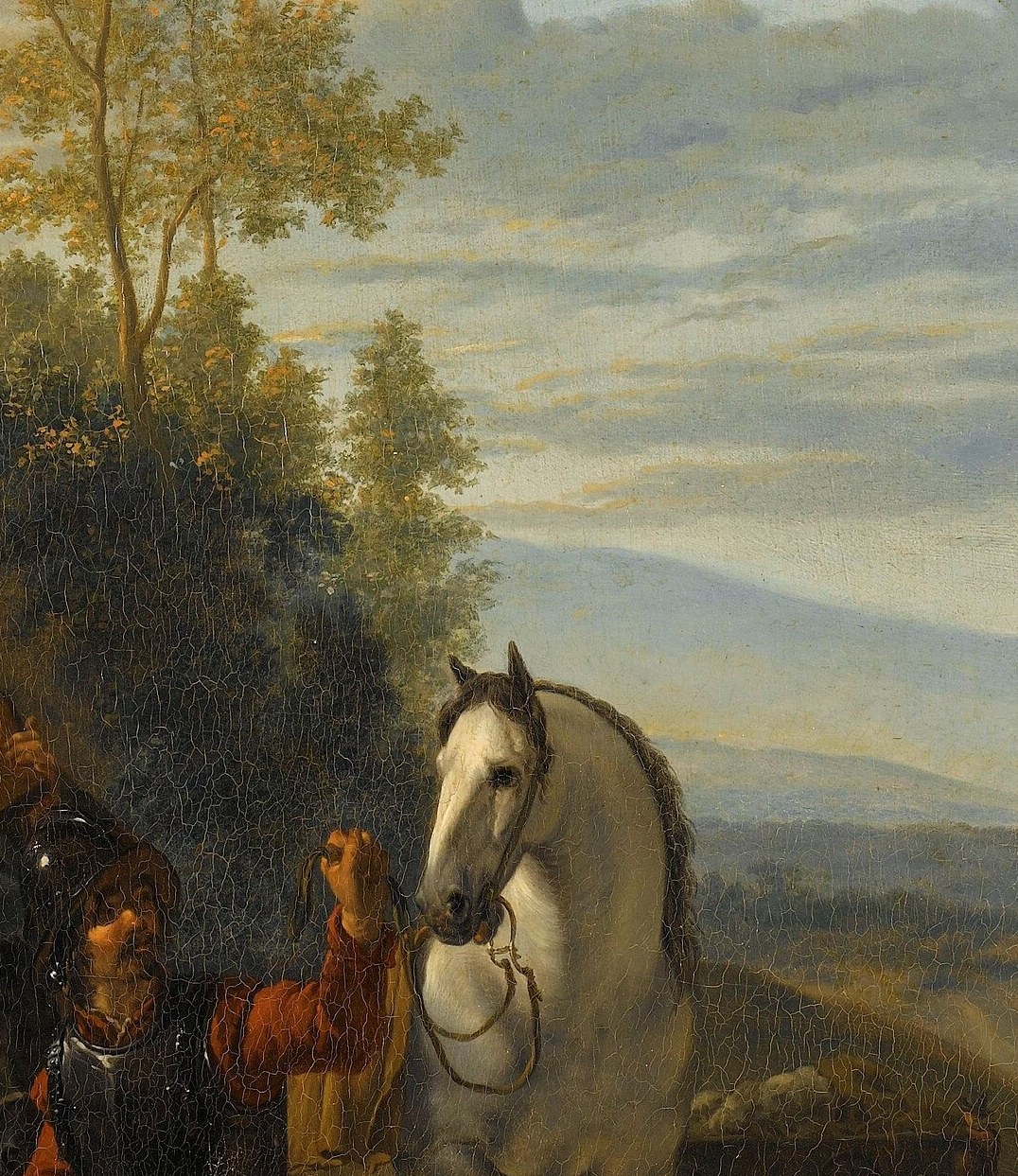
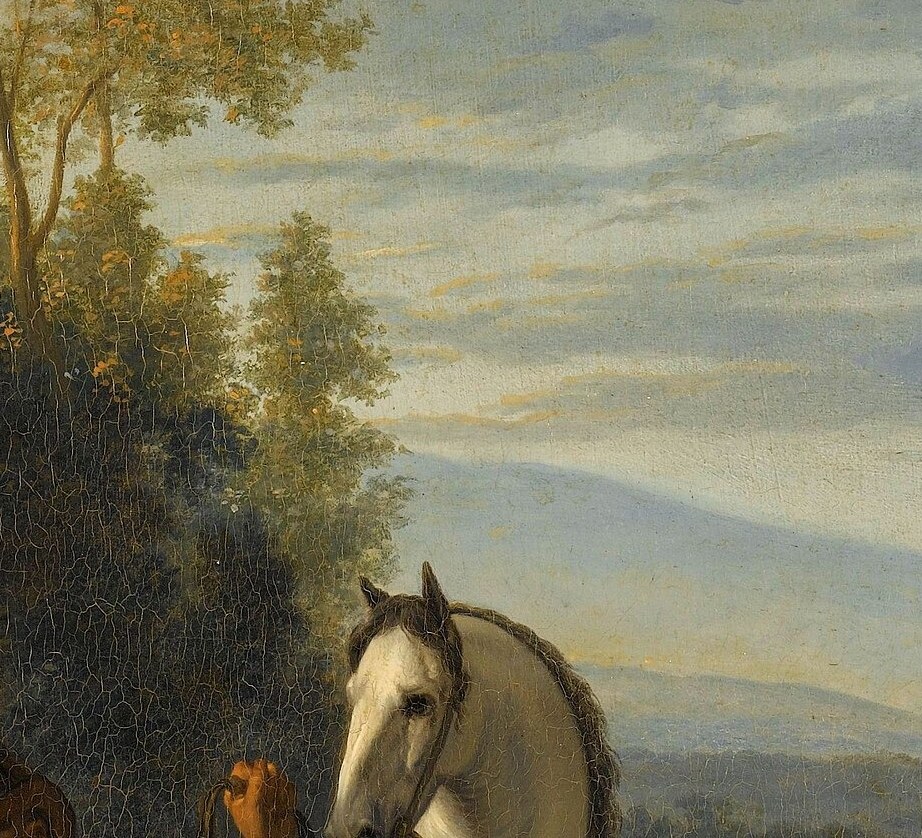
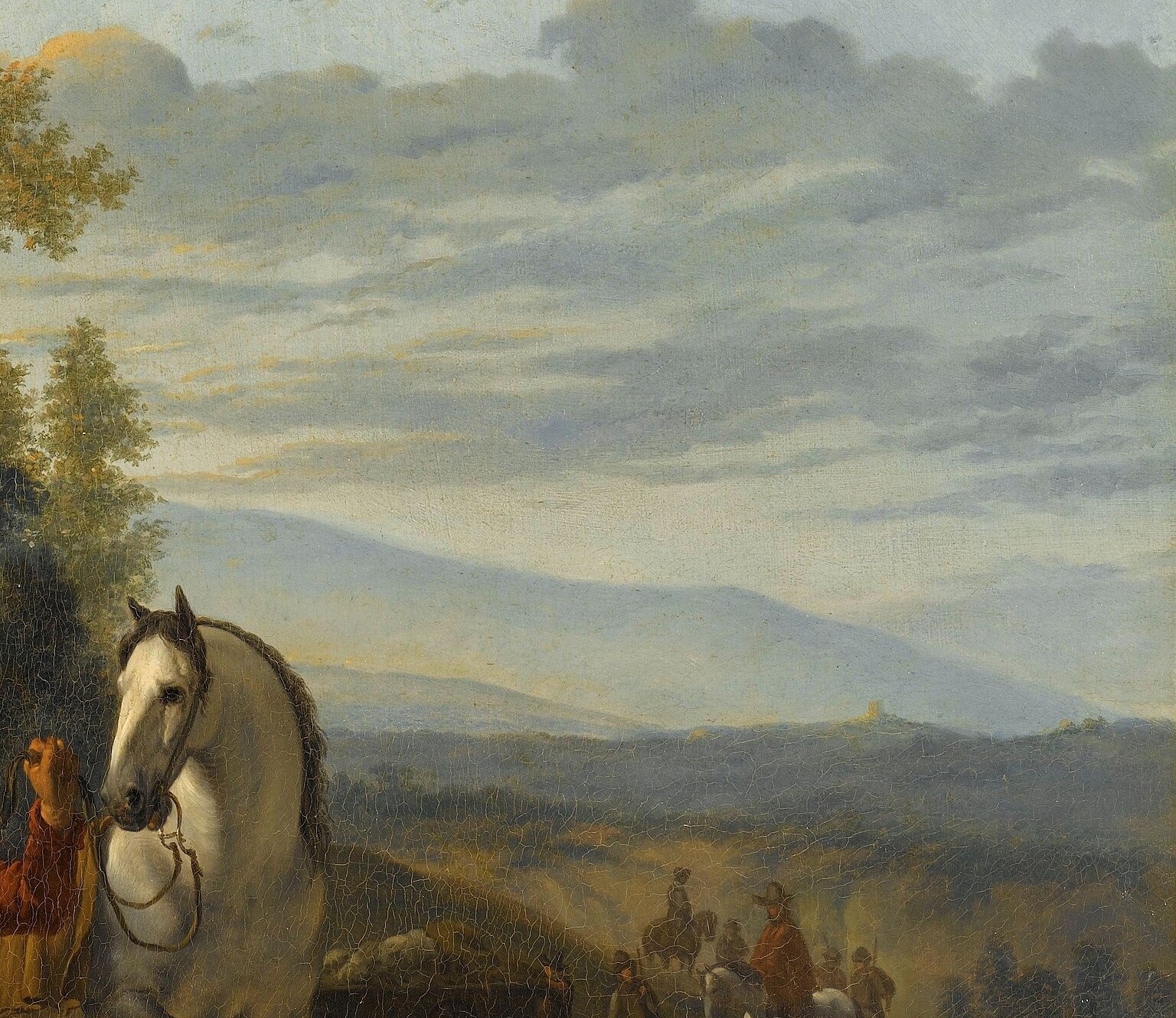
Karel Dujardin's 'Italian Landscape with Soldiers' (1670) at the Rijksmuseum is a masterful small-scale Italianate scene, a golden, tranquil country day with a mounted soldier, a donkey, a goat, and a vast plain stretching to a hazy horizon.
But the calm is a cover story. Dujardin spent two long stretches in Italy, and his career seemed to thrive on it, until his second stay collapsed. He racked up enormous debts in Rome, fled the city in the middle of the night, and returned to Amsterdam in disgrace. Back home, he kept painting these impossibly serene Italian views; collectors wanted them, and they could not get enough.
What makes the painting's survival remarkable is what happened next. When Dujardin died in 1678, his friends physically hid his artworks. Creditors were circling, ready to seize everything of value. The hiding worked. Paintings that could have been broken up and sold piecemeal survived intact and entered public collections.
So when you look at this warm Italian afternoon, the dog resting at the horse's feet, the golden sky, the quiet ruins on the hill, look also at what isn't painted: the stress, the debts, and the desperate scramble that let this canvas outlive its maker's scandal.
Details
Transcript
A warm, calm afternoon in the Italian countryside. The man who painted this was a success. Then he fled Italy for his life. Karel Dujardin ran up huge debts and vanished from Rome overnight. Back in Amsterdam, his Italian scenes were in high demand. But he was hiding a secret that would destroy his reputation. He kept painting serene lands. His creditors kept searching. When he died, his friends hid his art to save it from the debt collectors. His peaceful Italy survived. His disgrace did not.