Portrait of a Man by Giovanni Battista Moroni
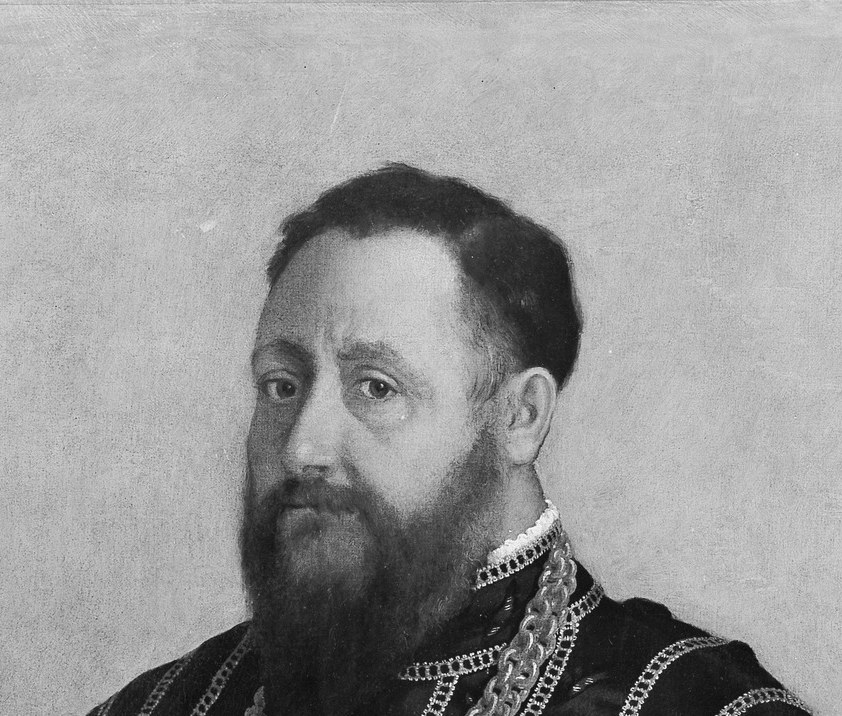
This is Giovanni Battista Moroni's Portrait of a Man, painted in 1561 and now held at The Metropolitan Museum of Art. For a long time, it was a lost masterpiece, sitting unrecognized in private hands until the Met acquired it at auction in 1913 for a modest sum.
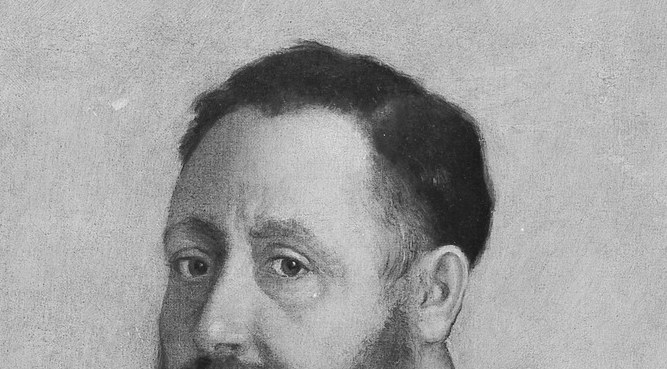
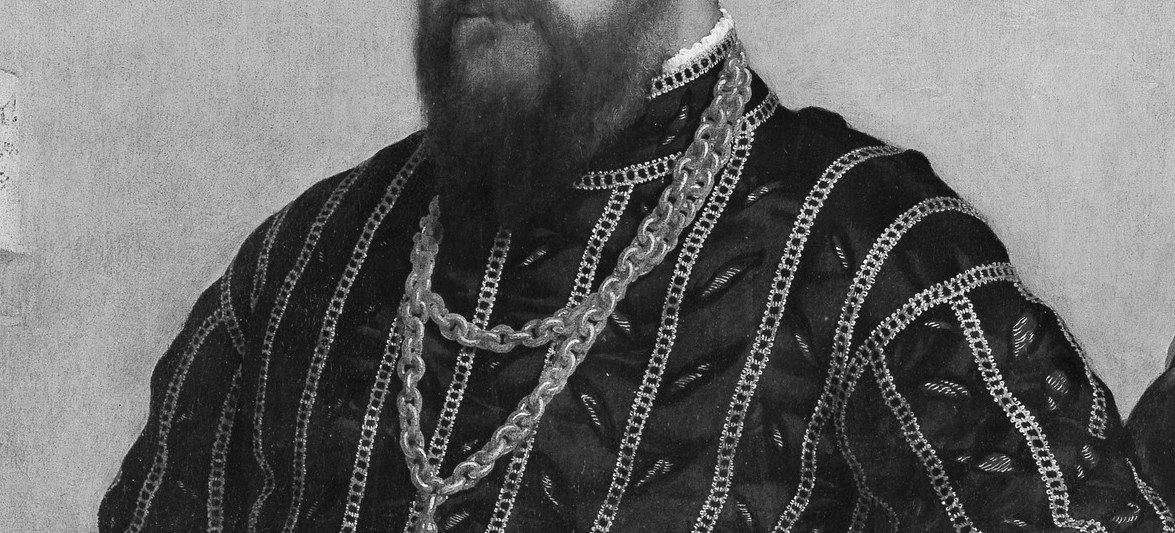
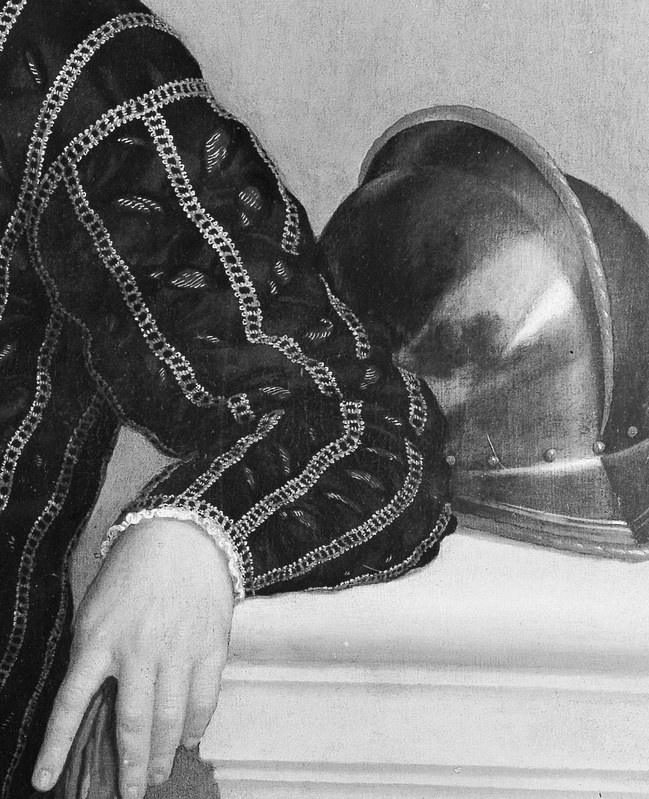
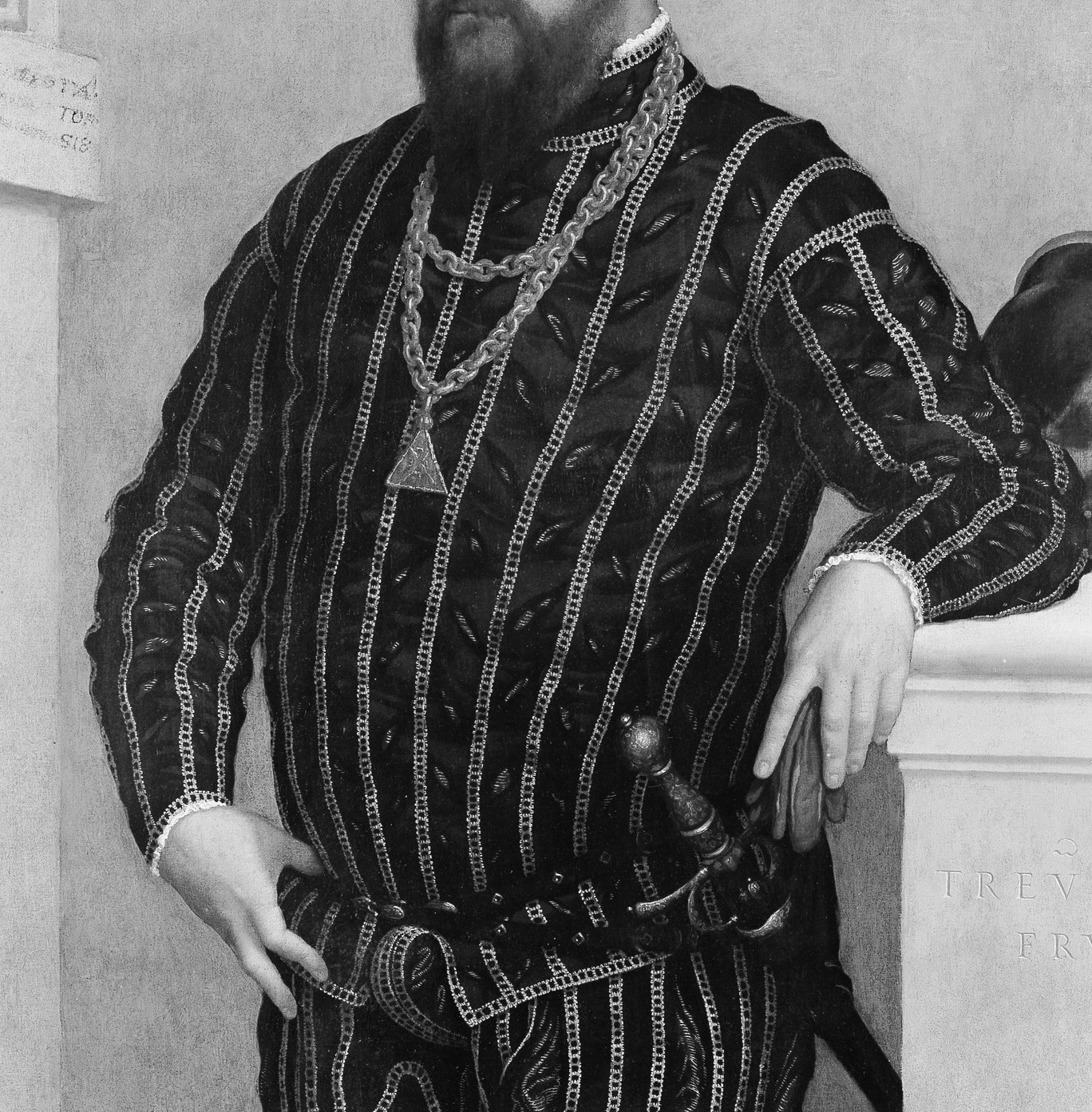
Look first at the eyes. Moroni was famous for a startling psychological directness, and this sitter connects immediately. The heavy gold chain across his chest is a clear sign of rank, while the polished helmet on the ledge and the sword at his waist mark him as a military commander, or condottiere. Notice the dark striped doublet: Moroni catches the light on every raised velvet stripe differently, a virtuoso display of textile painting.
Moroni worked in and around Bergamo in northern Italy. He was not a court painter for the biggest princes but the portraitist of the local nobility and clergy, and his lack of idealization makes his sitters feel intensely real. This man's identity is still a mystery, but the objects around him tell us exactly the kind of life he led.
It is a painting that rewards slowing down. If you could recover one lost fact about its history, what would you want to know?
Details
Transcript
For centuries, this painting was lost. A 16th-century portrait, forgotten in a private collection. The man meets your eye like a specific person, not a type. His gold chain signals a nobleman or a knight. The helmet marks him as a military commander. In 1913, the Met bought him at auction for one thousand dollars.