On the Southern Plains by Frederic Remington
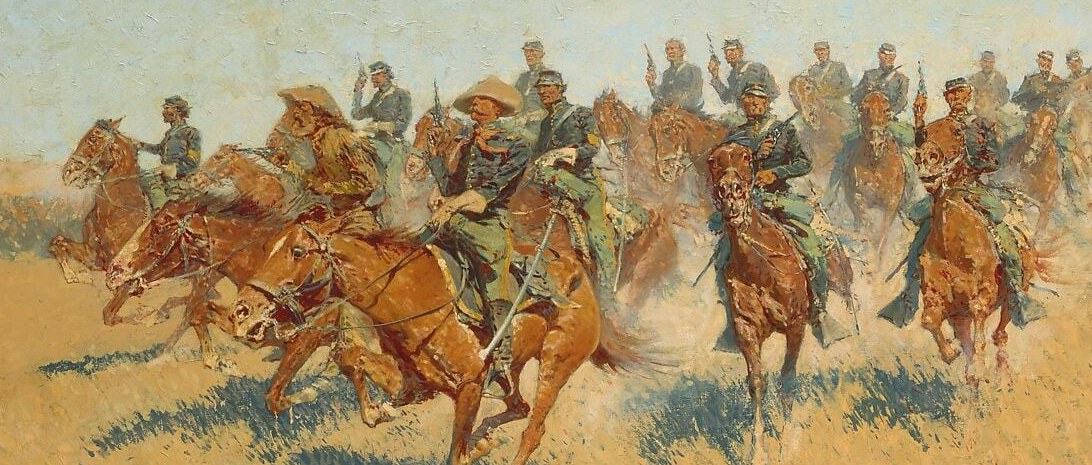
Frederic Remington's 1907 painting 'On the Southern Plains' is not the cavalry charge you expect. It is a picture of waiting. The artist visited remote army outposts in the American West and came away wanting to capture not the drama of combat, but the monotonous, grinding solitude that filled the months and years between. The result is an image of military life stripped of its heroism and replaced with something quieter and more true.
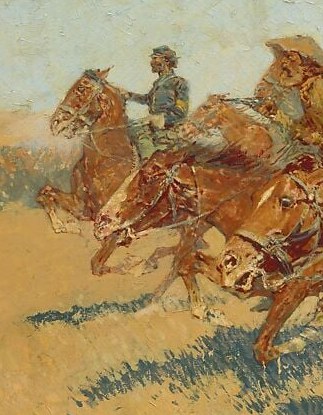
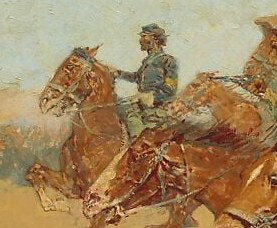
Look first at the sky. Remington gives us a flat, cold, overcast expanse that presses down on the figures below. The horizon is kept razor-flat and extremely low, which makes the column of riders feel tiny against the immensity of the plains. Then find the lead cavalryman: his body leans forward on a galloping horse, but the posture reads as vigilant fatigue rather than triumphant charge. The horse's straining head and visible breath in the chilly air complete the argument, this is physical cost, not glory.
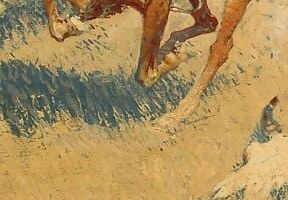
The painting comes from the final years of Remington's life, when his work was moving away from illustration toward a more personal, almost Impressionistic handling of paint. He built the scene from memory, constructing the surging silhouette of the cavalry mass and the churned ochre dust beneath their hooves. A single detail breaks the military story: a white dog bounds through the foreground dust, racing ahead of the column. It is the one warm, civilian note in an otherwise austere vision of frontier life.
Details

Transcript
No heroic sunset. Just a flat, cold, overcast sky. The horizon sits low and level, making the soldiers tiny. Remington visited remote army outposts, then painted from memory. He wanted the quiet endurance, not the battle. Look at the lead rider. His posture is not glory. It is vigilance ground down into exhaustion. The horse's strained breath is visible in the cold air. The only civilian here is a dog, running ahead into the dust.