The Gulf of Marseilles Seen from L'Estaque by Paul Cézanne
This is not the Cézanne you think you know. *The Gulf of Marseilles Seen from L'Estaque* (1885, The Metropolitan Museum of Art) appears at first as a serene, geometric seascape, all flat turquoise planes and violet mountains. But Cézanne was painting a real place, and a real economy.
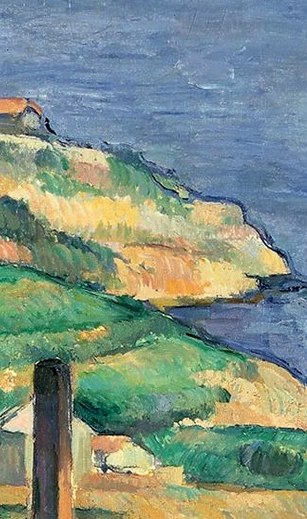
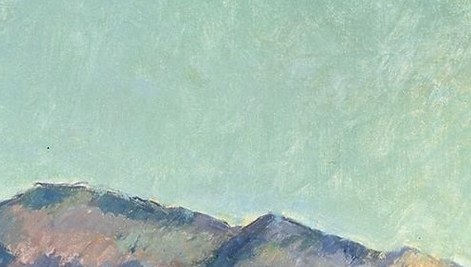
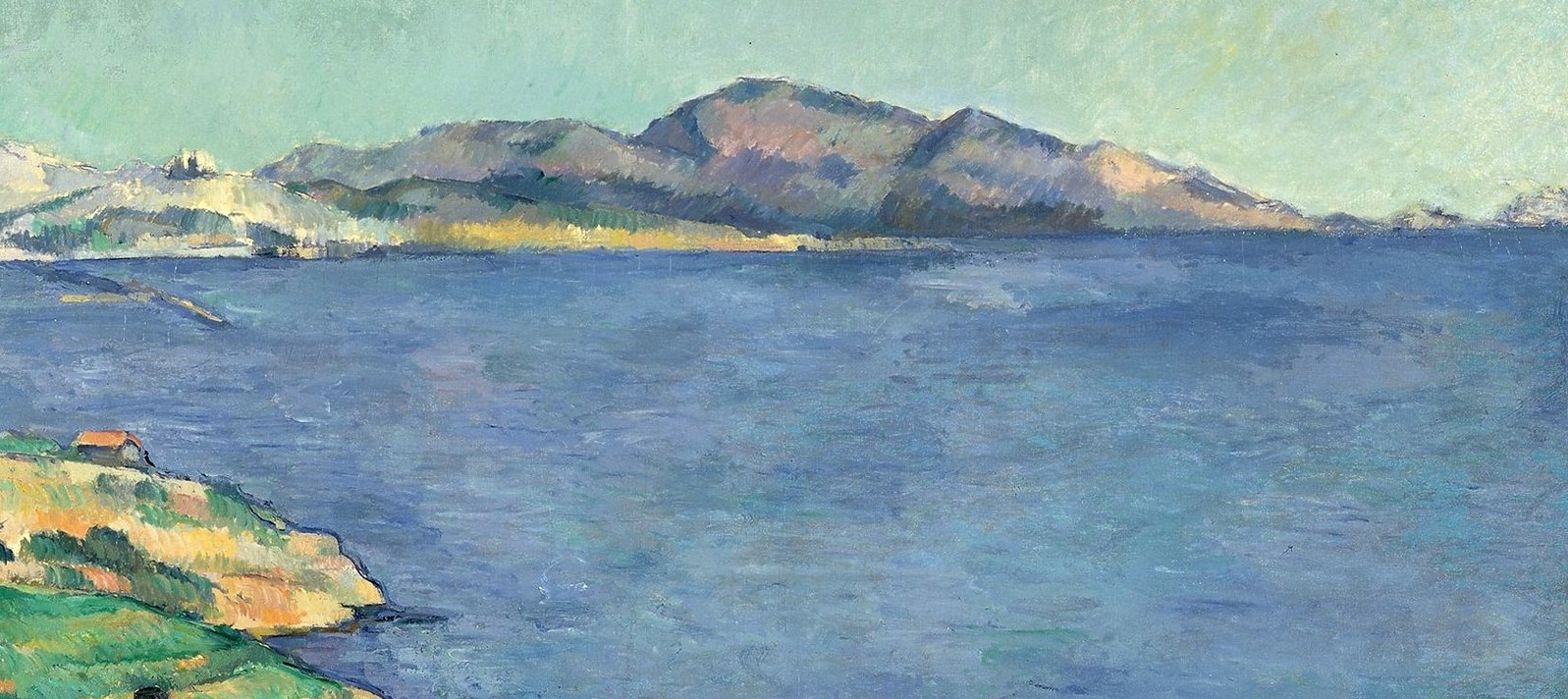
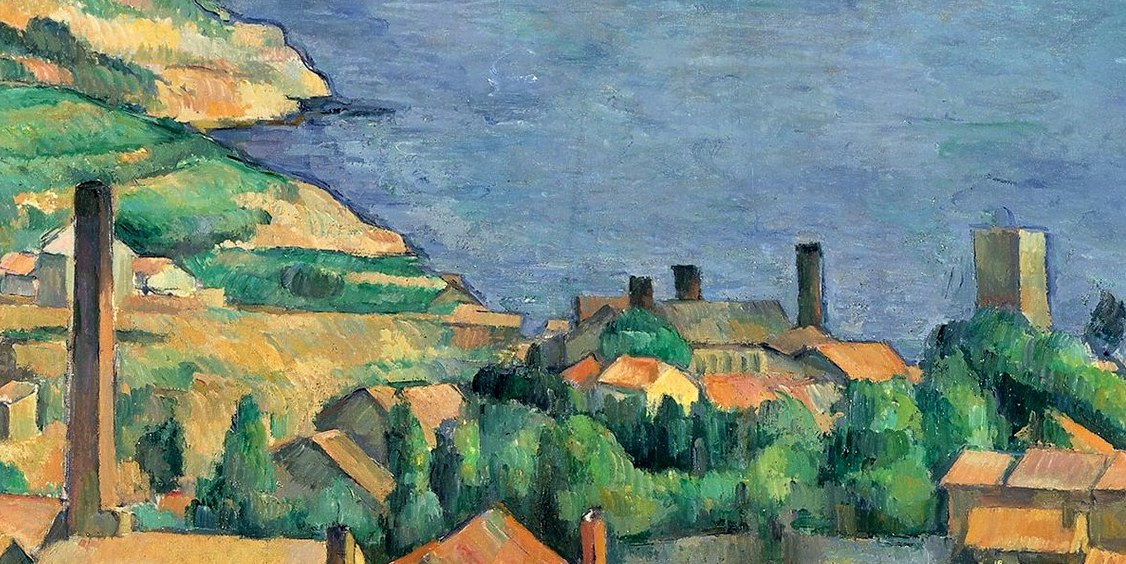
Scan left of center. A tall dark chimney rises above the orange roofs: a factory, not edited out. Mid-left on the water, a pale brushstroke resolves into a working vessel crossing the gulf. And on the far headland, tiny white marks suggest a lighthouse or distant harbor structures, easy to scroll past, impossible to unsee once found.
L'Estaque was a small fishing and tile-making town near Marseilles, not a picturesque fantasy. Cézanne spent long periods painting there precisely because it let him study the geometry of ordinary life, hillsides, rooftops, a smokestack, without the pressure of the monumental. He was building a new pictorial language out of the overlooked.
His constructive brushstroke, visible in every patch of green hillside and tile roof, would become foundational for Braque and Picasso a generation later. The hidden details here are not secrets. They are the truth of a place, quietly seen.
Details
Transcript
A bay of turquoise geometry. At first glance, pure calm. But this is not a postcard. This is a working port. Look left of center, above the terracotta roofs. A factory chimney. Cézanne leaves industry right in the frame. Now scan the water mid-left. A tiny pale mark. A working vessel, almost invisible, crossing the gulf. And on the far peninsula, the smallest white strokes. Perhaps a lighthouse. Another harbor. People are out there, working.