Still Life with a Guitar by Juan Gris
Juan Gris's "Still Life with a Guitar," painted in 1913, is a striking example of early Cubism. This oil on canvas, now at the Metropolitan Museum of Art, showcases the artist's unique approach to deconstructing and reassembling objects.
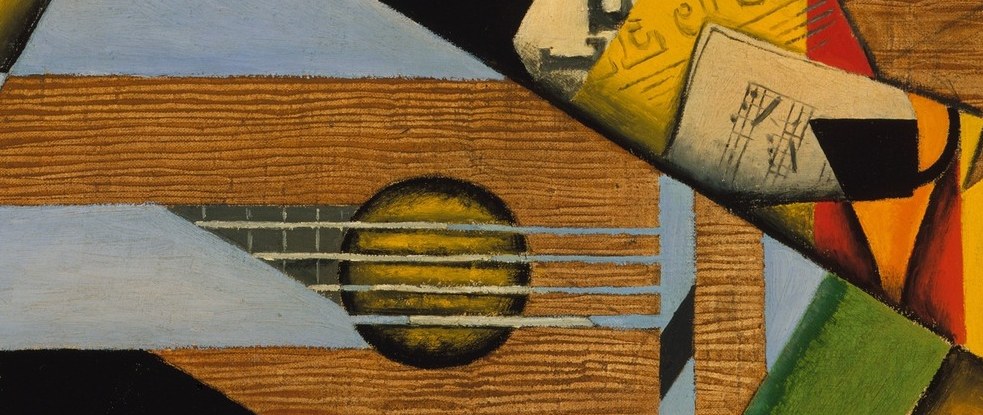
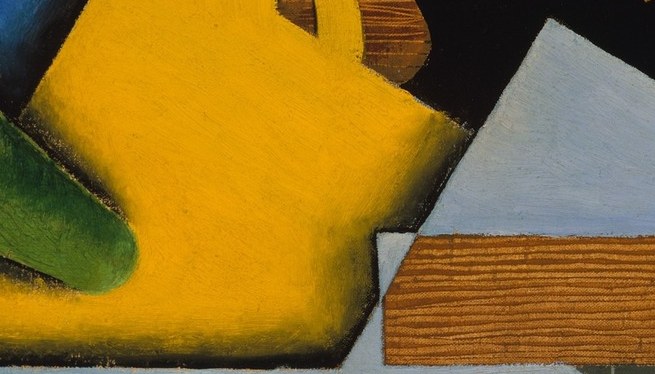
Look closely at how Gris breaks down the guitar's form into interlocking geometric planes, while still keeping recognizable elements like the soundhole and strings. Even everyday items like the yellow pitcher are transformed into abstract, sculptural shapes.
Gris created this work in Céret, a small town in the French Pyrenees that was a popular retreat for avant-garde artists, including Pablo Picasso, who also visited that year. This shared environment fostered much experimentation and innovation in the Cubist movement. Gris's systematic method brought a distinctive clarity to Cubist principles.
What do you notice first about the way Gris portrays these objects?
Details
Transcript
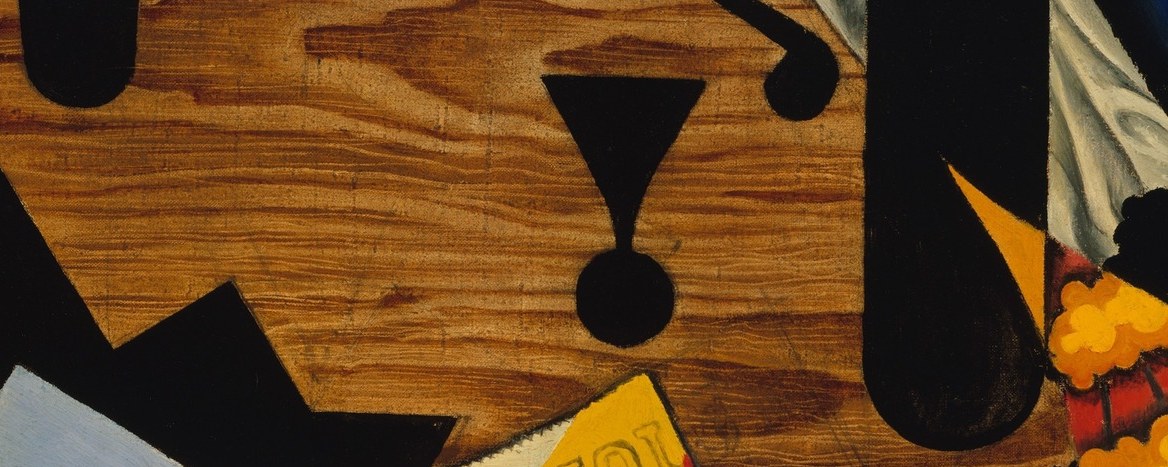
In 1913, Cubism fragmented the way artists saw the world. This painter broke objects into planes, like this guitar's body. He was working in Céret, a French village loved by Cubists. Even a simple pitcher becomes a sculptural form. Notice the subtle texture of the wood grain here. His systematic approach defined early Cubism.