Three Young Tobos Men by Catlin, George
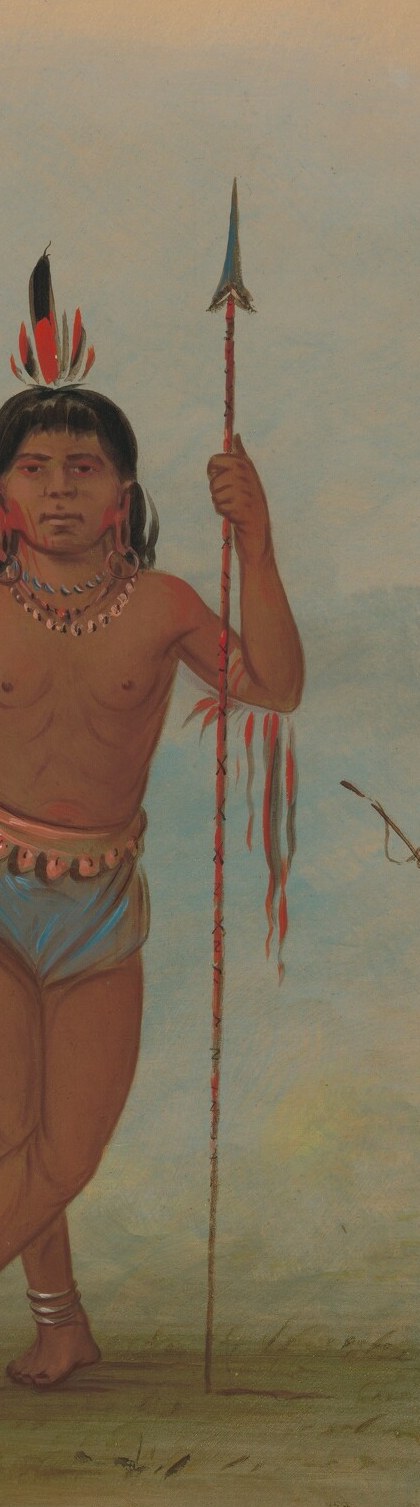
George Catlin, a lawyer turned artist, dedicated his life to documenting Native American cultures in the American West. His "Three Young Tobos Men," painted between 1854 and 1869, captures three distinct individuals from the Tobos tribe with remarkable realism.
Observe the varied expressions: the central figure's focused intensity, the right figure's watchful alertness with his bow and arrow, and the left figure's thoughtful, almost somber gaze. Each detail, from their adornments to their tools, tells a story of identity and daily life.
Catlin traveled extensively in the 1830s, creating a vast body of work that serves as a vital historical record of indigenous peoples during a period of immense change. His commitment to truthful representation offers a glimpse into lives that were often misunderstood or overlooked.
What do their different expressions suggest about their individual roles or perspectives?
Details
Transcript
In the 1830s, this painter traveled the American West. He recorded indigenous peoples through direct observation, like these three. The middle figure looks steady, ready with his spear. His companion on the right is alert, bow and arrow in hand. But the man on the left looks away, with a thoughtful, wary gaze. These portraits documented lives that were rapidly changing.