Virgin and Child with the Saints Catherine and Barbara by Lucas Cranach the Elder
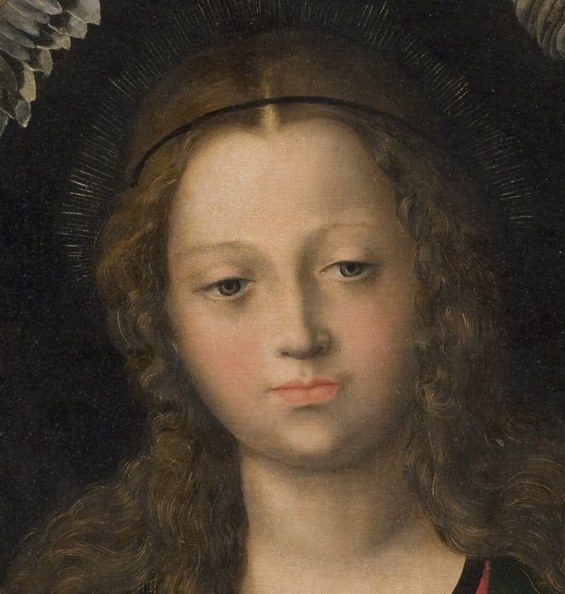
Lucas Cranach the Elder's "Virgin and Child with the Saints Catherine and Barbara," painted in 1511, holds subtle clues to its origins within the artwork itself. This early 16th-century German Renaissance painting, housed at the Statens Museum for Kunst, showcases Cranach's meticulous detail.
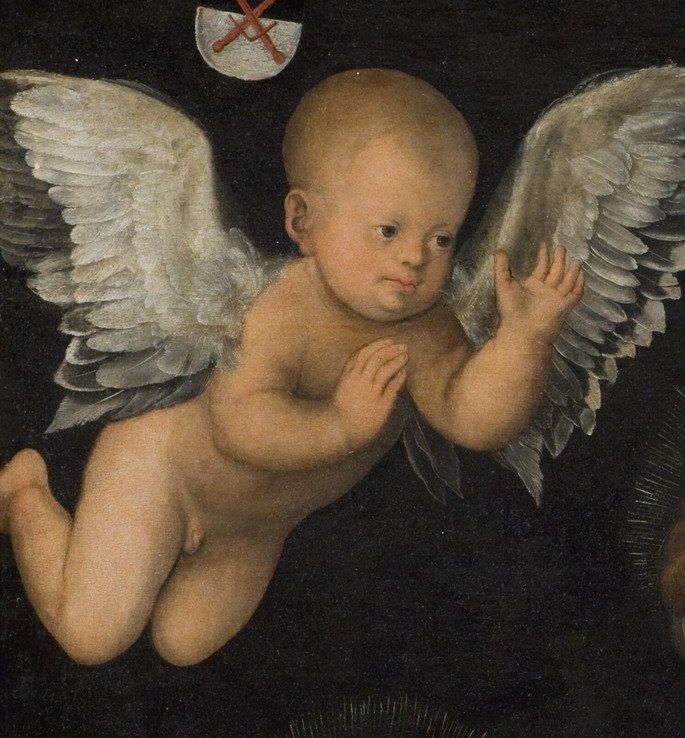
While the eye is drawn to the serene Virgin Mary, the Christ Child, and the flanking saints Catherine and Barbara, two small symbols in the upper corners are easily missed. A tiny cross can be seen in the upper left, while a small shield with heraldic symbols is visible in the upper right. These delicate additions, likely referring to the painting's original commissioner, add a layer of historical context to this religious scene.
Cranach, a close friend of Martin Luther and court painter to the Electors of Saxony, was known for blending religious subjects with intricate details. His work provides a fascinating glimpse into the artistic and spiritual landscape of the Northern Renaissance. What other hidden meanings might be found in his paintings?
Details
Transcript
This painter was a close friend of Martin Luther. He created this holy scene in 1511. Look closely at the upper left corner. A small symbol, a tiny cross, is painted there. Now find the upper right, above the cherub. Another detail, a small shield, completes the pair. These small marks may indicate the original patron.