The Trap by Toulouse-Lautrec, Henri de
Henri de Toulouse-Lautrec's "The Trap," painted in 1880, offers a glimpse into the artist's early career, long before his iconic depictions of Parisian nightlife. This oil on wood panel, now in a public museum collection, shows his roots in aristocratic rural life.
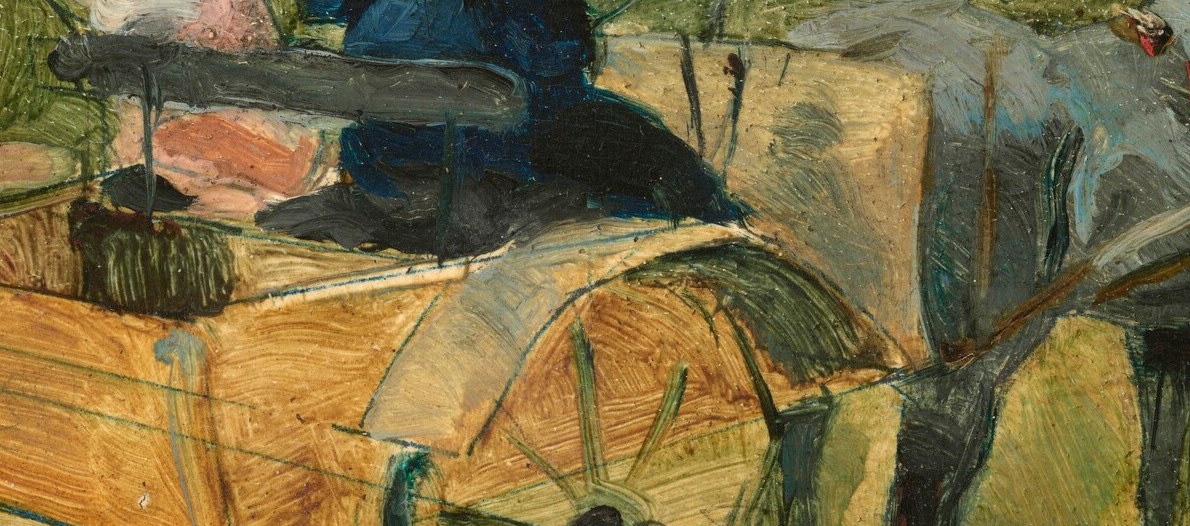
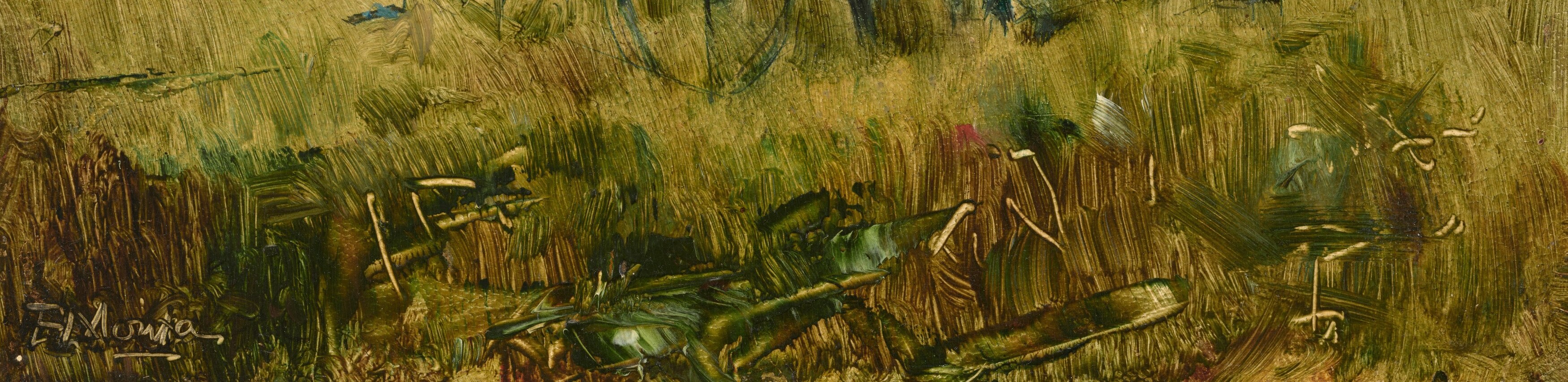
In this work, Toulouse-Lautrec captures a quiet moment: a horse-drawn carriage with a driver and passenger moving through an open field. Notice the expressive brushwork in the horse's head and the textures of the foreground grass, already showing the artist's distinctive style.
Born into French aristocracy, Toulouse-Lautrec painted this piece at just 16 years old. It remained in private collections for decades, providing a fascinating counterpoint to his later, more famous works set in the cabarets and brothels of late 19th-century Paris.
It's a testament to his early talent that even in such a subdued scene, the artist's ability to imbue movement and atmosphere is clearly evident.
Details
Transcript
Before the can-can and cabarets, this painter lived a quiet life. Born into aristocracy, he often depicted his family's rural estates. Here, a driver and passenger take a carriage through the fields. Even at 16, he captured movement with bold, expressive brushstrokes. This early style hints at the master he would soon become.